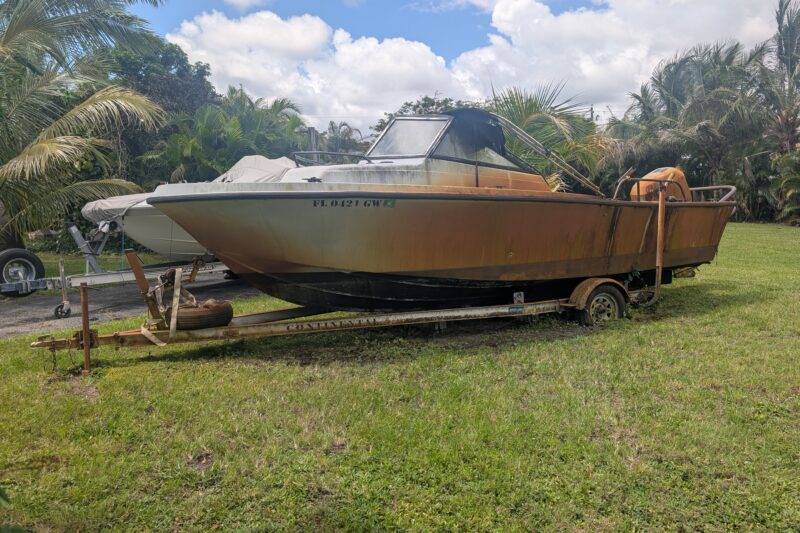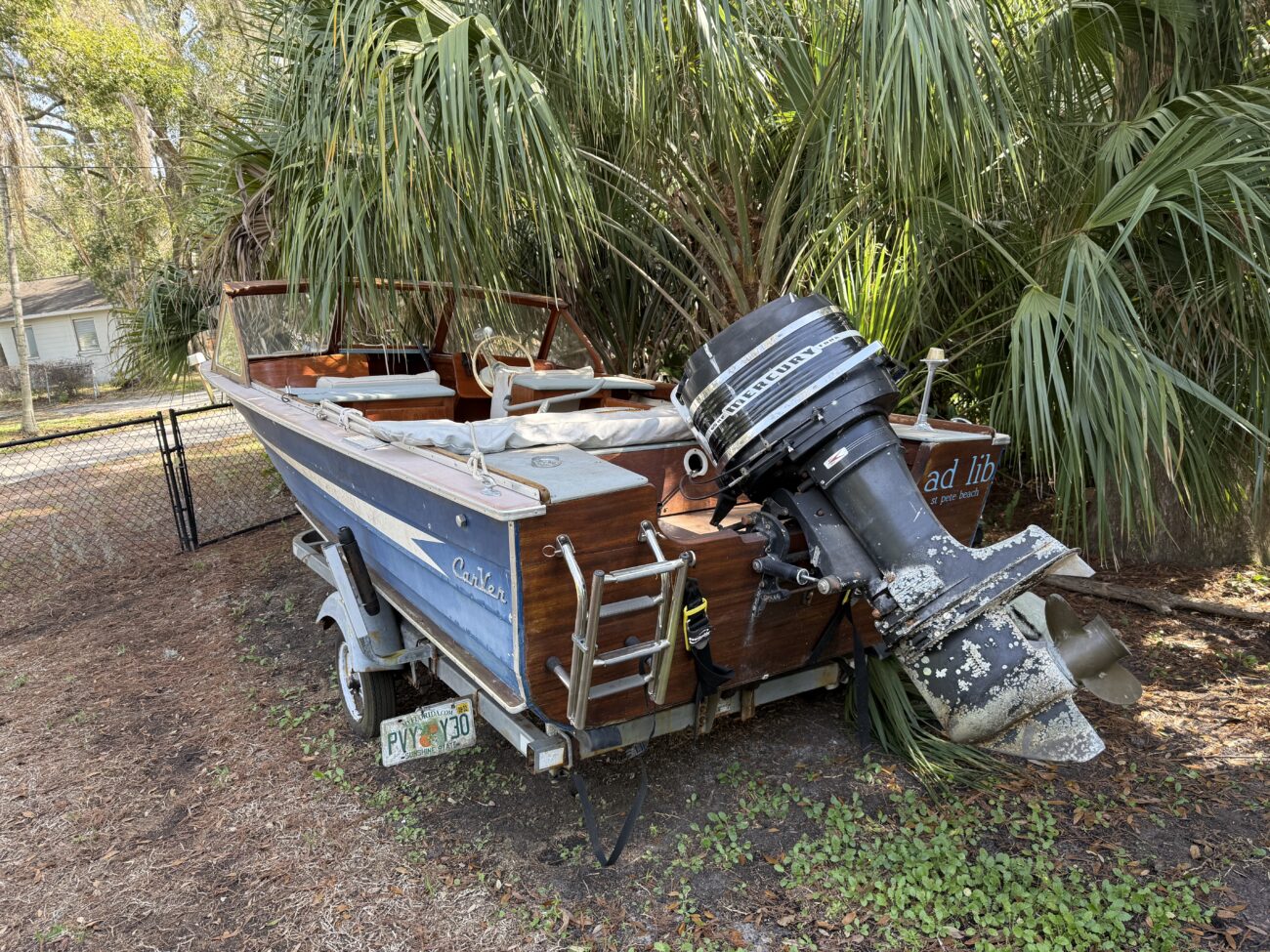
Tampa is a city built around the water.
Tampa Bay stretches across the region, the Hillsborough River cuts through the heart of the city, and the Gulf of Mexico provides access to some of Florida’s most popular fishing and boating destinations. Around the bay, you’ll find marinas, boatyards, waterfront homes, fishing vessels, sailboats, cruisers, center consoles, commercial boats, and plenty of vessels that have been around for many years.
Not every one of those boats is still being used.
Some have been sitting behind homes for years. Others occupy marina slips despite no longer being seaworthy. Some have suffered engine failures, storm damage, or structural deterioration. Others were purchased as restoration projects that never actually made it back onto the water.
Eventually, an owner has to decide what happens next.
Boat Scrapyards helps Tampa-area boat owners make that decision easier. We provide professional boat removal, boat scrapping, marine scrapping, salvage, and disposal services for vessels that are old, damaged, abandoned, non-running, or simply unwanted. From a small fishing boat to a larger cruiser, we evaluate the vessel and its location to determine the most practical approach to getting it removed.
Tampa Boat Scrapping FAQ
Can you remove a boat that doesn’t run?
Yes. Non-running boats are among the most common vessels requiring professional removal. Mechanical failures, electrical problems, deteriorated trailers, and years of neglect can all leave a boat immobile.
Do you handle fiberglass boats?
Yes. Fiberglass vessels are extremely common around Tampa Bay and can be evaluated for professional boat scrapping and removal.
Can you remove damaged boats?
Yes. Damaged vessels can be evaluated for removal depending on their condition, size, and location.
Can you remove boats from marinas?
Yes. Boat Scrapyards can coordinate with boat owners, marinas, storage facilities, and property managers when a vessel needs to be removed.
What happens after the boat is removed?
The boat can be evaluated for potentially recoverable materials and components, including metals, engines, trailers, marine hardware, electronics, batteries, and other equipment.
When the Boat Stops Being Fun
Most boat owners don’t wake up one morning and decide they want to scrap their boat.
Usually, it happens gradually.
The boat gets used less.
A repair gets postponed.
Another season passes.
The engine needs attention.
The trailer develops problems.
The owner starts thinking about selling it.
Then another year goes by.
Eventually, the vessel is no longer an enjoyable recreational asset. It’s simply something taking up space.
That’s when boat scrapping becomes a realistic option.
Rather than continuing to pay for storage, insurance, maintenance, registration, and repairs, an owner can arrange professional boat removal and finally clear the property.
Boat Scrapyards works with Tampa-area owners who have reached that point.
Tampa Bay Is Great for Boats—But Hard on Old Ones
The Tampa area provides excellent access to the Gulf of Mexico, but Florida’s marine environment can be tough on aging vessels.
Salt air can accelerate corrosion.
Intense sunlight can damage upholstery, plastics, seals, and exterior surfaces.
Humidity creates moisture-related problems.
Heavy rainfall can expose leaks.
Storms and hurricanes can cause significant structural damage.
Even boats that receive regular maintenance eventually require major repairs.
For a vessel that’s already several decades old, one major problem can be enough to make continued ownership difficult to justify.
If an engine fails on an older boat that also has deteriorating decking, electrical problems, and trailer issues, the owner isn’t looking at one repair anymore.
They’re looking at a restoration.
And restoration isn’t always worth the investment.
Boat Scrapping Isn’t the Same as Throwing Away Junk
A boat contains a mixture of materials and specialized systems.
Depending on the vessel, it may contain fiberglass, aluminum, stainless steel, copper wiring, bronze hardware, wood, plastics, batteries, fuel equipment, plumbing, hydraulic components, electronics, engines, and other marine equipment.
Those materials require different considerations.
The boat’s location also matters.
A small aluminum fishing boat sitting on a trailer in an open driveway presents one type of removal project.
A large cruiser sitting at a marina presents another.
A boat tucked behind a home or commercial property may have limited access.
Boat Scrapyards evaluates the vessel, its condition, size, location, and accessibility before determining how removal should be approached.
That’s an important part of professional marine scrapping.
Why Tampa Boats End Up at the Scrapyard
There are plenty of reasons a vessel eventually becomes a removal project.
Engine Failure
Marine engines can be expensive to repair or replace. On older vessels, repowering may cost more than the boat is worth.
Structural Deterioration
Soft decks, damaged transoms, leaks, hull problems, and deteriorated stringers can turn a simple repair into a major rebuild.
Hurricane Damage
Tampa Bay and the surrounding Gulf Coast are exposed to tropical storms and hurricanes. Wind, flooding, storm surge, and debris can leave boats severely damaged.
Corrosion
Saltwater exposure affects engines, hardware, electrical systems, fittings, and other metal components.
Long-Term Neglect
A boat that sits unused for years can develop multiple problems simultaneously.
Marina or Storage Expenses
An unwanted vessel can continue generating monthly costs even when it never leaves the dock.
Inherited Boats
An inherited boat can create an unexpected responsibility for someone who doesn’t want to become a boat owner.
Abandoned Restoration Projects
Many old boats begin as weekend restoration projects.
Then life gets busy.
The project gets pushed aside.
Eventually, the boat becomes part of the property rather than a project that is actually moving forward.
Boat removal provides a way to finally close the chapter.
The Types of Boats We Scrap
Tampa Bay has a diverse marine community, which means Boat Scrapyards encounters many different types of vessels.
These can include:
- Fishing boats
- Center consoles
- Bay boats
- Sailboats
- Cabin cruisers
- Sportfishing boats
- Aluminum boats
- Pontoon boats
- Deck boats
- Ski boats
- Wake boats
- Personal watercraft
- Utility boats
- Yacht tenders
- Commercial work boats
A boat doesn’t necessarily have to be completely destroyed to qualify for scrapping.
Sometimes it’s simply too old.
Sometimes it’s no longer economical to repair.
Sometimes the owner has no practical use for it anymore.
The important question is whether keeping the vessel makes sense.
What’s Hiding Inside an Old Boat?
An old vessel may contain a surprising amount of equipment and recoverable material.
Depending on its construction and condition, Boat Scrapyards may encounter:
- Aluminum
- Stainless steel
- Copper wiring
- Bronze hardware
- Propellers
- Marine batteries
- Fuel tanks
- Anchors
- Chains
- Cleats
- Winches
- Steering systems
- Outboard motors
- Marine pumps
- Navigation electronics
- Trailer components
Not every item will be reusable.
Condition matters, and severely deteriorated equipment may have little practical value.
Still, evaluating the individual materials and components is an important part of marine scrapping.
A boat isn’t simply one enormous object.
It’s a combination of different materials and systems that need to be considered individually.
Tampa’s Waterfront Creates Unique Removal Challenges
Removing a boat from a private residence can be straightforward—or surprisingly complicated.
A vessel may be sitting behind a fence.
The driveway may be too narrow.
The trailer may not be operational.
A marina may have specific scheduling requirements.
A larger vessel may require additional transportation planning.
Boat Scrapyards considers these circumstances before removal begins.
This is particularly important around Tampa Bay, where boats can be found in marinas, waterfront neighborhoods, commercial properties, storage yards, boatyards, and private docks.
Every location presents different conditions.
The goal is to develop a removal plan around the actual vessel instead of assuming every boat can be handled the same way.
Serving Tampa and Surrounding Communities
Boat Scrapyards provides boat removal, boat scrapping, marine scrapping, and salvage services throughout Tampa and the surrounding region.
Our service area includes:
- Tampa
- West Tampa
- South Tampa
- Carrollwood
- Town ‘n’ Country
- Temple Terrace
- Brandon
- Riverview
- Apollo Beach
- Ruskin
- Lutz
- Land O’ Lakes
- Plant City
- Safety Harbor
- Clearwater
- St. Petersburg
We also serve boat owners throughout the broader Tampa Bay region.
Vessels may be located at private homes, marinas, storage facilities, commercial properties, boatyards, or waterfront locations.
Whether your boat is sitting on land or has been occupying a slip, Boat Scrapyards can evaluate the project and determine what needs to happen next.
What Happens After Your Boat Is Picked Up & Hauled Away?
Removing the vessel from your property isn’t necessarily the end of its story.
Once transported, the boat can be evaluated based on its materials, condition, and equipment.
Potentially useful components can be identified where practical.
Metals may be separated according to type.
Engines, electronics, trailers, marine hardware, batteries, and other equipment can be evaluated individually.
The remaining hull is considered according to its construction.
Fiberglass presents different challenges from aluminum.
Steel is different from copper.
Batteries and fuel-related components require additional consideration.
That’s why professional marine scrapping involves more than simply hauling an old boat away.
Boat Scrapyards approaches each vessel according to what it actually contains.
Clearing an Old Boat Can Give You Back More Than Space
An unwanted boat can become something you stop noticing.
It’s just always there.
It occupies part of the driveway.
It takes up a storage spot.
It sits at the marina.
It becomes another expense that gets paid month after month.
But once it’s removed, the difference can be immediate.
The property looks better.
The space becomes usable again.
The storage bill can disappear.
And the constant thought of “I need to deal with that boat” is finally gone.
Boat Scrapyards provides Tampa boat owners with a practical option when selling, repairing, or restoring the vessel no longer makes sense.
Don’t Let Another Florida Summer Go By
If your boat has been sitting unused for years, another season probably isn’t going to change the situation.
The weather will continue.
The vessel will continue aging.
Repairs won’t become cheaper.
And storage costs won’t necessarily disappear.
If you’ve reached the point where you’re ready to let the boat go, professional boat scrapping can make the process considerably easier.
Boat Scrapyards provides boat scrapping, marine scrapping, salvage, boat removal, and disposal services throughout Tampa and the surrounding Tampa Bay region.
Whether you’re dealing with an old fishing boat, damaged cruiser, abandoned vessel, non-running center console, or unfinished restoration project, our team can help you take the next step.
Contact Boat Scrapyards today for a free estimate and find out how straightforward professional boat removal can be.