Jacksonville is one of Florida’s major boating communities, with the St. Johns River, Intracoastal Waterway, Atlantic coastline, marinas, boat ramps, fishing areas, and waterfront properties creating plenty of opportunities for time on the water.
But boats do not last forever.
A vessel that once provided years of fishing trips, family outings, cruising, or weekend recreation can eventually become an expensive problem. Engines fail. Trailers deteriorate. Fiberglass hulls become damaged. Interiors fall apart. Boats sit unused until the owner realizes that keeping the vessel no longer makes sense.
Getting rid of an old boat can be much more complicated than getting rid of ordinary household junk.
Boat Scrapyards helps Jacksonville-area owners deal with unwanted boats through boat removal, hauling, marine salvage, dismantling, scrapping, and disposal. Whether an aging vessel is sitting in a driveway, storage yard, marina, private property, or commercial location, the goal is to get the boat out of the way and help the owner move forward.
Jacksonville Boat Removal FAQs
Can Boat Scrapyards remove old boats in Jacksonville?
Boat Scrapyards helps owners with unwanted, damaged, neglected, and non-running boats in the Jacksonville area. The removal process depends on the vessel’s condition, size, location, and accessibility.
Does the boat need to be operational?
No. Non-running boats are often the most difficult vessels for owners to move themselves. A failed engine or unusable trailer does not necessarily prevent professional removal.
What types of vessels can be removed?
Potential projects can include fishing boats, sailboats, cruisers, runabouts, pontoon boats, fiberglass vessels, aluminum boats, and other recreational or working craft, depending on the circumstances.
Can an old boat trailer be removed?
Trailer condition can be considered as part of the overall removal project. Old trailers may have damaged tires, seized bearings, rust, brake problems, or other issues.
What about fiberglass boats?
Fiberglass vessels require different handling from conventional metal boats. Their construction and condition help determine the appropriate dismantling, salvage, and disposal process.
What happens after a boat is hauled away?
The vessel can be evaluated for usable components and scrap materials. Depending on its condition, different parts can be separated for salvage, scrapping, or appropriate disposal.
Why Jacksonville Boat Owners Eventually Need Removal
Boat ownership often begins with excitement.
The vessel represents weekends on the water, fishing trips, family outings, or a new hobby.
Then circumstances change.
An owner may stop using the boat because of work, relocation, age, changing interests, or rising maintenance costs. A boat may also become unwanted after an inheritance, a failed restoration project, or major mechanical damage.
Once the vessel is no longer being used, its size becomes a problem.
A boat cannot simply be left at the curb.
It needs a suitable removal and disposal plan.
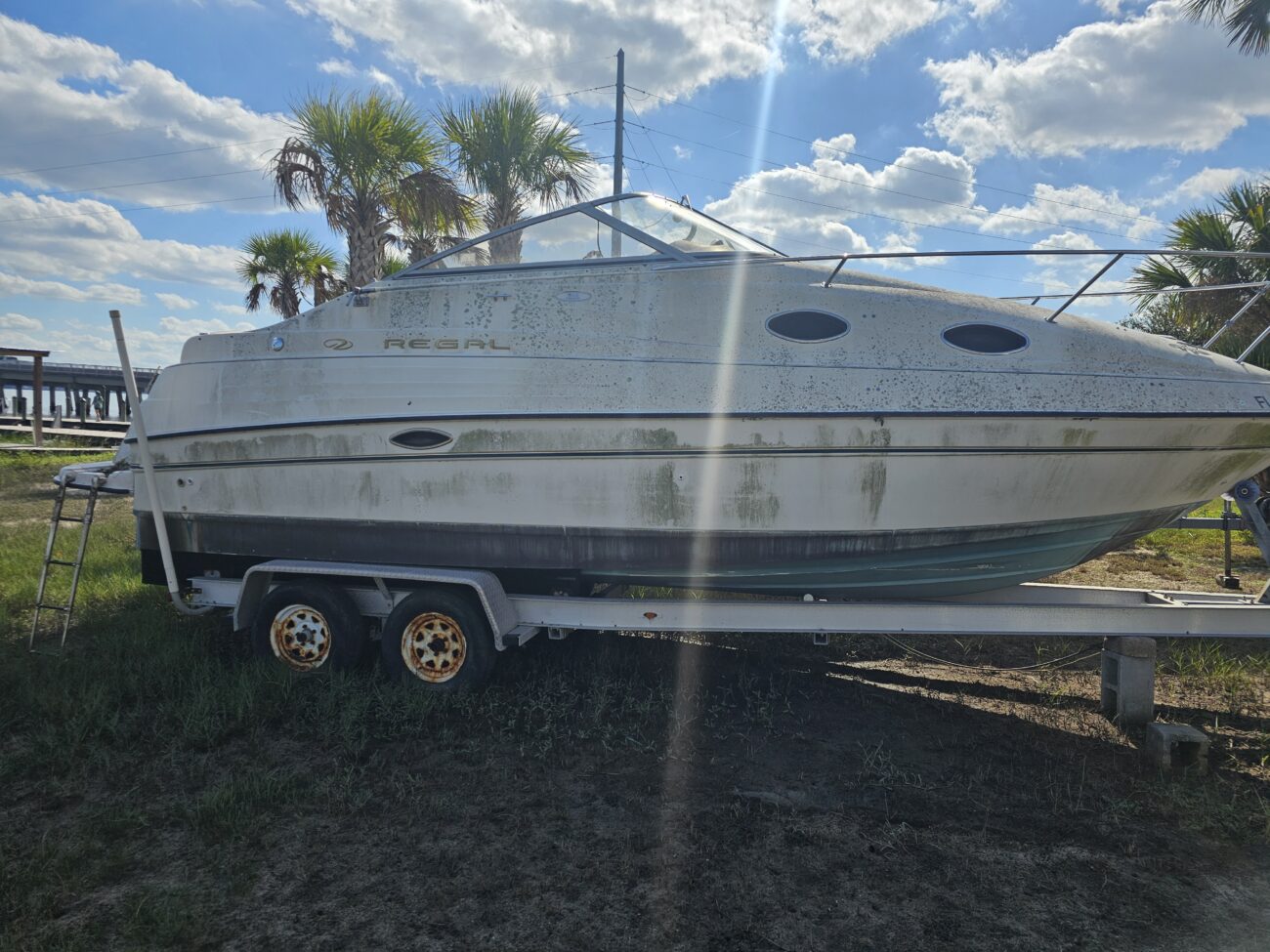
Jacksonville’s warm, humid coastal environment can also be hard on neglected marine equipment. Moisture, sun, rain, salt air, and prolonged exposure can affect engines, upholstery, wiring, hardware, hulls, and trailers.
A boat that has been sitting for years may be substantially more difficult to move than when it was first parked.
That is why addressing an unwanted vessel early can make the project easier.
When Repairing an Old Boat Stops Making Sense
Older boats can be tempting restoration projects.
An owner may think a few repairs will put the vessel back on the water.
Then the repair list grows.
The engine needs work.
The fuel system needs attention.
The electrical system is outdated.
The trailer needs tires and bearings.
The hull has damage.
The interior needs replacement.
Before long, the owner is facing a complete restoration rather than a simple repair.
Restoration can be worthwhile when the boat has sufficient value and the owner has the time and resources to complete the project.
But not every vessel makes financial sense to restore.
If the cost of returning the boat to usable condition approaches or exceeds what the finished vessel is worth, removal and scrapping may be a more practical option.
Boat Scrapyards gives Jacksonville owners a way to move forward once they have decided that keeping the vessel is no longer worthwhile.
Boats We Remove, Salvage & Scrap
Unwanted boats come in many different forms.
Fishing Boats
Fishing boats can contain engines, electronics, fuel systems, wiring, fishing equipment, aluminum, stainless hardware, and other components. When maintenance becomes too expensive, removing the vessel can eliminate a growing problem.
Sailboats
Older sailboats can become difficult projects when their sails, rigging, decks, interiors, engines, and hull components deteriorate. Their size can also make residential storage challenging.
Cruisers
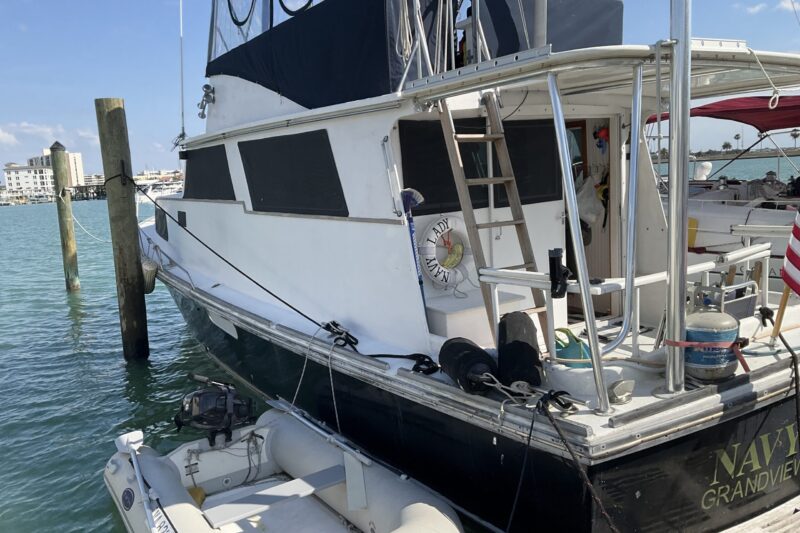
Cruisers may contain cabins, plumbing, electrical systems, engines, appliances, and other equipment. When several major systems require repair, restoration costs can rise quickly.
Pontoon Boats
Pontoon boats can develop problems involving decking, furniture, fencing, flotation components, engines, and metal structures. An older pontoon may eventually become more trouble than it is worth.
Runabouts
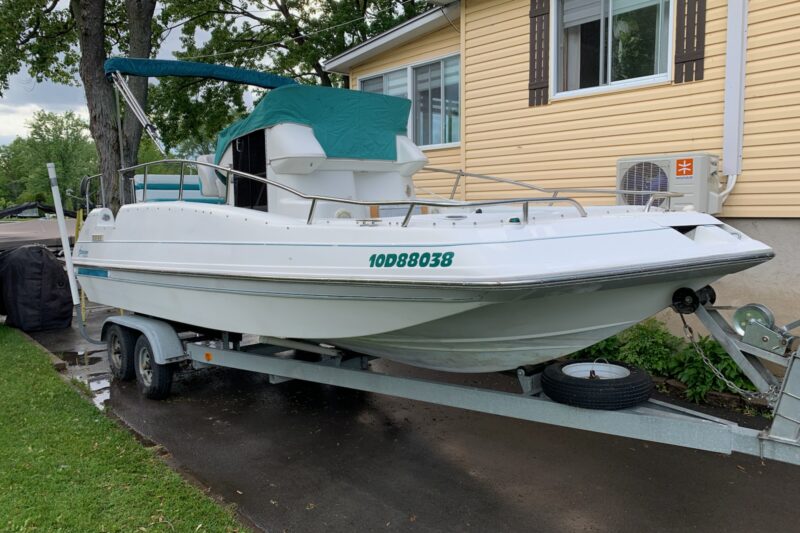
Smaller recreational boats are commonly kept on trailers. When the trailer fails or the boat has been neglected for years, moving the vessel can become surprisingly difficult.
Aluminum Boats
Aluminum fishing and recreational boats may contain substantial recoverable metal. Their construction and condition help determine how they can be handled.
Fiberglass Boats
Fiberglass vessels can require additional planning because the hull itself is not conventional metal scrap. Other components may include foam, wood, wiring, tanks, hardware, engines, and electronics.
Jacksonville’s Marine Environment
Jacksonville’s waterways give local boat owners access to a wide range of marine environments.
The St. Johns River runs through the city, while the Intracoastal Waterway and Atlantic coastline provide additional boating opportunities.
The region’s marine activity includes recreational boaters, anglers, sailing enthusiasts, commercial operators, waterfront businesses, and boat storage facilities.
That means Jacksonville also has a constant supply of older vessels reaching the end of their useful lives.
Some boats are sold.
Some are restored.
Others become unwanted.
A vessel that no longer runs may sit on a trailer for years. A damaged boat may be moved into storage while the owner decides what to do. An inherited boat may remain on private property simply because nobody wants to deal with its removal.
Eventually, the owner needs a solution.
Residential Boat Removal in Jacksonville
Old boats are not limited to marinas.
They can sit in driveways, side yards, backyards, workshops, storage lots, and commercial properties throughout Jacksonville and surrounding communities.
For homeowners, a boat can consume an enormous amount of usable space.
A vessel parked in the driveway may prevent additional parking. A neglected boat in the yard can interfere with landscaping or construction. An unfinished restoration project can remain an eyesore long after the original plans have disappeared.
Removing the vessel can give the property owner that space back.
This can be especially useful when preparing a property for sale, remodeling, renting, or simply cleaning up years of accumulated belongings.
Boat Trailer Problems Can Make Transportation Difficult
An old boat may appear easy to tow until the owner examines the trailer.
Years of sitting can cause tires to dry-rot, wheel bearings to seize, brake components to fail, and metal frames to deteriorate.
A trailer that has not moved in years should not automatically be assumed to be roadworthy.
That creates a major obstacle for owners trying to sell or dispose of the boat themselves.
Even if someone is willing to take the vessel, transporting it may be another problem entirely.
Professional boat removal can account for the condition of the vessel and trailer rather than requiring the owner to make an old setup roadworthy before removal.
Marina and Waterfront Boat Removal
Removing a vessel from a marina or waterfront property can require additional planning.
Other boats, docks, buildings, vehicles, storage equipment, and access restrictions can affect how a vessel can be moved.
A boat that does not operate under its own power can create another layer of difficulty.
Owners should provide useful information about the vessel’s approximate size, location, condition, trailer status, and accessibility when arranging removal.
Those details help establish the requirements of the project before equipment arrives.
For marina operators and property managers, removing an unwanted vessel can also create valuable space for another boat or another use.
Damaged and Storm-Affected Boats
Florida boats are exposed to weather throughout the year.
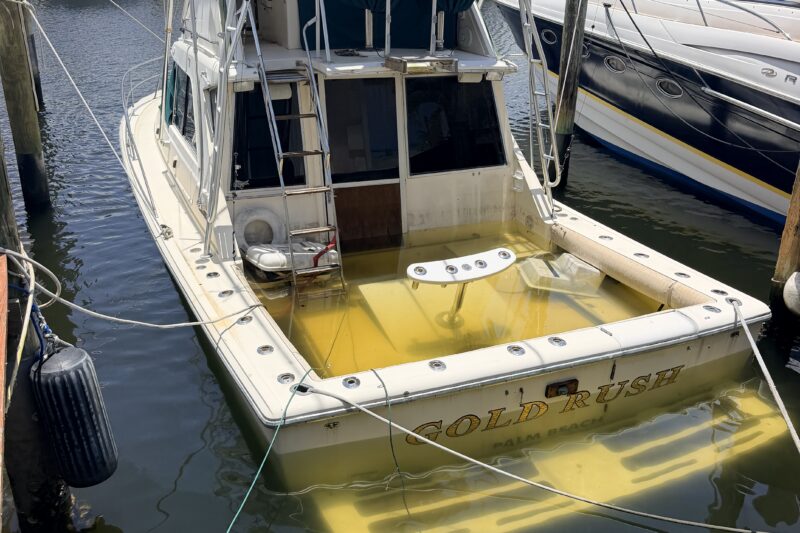
Storms, heavy rain, wind, flooding, sunlight, humidity, and salt air can all contribute to vessel deterioration.
A boat may suffer damage to its hull, deck, engine, electronics, trailer, or interior.
The visible damage may only be part of the problem.
Once a boat is thoroughly inspected, owners may discover additional repairs that make restoration considerably more expensive than expected.
At that point, the owner has a choice.
Continue investing in the vessel or arrange for removal.
For boats that have reached the end of their practical service life, scrapping can provide a straightforward way to clear the property.
Fiberglass Boat Disposal Requires Planning
Fiberglass boats are common throughout Florida, but disposing of a large fiberglass vessel is not as simple as hauling away a piece of metal.
The hull is made from composite materials and may contain other materials throughout the vessel.
There can be foam, wood, wiring, fuel systems, hardware, engines, electronics, and other equipment.
The boat needs to be considered as an entire project.
Potentially useful components can be separated. Metal materials can be handled according to type. The fiberglass structure can be addressed according to the requirements of the disposal process.
For Jacksonville owners with an unwanted fiberglass boat sitting on their property, professional removal can eliminate the challenge of figuring out how to dismantle and dispose of the vessel alone.
Marine Scrapping Can Recover More Than the Hull
An old boat may no longer be useful as a complete vessel while still containing components that have salvage or scrap potential.
Depending on its condition, a boat can contain aluminum, stainless hardware, engines, transmissions, wiring, marine electronics, batteries, trailer components, and other equipment.
Some parts may be useful for salvage.
Other materials may have scrap value.
This is why marine scrapping involves evaluating the vessel as a collection of materials and components rather than simply treating it as one oversized object.
The exact outcome depends on the boat.
A heavily deteriorated vessel may have limited salvageable material, while another older boat may contain equipment that remains useful.
Either way, the first step is getting the unwanted vessel removed.
What Happens After Your Boat Is Hauled Away?
Once the vessel is removed, it can be evaluated according to its condition, construction, and components.
Mechanical systems can be assessed. Metal materials can be separated. Trailer components can be addressed independently. Other parts can be handled according to their material characteristics.
An aluminum boat may be processed differently from a fiberglass cruiser.
A boat with usable equipment may have a different salvage potential than one that has been exposed to the elements for years.
There is no single outcome for every vessel.
The important result for the owner is that the unwanted boat is no longer occupying the property.
The driveway is available again.
The storage area is cleared.
The marina space can be used for another vessel.
The restoration project is finally over.
Why Boat Scrapyards?
Getting rid of an old boat is not the same as throwing away ordinary household junk.
The vessel may be oversized. The trailer may be unusable. Waterfront access may be restricted. Fiberglass construction can create additional disposal considerations.
Boat Scrapyards focuses specifically on unwanted boats and marine removal projects.
That means the process begins with understanding the actual vessel.
Where is it located?
How large is it?
Does it run?
What condition is it in?
Is it sitting on a trailer?
Can the location be accessed?
What type of boat is it?
These details help establish what is involved in removing it.
For Jacksonville-area owners who have spent months or years trying to figure out what to do with an unwanted boat, working with a company focused on marine removal can simplify the process.
Clear Out the Old Boat and Take Back the Space
An unwanted boat rarely improves with age when it is sitting unused.
The trailer deteriorates.
The engine becomes less reliable.
The interior breaks down.
The hull continues to weather.
The property remains occupied.
Eventually, the owner has to make a decision.
Boat Scrapyards helps Jacksonville-area boat owners, property managers, marina operators, and businesses address unwanted vessels through boat removal, hauling, salvage, dismantling, scrapping, and disposal.
Whether you have an aging fishing boat, a neglected sailboat, a damaged cruiser, a pontoon boat, an aluminum vessel, a fiberglass project, or a non-running boat sitting on an old trailer, professional removal can put an end to the problem.
You do not have to keep storing a boat you no longer use.
You do not have to keep putting money into a restoration that has become unrealistic.
And you do not have to keep wondering how you are going to get a massive unwanted vessel off the property.
Get the boat removed.
Clear the space.
Move forward.
Boat Scrapyards is ready to help Jacksonville-area owners take the next step toward clearing unwanted vessels from their properties and getting old boats properly addressed.