Baltimore has always been connected to the water.
The Inner Harbor, Patapsco River, Chesapeake Bay, and surrounding waterways support a wide variety of marine activity. Fishing boats, sailboats, cabin cruisers, work boats, commercial vessels, and recreational watercraft can be found throughout Baltimore and the surrounding Maryland communities.
But the Chesapeake isn’t just home to boats that are actively being used.
There are also vessels that have been sitting for years.
Some are damaged.
Some don’t run anymore.
Some were purchased as restoration projects that never got finished.
Others simply became too expensive to maintain.
Eventually, the question isn’t whether the boat can be repaired. It’s whether repairing it still makes sense.
That’s where Boat Scrapyards comes in.
Boat Scrapyards provides professional boat removal, boat scrapping, marine scrapping, and salvage services throughout Baltimore and surrounding Maryland communities. We help boat owners, property owners, marinas, and businesses deal with unwanted vessels that have reached the end of their practical service life.
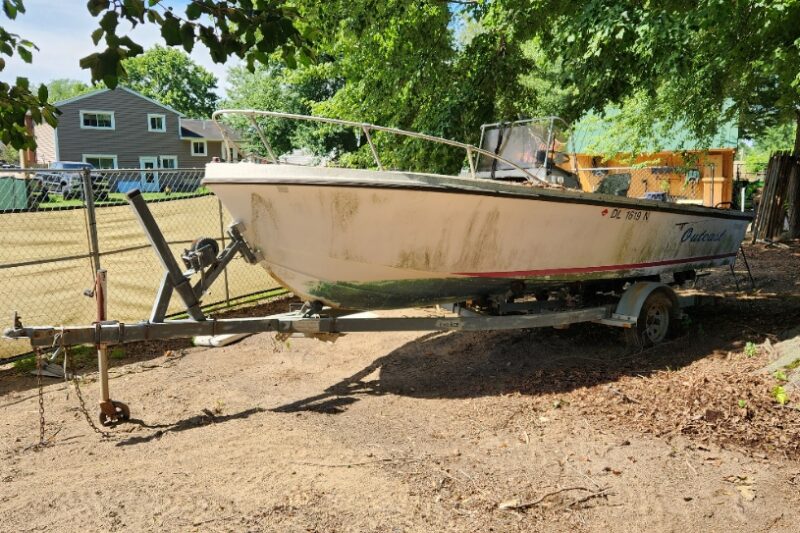
Whether you’re dealing with an old fishing boat, deteriorated sailboat, damaged cruiser, abandoned vessel, or non-running boat, our team can evaluate the project and determine a practical approach to getting it removed.
Baltimore Boat Scrapping FAQ
Can you remove boats that don’t run?
Yes. Non-running boats are common removal projects. Mechanical failures, electrical problems, trailer deterioration, and years of neglect can all leave a vessel unable to move.
Do you scrap fiberglass boats?
Yes. Fiberglass boats can be evaluated for professional boat scrapping and removal.
Can you remove aluminum boats?
Yes. Aluminum fishing boats and other aluminum vessels are common candidates for marine scrapping.
Can you remove a boat from a marina?
Yes. Marina removals can involve additional coordination, but Boat Scrapyards can work with owners and facilities to arrange the project.
What happens after the boat is removed?
The vessel can be evaluated for potentially recoverable components and materials, including metals, engines, trailers, marine hardware, electronics, batteries, and other equipment.
Not Every Boat Is Meant to Stay on the Chesapeake Forever
Boat owners often have a difficult time deciding when to let go.
There’s usually history involved.
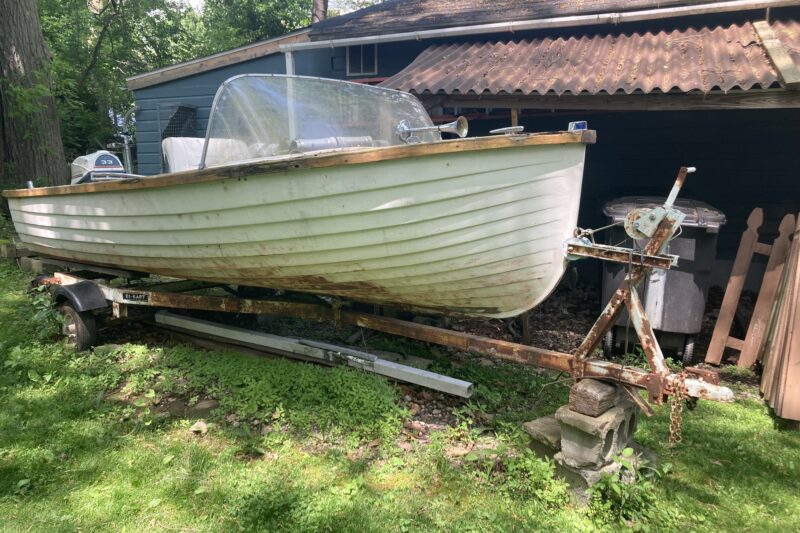
A sailboat may have carried a family through years of Chesapeake summers. A fishing boat may have been used for weekend trips. A cruiser may have been purchased with plans for extended vacations.
Then life changes.
The boat gets used less.
Maintenance gets postponed.
One repair becomes two.
Two become five.
Eventually, the vessel spends more time sitting than moving.
That’s when boat ownership can stop being recreational and start becoming an obligation.
Storage costs continue.
Insurance continues.
Repairs continue.
The boat continues taking up space.
For owners who have reached that point, professional boat scrapping provides another option.
Instead of spending another season trying to bring an aging vessel back to life, the owner can arrange removal and finally reclaim the space.
Chesapeake Weather Can Be Hard on an Aging Vessel
Baltimore’s marine environment presents a very different challenge from Florida.
Boats in the region experience hot summers, freezing winters, rain, snow, ice, humidity, strong winds, and repeated temperature changes.
Those seasonal extremes can be especially hard on older boats.
A vessel needs to be properly winterized before freezing temperatures arrive. Water trapped in plumbing or mechanical systems can create serious problems. Covers and exterior materials deteriorate over time. Metal components can corrode. Wood can experience moisture-related deterioration.
Then summer arrives and the process begins again.
For a properly maintained vessel, these conditions can be managed.
For a boat that’s been sitting untouched for years, they can accelerate deterioration.
An old vessel that already has structural or mechanical problems may eventually reach a point where restoration simply isn’t practical.
Marine Scrapping Is More Than Hauling an Old Boat Away
A boat is a complicated combination of different materials and systems.
Depending on its design, a vessel may contain:
- Fiberglass
- Aluminum
- Steel
- Stainless steel
- Copper wiring
- Bronze hardware
- Wood
- Plastics
- Marine batteries
- Fuel systems
- Plumbing
- Hydraulic components
- Electronics
- Engines
- Pumps
Each material can require different handling.
The location of the boat also matters.
A small fishing boat sitting on a trailer at an open property is one type of removal project.
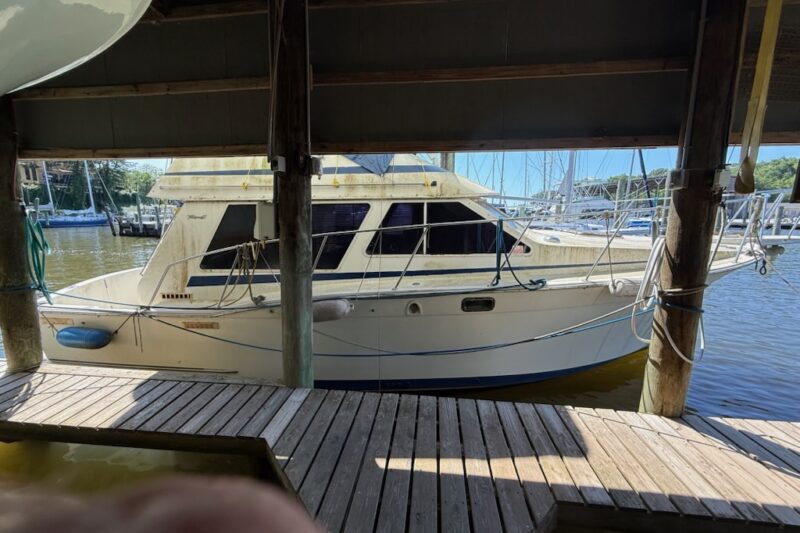
A sailboat stored at a crowded marina is another.
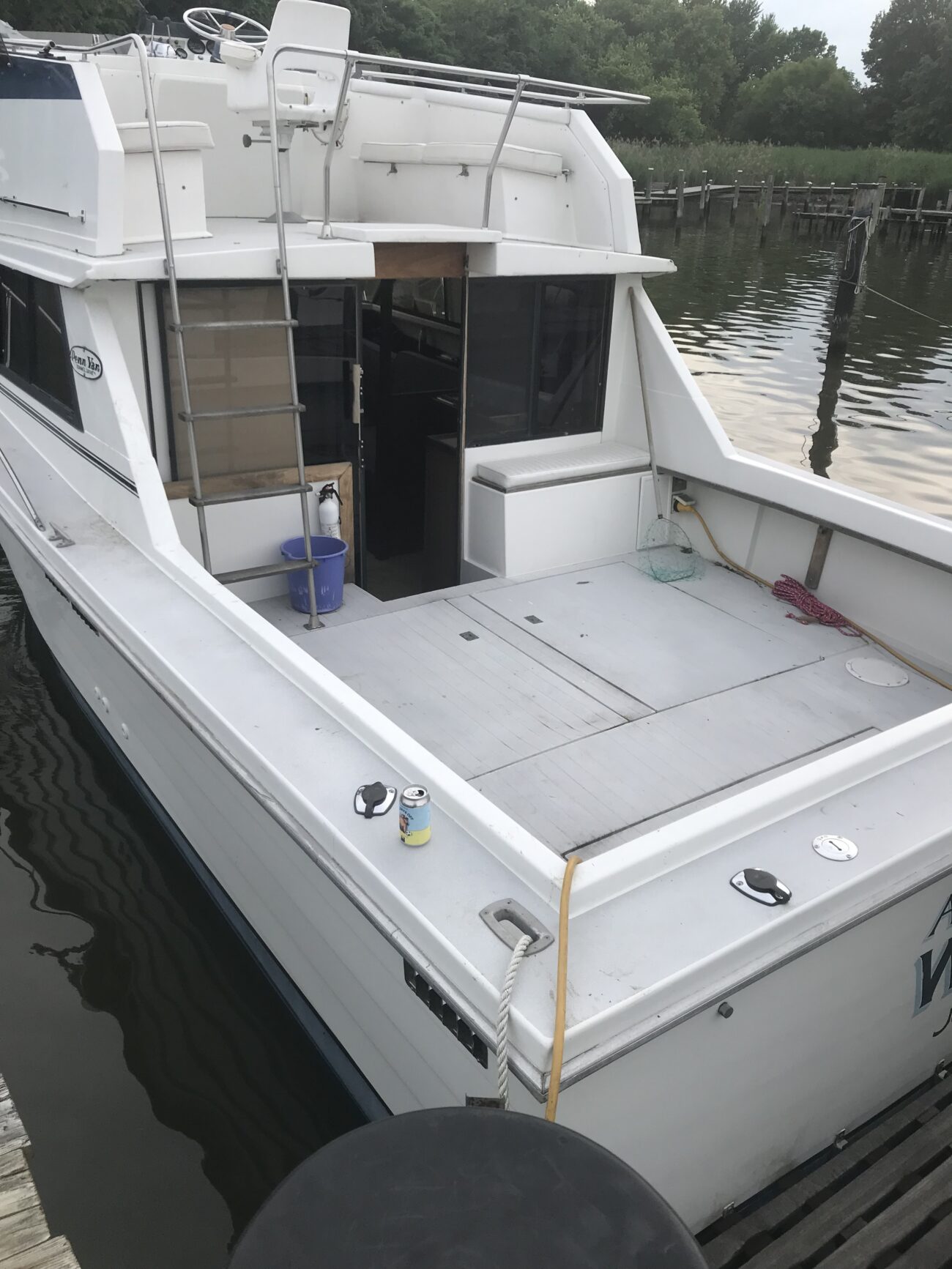
A larger cruiser located along the waterfront can create additional transportation and access considerations.
Boat Scrapyards evaluates the vessel, its condition, size, location, and accessibility before determining how the removal should be approached.
Why Baltimore Boats Become Scrapping Projects
There isn’t one reason every boat ends up at a scrapyard.
Several situations are particularly common.
Engine Failure
Older marine engines can be expensive to rebuild or replace. If the rest of the boat also needs work, repowering may not make financial sense.
Structural Deterioration
Soft decks, damaged transoms, hull cracks, leaks, and deteriorated stringers can turn a repair into a major reconstruction.
Winter Damage
Improper winterization can result in cracked plumbing, damaged systems, and other costly problems.
Storm Damage
High winds, flooding, debris, and severe weather can leave boats damaged beyond economical repair.
Corrosion
Saltwater and brackish water exposure can gradually affect hardware, electrical systems, engines, fittings, and other components.
Long-Term Neglect
A boat that hasn’t moved for several years may have numerous problems that aren’t immediately visible.
Storage Expenses
Even an unused boat can continue costing money through storage, insurance, maintenance, and registration.
Inherited Vessels
An inherited boat can become an unexpected responsibility for someone who doesn’t want to maintain it.
Failed Restoration Projects
Older boats can look like great restoration candidates when they’re first purchased.
Then the owner discovers what the project actually requires.
The work gets postponed.
Eventually, the boat becomes an abandoned project.
Professional boat removal can provide a way to finally clear it out.
The Types of Boats We Scrap
Baltimore and the Chesapeake Bay support a wide range of marine vessels.
Boat Scrapyards can evaluate projects involving:
- Fishing boats
- Aluminum boats
- Center consoles
- Sailboats
- Cabin cruisers
- Sportfishing boats
- Pontoon boats
- Deck boats
- Ski boats
- Wake boats
- Utility boats
- Yacht tenders
- Commercial work boats
- Personal watercraft
Some boats are removed because they’re severely damaged.
Others are simply too old to justify continued investment.
The vessel doesn’t have to be completely destroyed to become a candidate for scrapping.
Sometimes the owner has simply reached the point where keeping it no longer makes sense.
What’s Inside an Old Boat?
One reason marine scrapping requires specialized handling is the variety of components found inside a vessel.
An older boat may contain:
- Aluminum components
- Stainless steel hardware
- Copper wiring
- Bronze propellers
- Marine batteries
- Fuel tanks
- Anchors
- Chain
- Cleats
- Winches
- Steering systems
- Outboard motors
- Marine pumps
- Navigation equipment
- Trailer components
Not every component will have reusable value.
Condition, corrosion, age, and damage all matter.
Still, evaluating the vessel piece by piece is an important part of professional boat scrapping.
A boat isn’t simply one giant object.
It’s an assembly of materials and equipment that can require different considerations during removal.
Baltimore’s Waterfront Creates Unique Removal Situations
Baltimore-area boat owners may have vessels stored in many different locations.
A boat might be:
- At a marina
- On a private dock
- Behind a home
- In a boatyard
- At a storage facility
- On a trailer
- At a commercial property
- Along a waterfront business
Every location creates different logistical considerations.
Marinas may have scheduling requirements.
Private properties can have limited access.
Old trailers may no longer be safe to tow.
Larger vessels may require additional transportation planning.
Boat Scrapyards takes those circumstances into account before the removal begins.
Serving Baltimore and Surrounding Maryland Communities
Boat Scrapyards provides professional boat removal, boat scrapping, marine scrapping, and salvage services throughout Baltimore and the surrounding region.
Our service area includes:
- Baltimore
- Dundalk
- Essex
- Middle River
- Parkville
- Towson
- Glen Burnie
- Pasadena
- Annapolis
- Severna Park
- Brooklyn Park
- Riviera Beach
- Edgewater
- Arnold
- Pasadena
We also serve boat owners throughout the broader Chesapeake Bay region.
Whether the boat is stored on land or located near the water, the project can be evaluated based on its condition and accessibility.
What Happens After Your Boat Is Picked Up & Hauled Away?
Boat removal is only the beginning.
Once transported, the vessel can be evaluated according to its construction, condition, and onboard equipment.
Potentially useful materials may be identified where practical.
Metal components can be separated according to type.
Engines, electronics, trailers, marine hardware, batteries, pumps, and other components can be evaluated individually.
The remaining structure is then considered according to its material.
Fiberglass requires different considerations than aluminum.
Steel is different from copper.
Batteries and fuel-related equipment require additional attention.
That’s why marine scrapping is more involved than simply hauling a boat to a disposal facility.
Boat Scrapyards approaches each vessel individually.
When Selling the Boat Is No Longer the Answer
Some boat owners spend months trying to sell an unwanted vessel.
They list it online.
They reduce the price.
They advertise it as a project.
They offer it for parts.
Still, nobody wants it.
At that point, continuing to advertise the boat may not be worth the effort.
The owner isn’t looking for another buyer anymore.
They’re looking for a way to make the boat disappear.
Professional boat removal can provide that solution.
Boat Scrapyards helps Baltimore-area owners move past the frustration of dealing with unwanted vessels and reclaim the space they’re occupying.
Don’t Let Another Chesapeake Season Go By
An old boat rarely gets easier to deal with simply because it sits longer.
Another winter can bring more deterioration.
Another summer can expose additional problems.
Storage expenses can continue.
And the vessel remains exactly where it was.
If you’ve decided that your boat isn’t worth repairing, restoring, or maintaining, professional boat scrapping can provide a practical next step.
Boat Scrapyards provides boat scrapping, marine scrapping, salvage, and boat removal services throughout Baltimore and the surrounding Chesapeake Bay region.
Whether you’re dealing with an old sailboat, damaged fishing vessel, aging cruiser, aluminum boat, abandoned project, or non-running vessel, our team can help you move forward.
Contact Boat Scrapyards today for a free estimate and take the first step toward getting your unwanted boat removed.