St. Augustine has a long and unmistakable connection to the water. From the Matanzas River and Intracoastal Waterway to St. Augustine Inlet and the Atlantic coast, boats are part of everyday life throughout the area.
Fishing boats, sailboats, center consoles, cruisers, pontoons, skiffs, and other recreational vessels can be found around residential properties, marinas, boatyards, storage facilities, and waterfront locations.
But eventually, every boat reaches a point where the owner has to decide what comes next.
Maybe the engine has failed. Maybe the hull has deteriorated. Maybe a storm damaged the vessel. Maybe the boat has been sitting on a trailer for years. Or perhaps an unfinished restoration project has simply become more expensive and time-consuming than expected.
Whatever the reason, an unwanted boat can become a serious property problem.
Boat Scrapyards helps St. Augustine-area owners deal with old, damaged, abandoned, non-running, and unwanted vessels through boat removal, hauling, marine salvage, dismantling, scrapping, and disposal.
St. Augustine Boat Removal FAQs
Can you remove boats that no longer run?
Yes. Many boat removal projects involve vessels that cannot operate under their own power. The condition of the engine, trailer, hull, and access location all factor into the removal process.
What types of boats can be removed?
Projects can involve fishing boats, sailboats, cruisers, center consoles, pontoon boats, runabouts, skiffs, fiberglass vessels, aluminum boats, and other marine craft.
Do you remove boats from trailers?
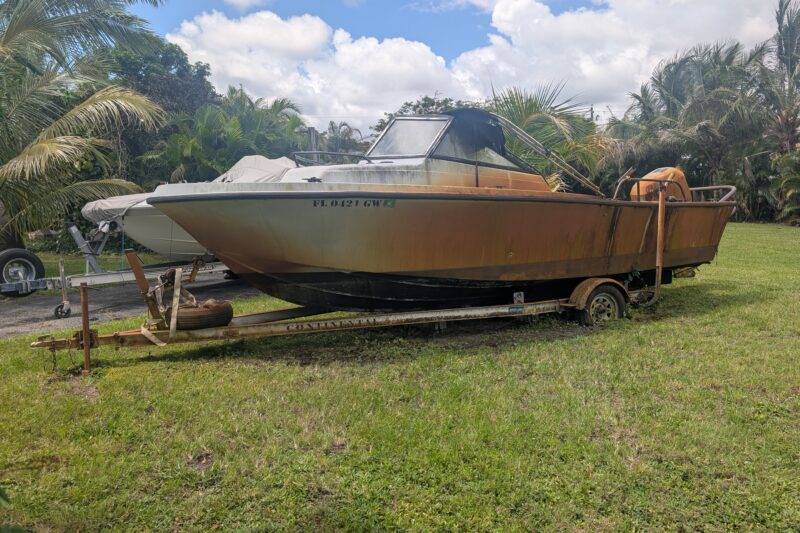
Boat trailers can be part of the removal project. An older trailer may have deteriorated tires, seized bearings, damaged axles, rust, or other problems that make conventional towing impractical.
What if my boat is sitting in a yard?
A boat stored on residential or commercial property can be evaluated for removal based on its size, location, condition, and accessibility.
Can fiberglass boats be scrapped?
Fiberglass boats require different handling from metal vessels. The hull, mechanical equipment, hardware, and other materials may need to be addressed separately.
What happens to an old boat after removal?
The vessel can be assessed for salvageable equipment, reusable components, scrap metals, and other materials. The final handling depends on the boat’s condition and construction.
Why St. Augustine Owners End Up With Unwanted Boats
Buying a boat is often an exciting decision.
Getting rid of one can be considerably less exciting.
A boat may have been purchased for weekend fishing trips that eventually stopped happening. A family may inherit a vessel without having any use for it. An owner may relocate inland. A mechanical failure may leave the boat sitting on its trailer.
Then months turn into years.
The vessel remains in the driveway.
Or it sits behind a building.
Or it occupies a marina or storage space.
As time passes, the boat generally becomes more difficult to deal with.
Weather exposure can affect the exterior. Mechanical systems can deteriorate. Wiring can corrode. Upholstery can break down. Trailer tires can deteriorate from age and exposure.
An owner who originally planned to repair the vessel may eventually realize that removing it makes more sense than continuing to store it.
That is where professional boat removal becomes useful.
When Repairing an Old Boat No Longer Makes Sense
There is nothing wrong with repairing a boat when the investment makes sense.
The problem occurs when repair costs continue accumulating without a realistic end point.
An owner may start with an engine problem.
Then additional issues appear.
The fuel system needs work. Electrical components need replacement. The trailer requires repairs. The deck needs attention. The interior is deteriorated. The electronics are outdated.
Suddenly, a relatively simple repair has turned into a complete restoration.
Before continuing, owners should look at the entire project rather than focusing on one repair at a time.
What will the boat be worth when finished?
How much will the remaining repairs cost?
How much time will be required?
Will the boat actually be used?
If the project no longer makes financial or practical sense, boat removal can be the logical next step.
Boat Scrapyards gives St. Augustine-area owners an alternative to allowing an unwanted vessel to remain on their property indefinitely.
Boats We Remove, Salvage and Dismantle
Every vessel is different, but several types commonly become removal projects.
Fishing Boats
Fishing boats can contain engines, electronics, fuel systems, wiring, aluminum, stainless hardware, and other components. Older vessels may become difficult to maintain as systems age.
Center Consoles
Center consoles are common around Florida waterways and can range from small fishing boats to larger offshore vessels. When the engine or hull reaches the end of its useful life, removal may become necessary.
Sailboats
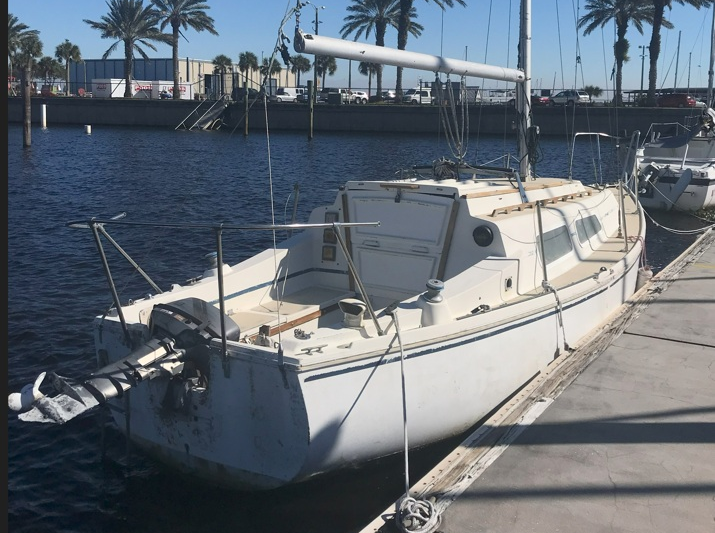
Older sailboats can develop problems involving rigging, decks, sails, engines, interiors, and hull structures. Their size can also make transportation complicated.
Cruisers
Cruisers often contain cabins, plumbing, electrical systems, engines, appliances, and other equipment. A major mechanical or structural problem can turn an aging cruiser into a substantial restoration project.
Pontoon Boats
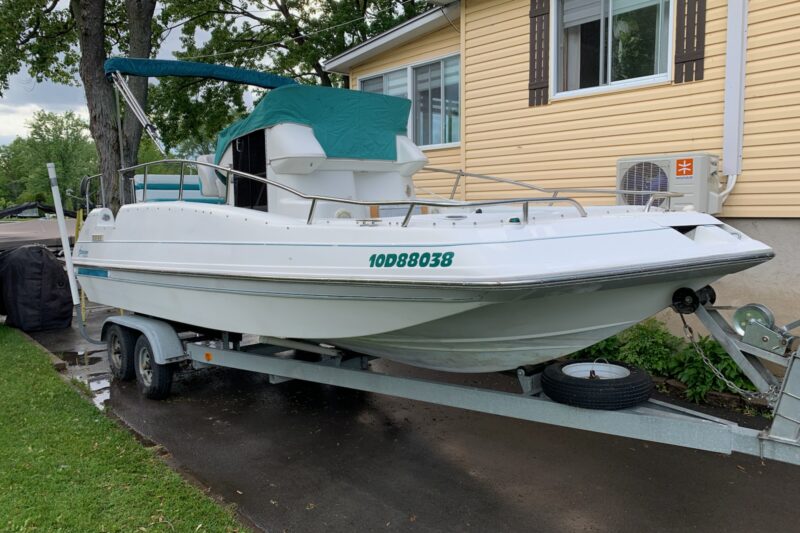
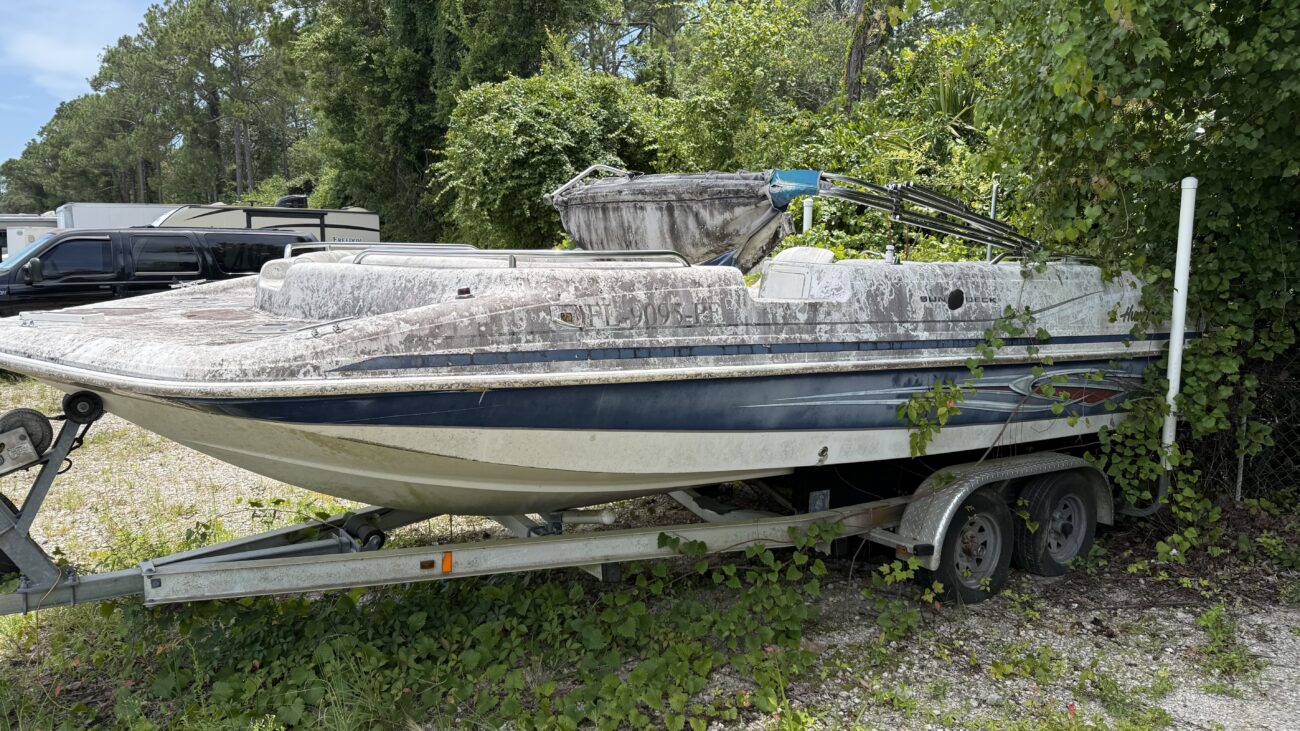
Pontoons can deteriorate through problems involving decking, furniture, fencing, flotation systems, and engines. Older pontoons may eventually become more difficult to justify repairing.
Fiberglass Boats
Fiberglass is widely used in recreational vessels, but fiberglass boats can create disposal challenges when they become too damaged or deteriorated to use.
Aluminum Boats
Aluminum vessels can contain recoverable metal and other components that may be evaluated during the scrapping process.
St. Augustine’s Waterways Create Unique Boat Removal Situations
St. Augustine is not simply a coastal city with boats parked around it.
Its waterways connect residential boating areas, fishing destinations, marinas, commercial waterfront properties, and the Atlantic.
The Matanzas River runs along the historic waterfront, while the Intracoastal Waterway provides another major route through the region.
St. Augustine Inlet connects the area’s inland waterways with the Atlantic Ocean.
That creates a wide variety of boat storage and removal situations.
One owner may have a small fishing boat in a residential driveway.
Another may have an aging sailboat at a marina.
A third may have a damaged vessel on a trailer behind a commercial property.
The removal strategy can be different for every situation.
Removing a Boat From a Residential Property
A boat sitting in a driveway can become a surprisingly large obstacle.
It takes up parking space.
It may prevent other vehicles from being stored properly.
It can make landscaping or property improvements more difficult.
And if the boat has been sitting there for years, it may become increasingly unattractive and difficult to move.
The situation becomes even more challenging when the trailer is no longer roadworthy.
Old trailer tires can dry out. Bearings can seize. Axles can rust. Brakes can fail.
That means an owner cannot necessarily connect the trailer to a truck and simply drive away.
Professional boat hauling can address the vessel as a removal project rather than assuming that an old trailer is ready for the highway.
Marina and Waterfront Boat Removal
Boat removal around marinas and waterfront properties requires careful attention to access.
There may be docks, neighboring boats, buildings, vehicles, storage areas, narrow lanes, and other obstacles surrounding the vessel.
A non-running boat may require a different approach from an operational vessel.
For marina owners and property managers, unwanted boats can also consume valuable space.
A vessel that has been sitting unused can prevent that space from being used for another purpose.
Removing an unwanted boat can help clear the area and resolve a long-standing storage issue.
Owners arranging a removal should be prepared to provide basic information about the vessel, including its approximate size, location, condition, trailer status, and accessibility.
Storm-Damaged and Weathered Boats
Florida’s coastal environment exposes boats to substantial weather conditions.
Sun, humidity, rain, wind, salt air, and severe weather can all contribute to deterioration.
A boat that is regularly maintained can withstand years of use.
A boat that has been neglected can deteriorate much faster.
Storm damage can make the situation more complicated.
A vessel may experience damage to the hull, deck, windshield, engine, electronics, trailer, or interior. Once several systems are affected, the cost of restoring the boat can increase rapidly.
Some owners decide to repair.
Others decide the boat has reached the end of its practical life.
For those choosing removal, Boat Scrapyards can help address the vessel as a marine salvage and disposal project.
Fiberglass Boat Disposal in St. Augustine
Fiberglass boats are common throughout Florida, but disposing of an unwanted fiberglass vessel is not the same as getting rid of an old metal object.
The hull is constructed from composite material.
Inside the vessel, there may be wood, foam, wiring, fuel systems, engines, batteries, electronics, hardware, and other components.
The boat therefore needs to be considered as a combination of different materials.
Some components may have salvage potential.
Metal may be separated for scrap handling.
Mechanical equipment may be evaluated independently.
The remaining vessel materials require appropriate handling.
For an owner with a large fiberglass boat sitting unused, having the entire vessel removed can eliminate the difficult task of figuring out how to dismantle it personally.
Boat Trailers Can Become Disposal Problems Too
The boat and trailer often become one combined problem.
A trailer that was perfectly functional years ago may now be unusable.
Tires can deteriorate simply from age.
Wheel bearings can seize.
Lights and wiring can fail.
Brakes may stop functioning.
Frames and crossmembers can develop corrosion.
If the boat has been stationary for a long time, the trailer should be evaluated before anyone attempts to tow it.
This is particularly important when an owner is preparing to sell a property and needs the boat gone quickly.
Instead of investing money into making an obsolete trailer roadworthy, the owner may prefer to arrange professional removal of the entire setup.
Marine Salvage Can Give Old Boats a Second Life as Materials
Not every old boat is valuable as a functioning vessel.
That does not necessarily mean everything on it is worthless.
An older boat may contain aluminum, stainless steel, copper wiring, engines, transmissions, marine hardware, electronics, trailer components, and other materials.
Depending on the condition, some equipment may be salvageable.
Other materials may be appropriate for scrapping.
Dismantling allows the vessel to be considered piece by piece rather than treating the entire boat as a single object.
The approach can vary considerably.
A damaged aluminum fishing boat may have a different salvage profile from a deteriorated fiberglass cruiser.
A partially intact vessel may contain more usable equipment than one that has been exposed to the elements for years.
The important first step is removing the unwanted vessel from the owner’s property or storage location.
What Happens After Boat Removal?
Once a vessel is hauled away, it can be evaluated according to its condition and construction.
Potentially useful components can be identified.
Metal materials can be separated where appropriate.
Engines, trailers, hardware, electronics, and other components may be addressed independently.
A boat that is beyond practical repair may still contain materials with scrap or salvage value.
The final process depends on the vessel.
There is no one-size-fits-all outcome for every boat.
What matters to the owner is that the unwanted vessel is no longer consuming valuable space or creating an ongoing maintenance problem.
Why Choose Boat Scrapyards?
Boat disposal is not the same as ordinary household junk removal.
Boats are large.
They can be heavy.
They may contain engines, fuel systems, batteries, electrical components, trailers, fiberglass, aluminum, and other marine equipment.
Some are stored in difficult locations.
Others cannot move under their own power.
Boat Scrapyards specializes in addressing these marine removal situations.
The process starts with the basic facts about the vessel.
What kind of boat is it?
How long is it?
Where is it located?
Does it run?
Is it on a trailer?
What condition is the boat in?
Can the removal location be accessed?
Those details help determine what the project involves.
For St. Augustine owners who have been staring at the same unwanted boat for months or years, getting the removal process started can be the easiest way to finally clear the problem.
Clear Out the Boat and Reclaim the Space
An unwanted boat can take up valuable property for a very long time.
The owner keeps thinking about fixing it.
The project keeps getting delayed.
The trailer keeps deteriorating.
The vessel keeps sitting outside.
Eventually, the question becomes simple:
What is the boat still doing here?
Boat Scrapyards helps St. Augustine-area property owners, boat owners, waterfront businesses, and other customers address unwanted vessels through removal, hauling, marine salvage, dismantling, scrapping, and disposal.
Whether the boat is a neglected fishing vessel, old sailboat, damaged cruiser, fiberglass project, aluminum skiff, pontoon, center console, or non-running boat on an aging trailer, getting it removed can finally eliminate the problem.
You can stop paying for space you are not using.
You can stop looking at an unfinished restoration project.
You can stop worrying about how to move a boat that has not been operational for years.
Clear the vessel.
Clear the property.
Move on to the next project.
Boat Scrapyards is ready to help St. Augustine-area owners take the next step toward getting unwanted boats hauled away and properly handled.