Long Beach is surrounded by one of Southern California’s most active marine environments. Boats of all sizes move through the area’s waterways, marinas, harbor facilities, storage yards, and waterfront properties. For boat owners, that access to the water is a major benefit.
But eventually, every vessel reaches a point where it is no longer worth keeping.
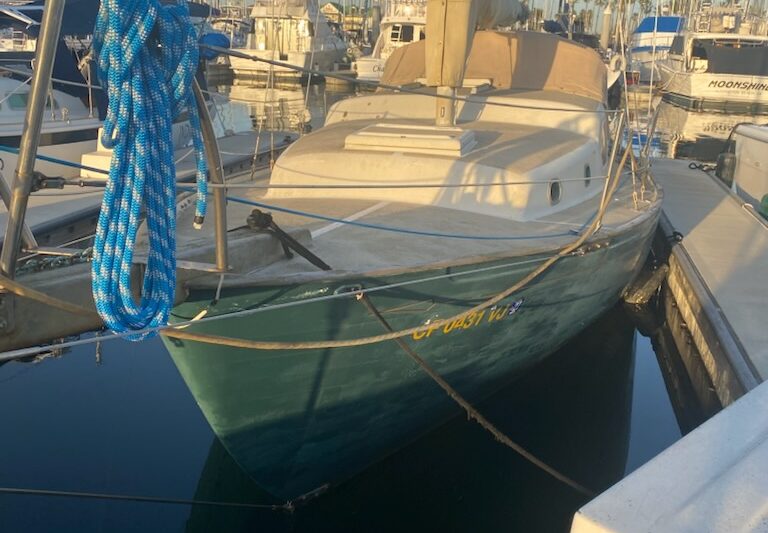
An old boat may have spent years in the harbor before mechanical problems, structural deterioration, or simple age made it difficult to operate. A recreational boat might sit on a trailer behind a home because its owner no longer uses it. A fishing boat may have suffered damage that makes restoration financially unrealistic. A commercial or work vessel may eventually become obsolete and occupy valuable space at a marine facility.
When that happens, professional boat removal and marine scrapping can provide a practical solution.
Boat Scrapyards helps owners dealing with unwanted, damaged, deteriorated, abandoned, and non-running boats in Long Beach and the surrounding Southern California area. Instead of allowing an old vessel to continue consuming storage space and money, owners can begin the process of getting the boat removed and handled appropriately.
Long Beach Boat Removal FAQs
Can you remove a boat that does not run?
Yes. Non-running boats can be candidates for removal. The vessel’s size, condition, weight, location, and accessibility determine what type of hauling approach may be necessary.
What types of boats can be scrapped?
Boat Scrapyards can receive inquiries involving fishing boats, sailboats, cruisers, fiberglass boats, aluminum boats, center consoles, runabouts, pontoons, work boats, commercial vessels, and other unwanted watercraft.
Can you remove boats from marinas or storage facilities?
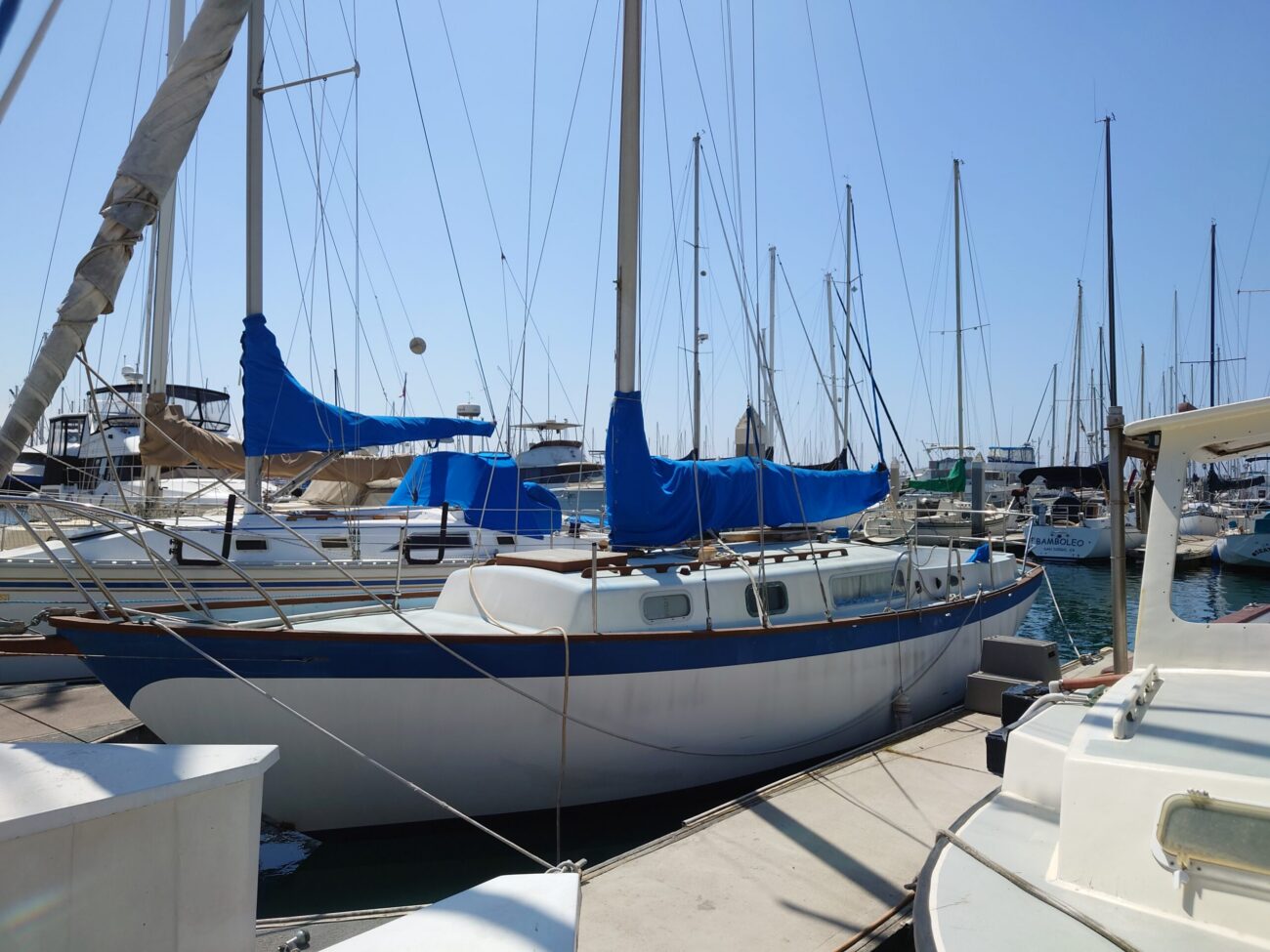
Boat removal may be possible from marinas, boatyards, and storage properties when the owner or authorized party has the necessary permission to have the vessel removed.
Do you remove boats from private property?
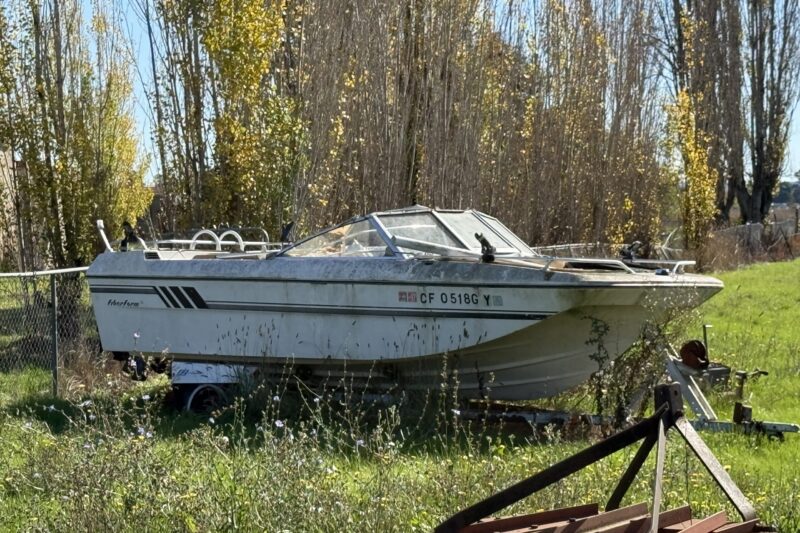
Residential boat removal may be possible from driveways, yards, side lots, storage areas, and other accessible private properties.
What if my boat is sitting on a bad trailer?
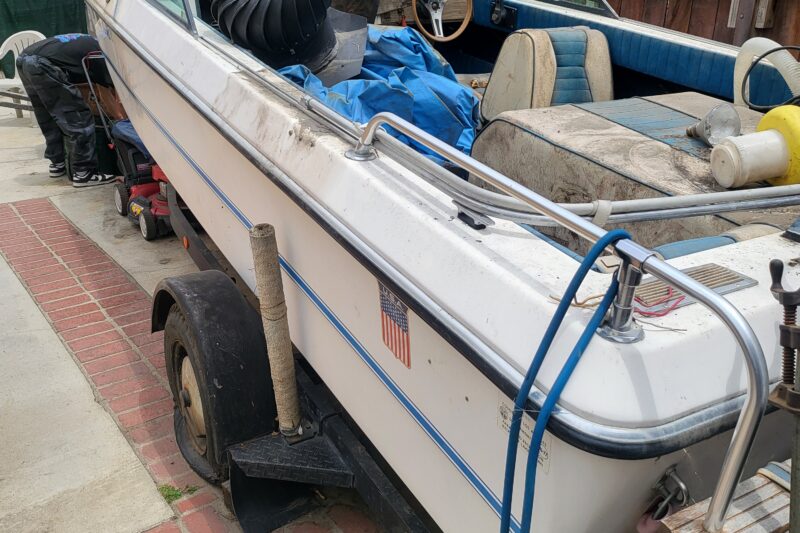
A deteriorated trailer can make conventional towing impossible. Flat tires, seized wheels, damaged axles, corrosion, or structural problems should be mentioned when arranging removal.
Can abandoned boats be removed?
Abandoned vessels require proper authorization before disposal. The party requesting removal should establish that they have the legal authority to have the boat removed.
Should I repair my boat before having it removed?
If you have already decided that restoration is not worthwhile, extensive repairs may not make financial sense. The boat can be evaluated in its existing condition to determine the removal requirements.
Long Beach Has a Boat Disposal Problem of Its Own
Long Beach’s connection to the water is impossible to miss.
The city’s waterfront, marina facilities, harbor, and proximity to major Southern California boating destinations mean that boats are constantly entering, leaving, being stored, repaired, and maintained throughout the region.
That also means aging vessels eventually accumulate.
Some owners keep boats for decades.
Others purchase project vessels with plans to restore them.
Some boats are inherited.
Others suffer damage and never return to regular service.
Eventually, a vessel can become an obstacle rather than an asset.
The owner still has to store it.
The marina still has to accommodate it.
The trailer still takes up space.
And someone eventually has to figure out how the boat is going to leave the property.
That is where professional boat removal becomes valuable.
When an Old Boat Stops Making Financial Sense
A boat does not necessarily have to be completely destroyed before scrapping becomes an option.
Sometimes the economics simply stop working.
An older vessel may need a new engine, electrical repairs, hull work, trailer repairs, interior replacement, and additional mechanical attention.
Each individual repair may sound manageable.
Together, they can become an enormous bill.
A boat owner might start with the engine and discover that the fuel system needs work. Then the electrical system needs attention. The trailer is no longer roadworthy. The hull requires repairs.
Suddenly, the owner is looking at a restoration rather than a repair.
If the boat’s value does not justify the investment, scrapping can be the more sensible decision.
The Types of Boats We Scrap, Salvage & Dispose Of
Boat Scrapyards can receive inquiries involving a wide range of vessels.
Long Beach and the surrounding harbor region can present removal projects involving everything from smaller recreational craft to larger commercial and working vessels.
Potential projects include:
- Fishing boats
- Sailboats
- Fiberglass boats
- Aluminum boats
- Cabin cruisers
- Bowriders
- Runabouts
- Center-console boats
- Pontoon boats
- Small yachts
- Utility boats
- Work boats
- Commercial vessels
- Damaged boats
- Non-running boats
- Boats with deteriorated trailers
The boat’s construction is important, but so is its location.
A smaller vessel at a difficult residential property may require more planning than a larger boat sitting in an open yard.
Access, trailer condition, hull condition, and surrounding structures all need to be considered.
Fiberglass Boat Disposal in Long Beach
Fiberglass boats are common throughout Southern California.
They are built to last, but “built to last” does not mean “built to last forever.”
Years of sun, moisture, use, and deferred maintenance can eventually take their toll.
An old fiberglass boat can develop problems involving the hull, deck, interior, wiring, hardware, engine, fuel system, and other components.
Once the vessel has deteriorated far enough, the owner may discover that disposal is more difficult than expected.
Fiberglass is not handled in the same way as a straightforward metal hull.
The boat may contain multiple materials that need to be considered separately.
Attempting to dismantle a large fiberglass vessel personally can also create an enormous amount of work.
For an owner who simply wants the boat removed, professional boat disposal can provide a much easier alternative.
Aluminum Boats and Marine Scrapping
Aluminum boats are another common category of unwanted vessel.
Fishing boats, utility boats, and recreational craft frequently use aluminum because it is durable and relatively lightweight.
When an aluminum boat reaches the end of its useful life, its metal construction can make it particularly relevant to the marine scrapping process.
The vessel may also contain:
- Stainless steel hardware
- Copper wiring
- Steel components
- Engines
- Propellers
- Fuel tanks
- Batteries
- Trailer components
- Marine electronics
The actual scrap value of any vessel depends on its size, weight, construction, condition, equipment, transportation requirements, and current market conditions.
An owner should therefore avoid assuming that an old aluminum boat has a guaranteed cash value.
The entire project needs to be evaluated.
Southern California Sun Can Be Hard on Boats Too
When people think about boat deterioration, they often focus on water.
But Southern California’s intense sun can be just as relevant to an aging vessel.
Years of ultraviolet exposure can affect covers, upholstery, plastics, seals, finishes, and other components.
A boat stored outdoors without adequate protection can slowly deteriorate even when it is not actively being used.
Add moisture, marine exposure, mechanical neglect, and age to the equation, and the result can be a vessel that is far more expensive to restore than its owner expected.
For boats that have been sitting unused for years, the combination of sun and neglect can make removal the most practical option.
Long Beach Harbor and the Challenge of Older Vessels
Harbor environments create their own set of challenges.
Boats operating around Southern California’s marine waters deal with moisture, saltwater exposure, corrosion, marine growth, and constant mechanical demands.
A working vessel may receive regular maintenance because it needs to remain operational.
An abandoned or neglected boat does not receive that same attention.
Once maintenance stops, deterioration can compound.
Hardware begins to corrode.
Electrical connections develop problems.
Engines sit idle.
Moving components become unreliable.
The vessel becomes increasingly difficult to operate—and eventually increasingly difficult to remove.
That is why professional boat removal is useful even when the boat is no longer seaworthy.
Boat Trailers Can Become a Major Problem
Not every Long Beach boat is permanently kept at the waterfront.
Many smaller recreational boats are transported on trailers.
A trailer is convenient when it works.
Years of neglect can change that.
A trailer may have:
- Flat tires
- Seized bearings
- Damaged wheels
- Corroded axles
- Structural deterioration
- Broken lights
- Rusted components
If the trailer can no longer safely travel on the road, simply hitching it to a truck is not a practical solution.
The owner may then be stuck with a boat that cannot be sold or transported easily.
Professional removal can account for the condition of the trailer when determining how the vessel needs to be handled.
Removing a Boat From a Long Beach Property
Residential boat removal can be more complicated than owners expect.
A boat may be sitting beside a garage or in a driveway where access appears straightforward.
Then there are the obstacles.
Fences.
Parked vehicles.
Trees.
Walls.
Landscaping.
Narrow driveways.
Neighboring structures.
All of these can affect the removal process.
This is particularly important in established Southern California neighborhoods where properties may have limited space between structures.
Providing accurate information and photographs of the boat and surrounding access area can help establish what the project requires.
Marina, Boatyard & Storage Facility Boat Removal
Long Beach’s marine infrastructure means unwanted boats can also create problems for businesses.
A marina or storage facility may have a vessel that has not moved in years.
The owner may have stopped paying attention to it.
Repairs may have been abandoned.
The boat may have become too expensive to restore.
Meanwhile, the vessel continues occupying valuable space.
For a marina operator, an unused boat can mean a lost slip or storage position.
Once the appropriate ownership and authorization issues have been addressed, professional boat removal can help clear the space.
That can make room for an active customer and improve the overall condition of the facility.
Abandoned Boats Need Proper Handling
An abandoned vessel can be more complicated than a normal removal.
Before a boat is disposed of, the party requesting removal needs to establish that they have the authority to do so.
This can be particularly important for marina operators, property managers, storage businesses, and owners who discover an unwanted boat left on their property.
Once authorization is properly established, removal can move forward based on the condition and location of the vessel.
The goal is to eliminate the physical problem without creating a separate ownership problem.
Commercial and Work Boats Have Different Removal Challenges
Long Beach’s waterfront is not limited to recreational boating.
Commercial and working vessels can also eventually become obsolete or uneconomical to maintain.
A work boat may have served a business for many years before mechanical problems or changing business needs make it unnecessary.
These vessels can be larger and heavier than recreational boats, creating additional logistical considerations.
Their equipment can also be more extensive.
Engines, tanks, electrical systems, pumps, commercial equipment, and other components may all be part of the removal project.
Professional evaluation becomes particularly important when dealing with larger or specialized vessels.
Marine Scrapping Involves the Whole Boat
An old boat is a collection of materials rather than one simple object.
Depending on the vessel, marine scrapping may involve:
- Aluminum
- Steel
- Stainless steel
- Copper wiring
- Bronze hardware
- Engines
- Outboard motors
- Propellers
- Fuel tanks
- Batteries
- Pumps
- Marine electronics
- Electrical components
- Trailer parts
- Railings
- Hardware
Different portions of the vessel can have different handling requirements.
Metal components may be separated for scrapping.
Mechanical equipment can be handled independently.
Trailer components can be separated from the hull.
Other materials may require different disposal methods.
This is why boat scrapping is a specialized process rather than ordinary junk hauling.
What Happens After Your Boat Is Picked Up & Hauled Away?
After removal, the vessel can be evaluated according to its materials, construction, condition, and components.
Metal materials may be separated for scrapping.
Mechanical components may be handled independently.
Trailer parts can be separated from the vessel.
Other materials may require their own disposal methods.
The exact process varies depending on the boat.
For the owner, the most important result is much simpler.
The boat is gone.
The driveway is clear.
The marina space is available.
The storage yard has room again.
And an old vessel that has been sitting around for years is finally no longer the owner’s problem.
Boat Removal Throughout Long Beach and the Greater Los Angeles Area
Long Beach is part of a much larger Southern California boating market.
The surrounding region includes waterfront communities, marinas, boatyards, residential properties, storage facilities, and commercial marine operations.
That means an unwanted boat can turn up almost anywhere.
It may be sitting near the harbor.
It may be stored inland.
It may be parked behind a house.
It may be occupying space at a boatyard.
It may be sitting on a deteriorated trailer that has not moved in years.
Boat Scrapyards can help owners begin by providing information about the vessel, its condition, location, and accessibility.
Don’t Let an Old Boat Become a Permanent Fixture
An unwanted boat has a habit of becoming permanent.
The owner keeps thinking they will repair it.
The marina keeps storing it.
The trailer keeps sitting there.
Another year passes.
Then another.
Meanwhile, the vessel continues to deteriorate.
If you already know you are not going to use or restore the boat, continuing to store it may not make sense.
Boat Scrapyards provides Long Beach-area owners with a practical starting point for boat removal and marine scrapping.
Whether you have an old fishing boat, damaged sailboat, fiberglass cruiser, aluminum vessel, commercial work boat, or non-running recreational craft, you can begin by providing the basic information about the vessel.
You do not need to restore an unwanted boat just to make it easier to dispose of.
You do not need to spend thousands of dollars repairing a vessel you no longer want.
And you do not need to spend your weekends trying to dismantle a large boat yourself.
When a vessel has reached the end of its useful life, professional boat removal can help clear the property and put the problem behind you.
For boat owners in Long Beach, Boat Scrapyards is ready to help turn an unwanted vessel into a completed removal and marine scrapping project.