Santa Barbara is one of California’s most recognizable coastal communities, with a strong connection to boating, fishing, sailing, marinas, waterfront businesses, and recreational vessels. Around Santa Barbara Harbor and the surrounding Central Coast, boats are part of everyday life.
But every boat eventually reaches a point where ownership stops being enjoyable.
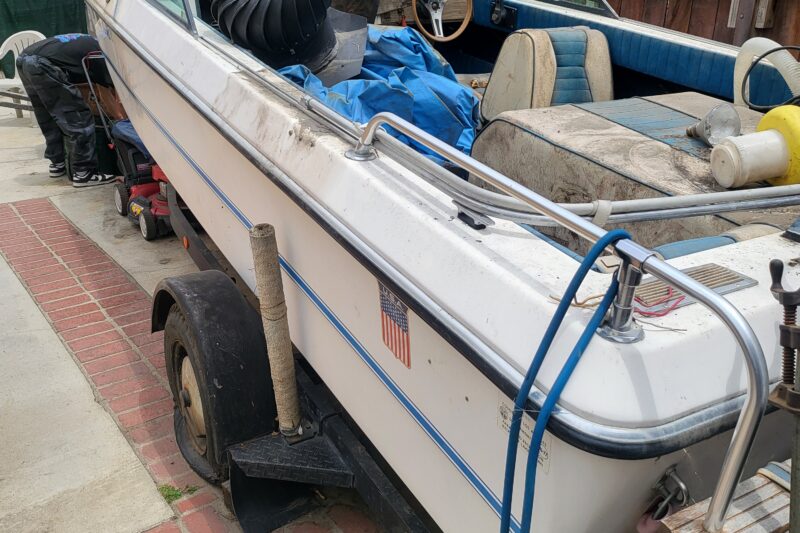
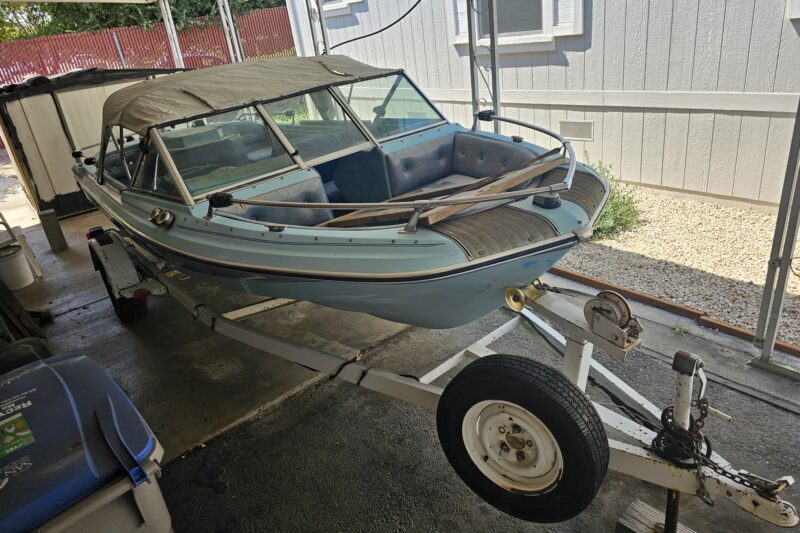
An old fishing boat can become too expensive to repair. A sailboat may sit unused for years while its systems deteriorate. A fiberglass project boat can become an unfinished restoration taking up valuable property space. A damaged vessel may no longer be safe or economical to put back into service.
When that happens, the problem is no longer how to maintain the boat. The problem is how to get it removed.
Boat Scrapyards provides boat removal and boat scrapping solutions for unwanted vessels in Santa Barbara, helping owners clear out boats that have become damaged, neglected, obsolete, or simply no longer wanted. From boats stored on trailers to larger vessels requiring more involved removal planning, the goal is to make the process straightforward and practical.
Santa Barbara Boat Scrapping FAQs
Do you remove old boats in Santa Barbara?
Boat Scrapyards helps boat owners address the removal of unwanted vessels, including older, damaged, non-running, and neglected boats. The removal process depends on the boat’s location, size, condition, and accessibility.
Can you remove a boat that does not run?
A boat does not necessarily need to be operational to qualify for removal. Non-running engines, deteriorated trailers, and other mechanical problems are common reasons owners seek professional boat removal.
What types of boats can be scrapped?
Depending on the individual vessel, removal and scrapping can apply to fishing boats, sailboats, runabouts, aluminum boats, fiberglass boats, recreational vessels, and other marine craft.
Do you remove boat trailers?
An old boat and its trailer often become one disposal problem. Trailer condition can be evaluated as part of planning the overall removal.
Can fiberglass boats be scrapped?
Fiberglass vessels require a different handling approach than metal boats. Their construction, condition, and remaining components help determine the appropriate disposal or processing method.
What happens after a boat is removed?
Depending on the vessel, components and materials may be evaluated for salvage or scrap. Usable parts can be separated, while other materials can be handled according to their characteristics and disposal requirements.
Why Santa Barbara Boat Owners Eventually Need Removal Services
Buying a boat is usually an investment in recreation, travel, fishing, or time on the water.
Getting rid of one can be considerably harder.
Many older vessels remain in use for years because their owners continue making repairs. Eventually, however, maintenance costs can exceed the practical value of the boat.
One repair leads to another. The engine needs attention. Electrical systems stop working. Upholstery deteriorates. The trailer needs tires and bearings. The hull requires work. Safety equipment becomes outdated.
At some point, the owner has to decide whether the boat is worth saving.
For some vessels, restoration is absolutely worthwhile. For others, scrapping or disposal is the more sensible choice.
Santa Barbara’s coastal environment can add another layer to the problem. Marine equipment is constantly exposed to salt air, moisture, sun, wind, and changing weather conditions. Over many years, those conditions can contribute to deterioration throughout the vessel.
A boat that looked manageable several years ago may eventually become a major removal project.
The Real Problem Is Often the Boat’s Location
The boat itself may not be the most difficult part of the job.
Location matters.
A vessel sitting in an open storage yard is one situation. A boat positioned behind a narrow gate or surrounded by landscaping, vehicles, structures, or other equipment is completely different.
Trailers can create additional problems.
A trailer that has been sitting for years may have flat tires, seized bearings, damaged axles, rusted components, or other issues that make normal towing impractical.
If the boat itself is not operational, moving it can become even more challenging.
This is why professional boat removal begins with understanding the entire situation rather than simply looking at the vessel.
Boat Scrapyards can help Santa Barbara property owners evaluate the basic removal circumstances and determine what needs to happen to get the unwanted boat out.
Boats We Scrap, Salvage & Dispose Of
Every vessel is different, and old boats come in many forms.
Fishing Boats
Fishing vessels can accumulate years of equipment, electronics, engines, fuel systems, fishing gear, and hardware. Once the boat becomes too costly to maintain, removal may make more sense than continued repairs.
Sailboats
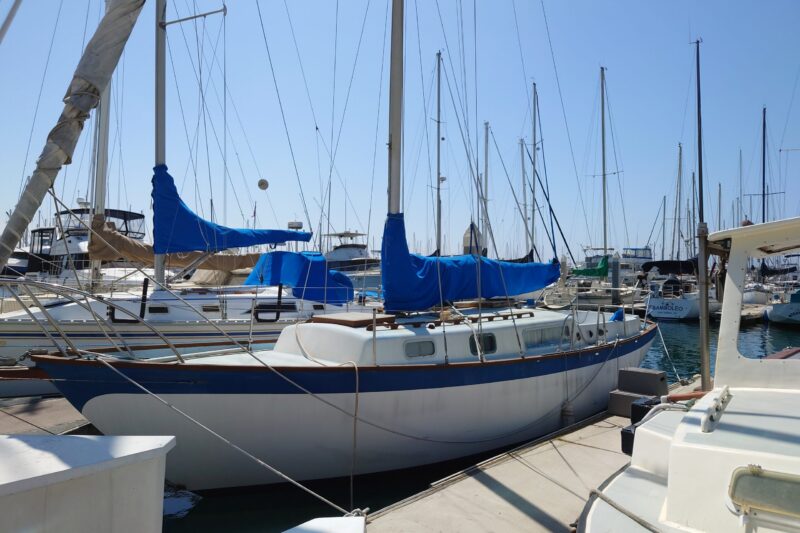
Sailboats can become particularly complicated disposal projects when rigging, sails, engines, decks, interiors, or hulls have deteriorated. An abandoned restoration project can quickly become a long-term storage problem.
Recreational Boats
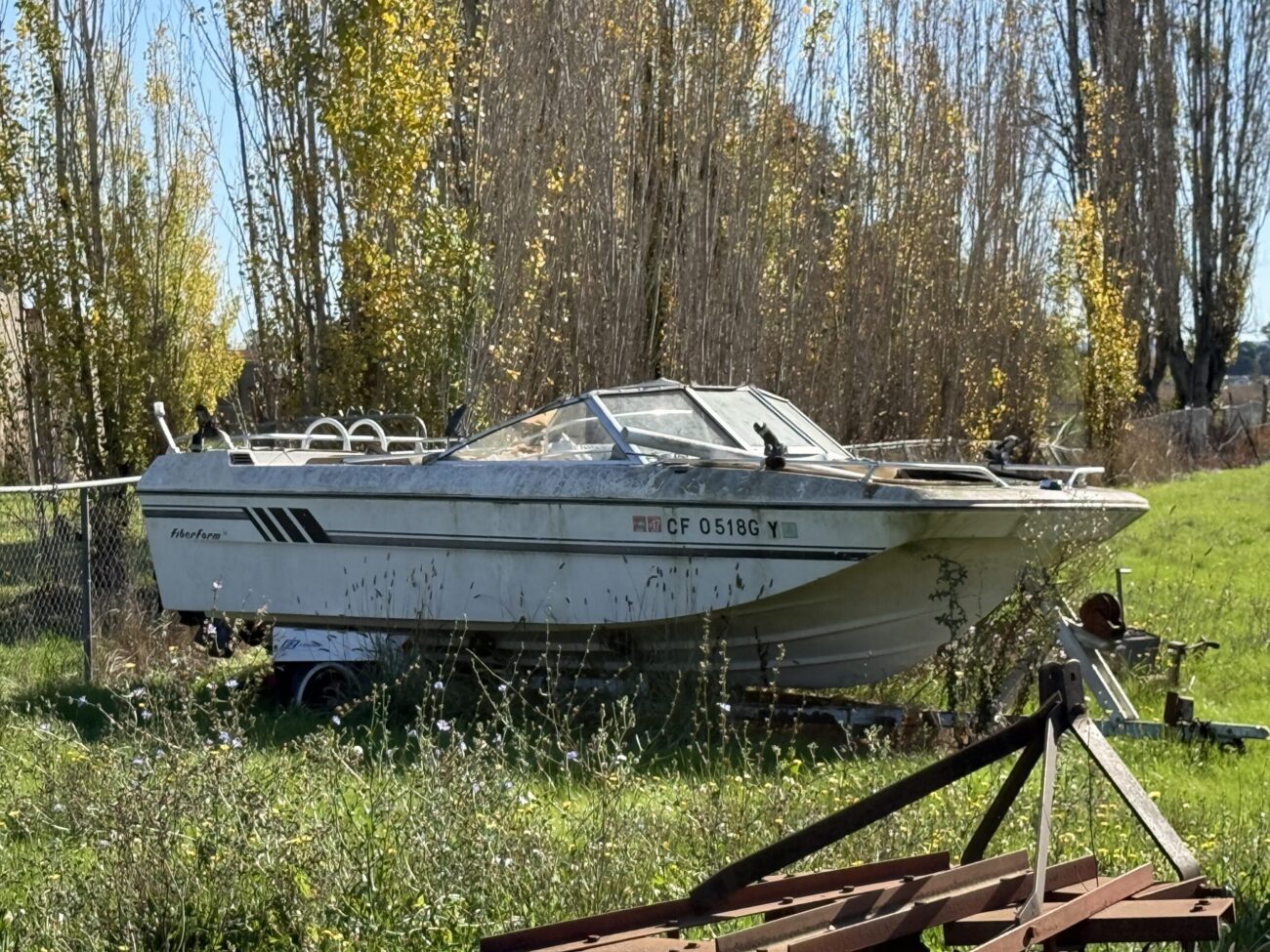
Runabouts, cruisers, and other recreational vessels can spend years sitting on trailers when their owners stop using them. Removing these boats can reclaim significant driveway, storage, or yard space.
Fiberglass Boats
Fiberglass construction is common among recreational vessels. When a fiberglass boat reaches the end of its useful life, owners may face significant challenges finding an appropriate way to handle the hull.
Aluminum Boats
Aluminum vessels can contain substantial amounts of metal and may be candidates for marine scrapping depending on their construction and condition.
Commercial and Work Boats
Larger working vessels may eventually become outdated or economically impractical to repair. These projects can require additional planning because of their size and location.
When Is an Old Boat Ready for the Scrap Yard?
There is no universal age at which a boat suddenly becomes scrap.
Condition is much more important.
A 30-year-old boat that has been meticulously maintained could remain useful, while a much newer vessel that suffered severe damage may no longer be economical to repair.
Some warning signs include extensive hull deterioration, major engine failure, long-term water intrusion, damaged decks, severe interior deterioration, obsolete systems, trailer failure, or years of inactivity.
Another important consideration is the cost of restoration.
If repairing the vessel requires replacing nearly everything that makes it operational, the numbers can quickly become unreasonable.
Owners should look at the boat as a whole rather than focusing on one repair at a time.
If the vessel has become an endless project, professional removal may provide a much better solution.
Santa Barbara Harbor and the Local Marine Community
Santa Barbara Harbor is a major focal point for local boating activity. Fishing, sailing, recreational boating, marine businesses, and waterfront activity all contribute to the area’s strong relationship with the ocean.
That means there are many different types of vessels moving through the local marine environment.
It also means older boats eventually become part of the area’s disposal challenge.
A vessel that is no longer seaworthy may need to be removed from service. A boat owner may need to clear a storage space. A property owner may inherit an unwanted vessel. A business may need to eliminate obsolete marine equipment.
These situations are different, but they have the same basic problem: the boat needs to go.
Professional boat removal gives owners a way to address that problem without attempting to manage the entire project themselves.
Residential Boat Removal in Santa Barbara
Not every boat is stored at the waterfront.
Some sit in residential driveways. Others remain in side yards, private storage areas, garages, workshops, or properties outside the immediate harbor area.
An old boat can consume an enormous amount of space.
That space could potentially be used for another vehicle, landscaping, construction, storage, or simply an open area that is no longer occupied by a deteriorating vessel.
Removing the boat can also improve the overall appearance of the property.
For homeowners preparing to sell, renovate, rent, or clean up a property, getting rid of a large unwanted boat can be an important part of the process.
Marina and Waterfront Vessel Removal
Removing a boat from a marina environment can involve additional considerations.
Access may be restricted, surrounding vessels may limit maneuvering room, and the boat may not be capable of moving under its own power.
A damaged vessel may also have to be handled differently from a functioning one.
Providing accurate information before removal helps determine how the project should be approached. Boat size, approximate condition, location, trailer status, and accessibility can all affect the logistics.
The more information available in advance, the easier it becomes to plan the removal.
Why Fiberglass Boats Can Be Difficult to Dispose Of
Fiberglass boats are durable when properly maintained, but that durability can become a disadvantage when the vessel reaches the end of its life.
Unlike an aluminum boat, a fiberglass hull is not simply a large piece of conventional scrap metal.
Old fiberglass vessels may contain layers of composite material, foam, wood, hardware, wiring, mechanical systems, and other components.
That means owners cannot always treat them like ordinary household junk.
A professional boat removal company can assess the vessel and determine what can potentially be separated, salvaged, scrapped, or otherwise handled.
For owners who have been stuck with an unwanted fiberglass hull, getting professional assistance can eliminate one of the biggest obstacles to finally clearing the property.
Marine Scrapping Can Recover More Than Metal
The word “scrapping” does not necessarily mean that every part of a boat is immediately destroyed.
An old vessel can contain components that still have practical value.
Engines, transmissions, stainless hardware, aluminum components, trailer parts, electronics, marine equipment, and other items may be evaluated separately.
Metal can potentially be separated according to type.
Other components may have salvage value depending on condition.
This makes marine scrapping a process of evaluating the entire vessel rather than simply disposing of a hull.
The exact outcome varies from boat to boat, but the owner’s primary objective remains the same: getting the unwanted vessel removed and clearing the space.
What Happens After Your Boat Is Picked Up & Hauled Away?
Once the boat has been removed, it can be assessed based on its construction, condition, components, and potential salvage or scrap value.
A vessel may be dismantled so that different materials can be separated. Mechanical components can be evaluated. Metal hardware may be sorted. Aluminum and other scrap materials can be directed toward appropriate processing.
Fiberglass hulls require different handling than metal vessels.
The process is not identical for every boat, which is why the condition and construction of the vessel matter.
For the owner, however, the most important result is immediate and simple: the unwanted boat is no longer occupying the property.
Why Work With Boat Scrapyards?
Trying to dispose of an unwanted boat independently can turn into a frustrating search for someone willing to accept it.
Traditional junk removal companies may not have the equipment or experience necessary for oversized marine vessels. Ordinary towing services may not be prepared to deal with a deteriorated boat or failed trailer. Disposal facilities may have restrictions on certain types of marine materials.
Boat Scrapyards focuses specifically on the problems surrounding unwanted boats.
The process starts with understanding the vessel and its location. From there, the removal requirements can be considered based on the boat’s size, condition, accessibility, and transportation needs.
That makes the process far more direct for an owner who simply wants the vessel gone.
Stop Letting an Unwanted Boat Take Up Space
An old boat rarely gets easier to deal with by leaving it untouched.
Weather continues to affect it. Trailers deteriorate. Mechanical components become less useful. Property space remains occupied.
Eventually, someone has to make the decision.
For Santa Barbara boat owners, property managers, marina operators, and businesses dealing with unwanted vessels, Boat Scrapyards offers a practical path toward getting those boats removed and moving on.
Whether it is a neglected fishing boat near the harbor, an old sailboat sitting on a trailer, a fiberglass restoration project that was never completed, or a damaged recreational vessel that has become too expensive to repair, professional boat removal can eliminate the headache.
If the boat is no longer being used and restoration no longer makes financial sense, there is little reason to let it continue taking up valuable space.
Get the vessel addressed, clear the property, and move forward.
Boat Scrapyards is ready to help Santa Barbara property owners tackle the old-boat problem from removal through scrapping and disposal.