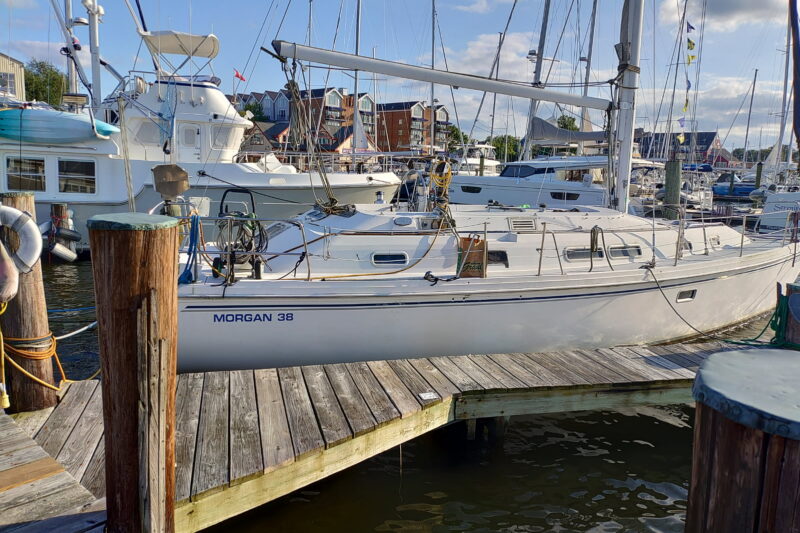
Boats are supposed to spend their lives on the water, not deteriorating behind a marina, sitting neglected at a private dock, or taking up valuable space on a property. Around Baltimore, aging vessels can become especially difficult to deal with because of the city’s busy harbor, waterfront properties, marinas, canals, rivers, and access to the Chesapeake Bay.
When a boat reaches the point where repairing it no longer makes financial sense, finding someone willing to haul it away can be surprisingly difficult. That is where professional boat removal and marine scrapping services can make the process much easier.
Boat Scrapyards helps property owners, boat owners, marinas, contractors, and other customers deal with unwanted vessels throughout Baltimore and surrounding communities. Whether the boat is sitting in a driveway, at a marina, on a trailer, or in another accessible location, the objective is simple: remove the unwanted vessel and determine the most practical disposal or scrapping solution.
Baltimore Boat Removal Without the Headache
Getting rid of an old boat is considerably different from throwing away ordinary household junk. Even smaller boats can be heavy, awkward, and difficult to transport. Larger fiberglass boats, cabin cruisers, sailboats, fishing boats, and commercial vessels can require specialized equipment and careful planning before they can be moved.
A boat that has been sitting unused for years may also have additional problems. Tires and trailers can deteriorate, hulls can become damaged, engines may be seized, and accumulated equipment can make the vessel considerably heavier.
Instead of trying to figure everything out yourself, professional boat removal gives you a way to approach the job as a single project.
Boat Scrapyards works with customers who need unwanted boats removed so they can reclaim their property and move forward without having an abandoned vessel sitting around.
When Does a Boat Become a Candidate for Scrapping?
Not every old boat needs to be immediately scrapped. Some vessels can be repaired or sold. Others, however, have reached a point where continued ownership simply creates more expense.
A boat may make sense for scrapping when:
- The hull has significant structural damage
- The vessel has been sitting unused for an extended period
- The engine is beyond economical repair
- Restoration costs exceed the boat’s practical value
- The trailer is damaged or unusable
- The boat has suffered storm or water damage
- The owner no longer wants to maintain it
- Marina storage has become too expensive
- The vessel is taking up valuable property space
- Selling it privately has become unrealistic
Older boats can be particularly challenging because their value is not always obvious from the outside. A vessel that once represented a significant investment may eventually become a liability simply because of age, deterioration, and maintenance costs.
Marine scrapping provides an alternative to allowing that vessel to continue deteriorating.
Boat Scrapyards Serving Baltimore-Area Customers
The term “scrapyard” often brings to mind automobiles, appliances, or construction materials. Boat scrapyards operate with a similar basic concept, but boats require a different approach.
A boat contains a combination of materials and components that can include fiberglass, aluminum, steel, wiring, engines, batteries, mechanical equipment, hardware, trailers, and other marine components.
Depending on the vessel, its condition, and the available options, different portions of the boat may be handled separately.
For customers, the important part is getting the unwanted boat out of the way.
Boat Scrapyards can help simplify that process by coordinating the removal of vessels that are no longer wanted or practical to keep.
We Handle More Than One Type of Boat
One of the biggest misconceptions about boat removal is that the service is limited to one particular type of vessel.
In reality, unwanted boats come in many shapes and sizes.
Baltimore-area customers may need help with:
- Fishing boats
- Pontoon boats
- Center consoles
- Cabin cruisers
- Sailboats
- Runabouts
- Ski boats
- Jet boats
- Aluminum boats
- Fiberglass boats
- Older wooden vessels
- Commercial boats
- Damaged boats
- Abandoned boats
- Boats sitting on trailers
- Non-running vessels
Some boats are relatively easy to move. Others require substantially more planning because they have been neglected for years.
The condition of the boat does not necessarily mean the removal project is impossible. What matters is evaluating the vessel, its location, its accessibility, and the equipment necessary to move it safely.
Marine Scrapping in Baltimore
Baltimore’s relationship with the water makes marine scrapping an important consideration for owners of aging vessels.
The surrounding Chesapeake region includes marinas, waterfront businesses, residential docks, boat storage facilities, and communities where recreational boating is part of everyday life. That also means there are plenty of older vessels eventually reaching the end of their useful lives.
Marine scrapping is about more than simply getting an old boat out of sight.
A vessel that remains abandoned can deteriorate further, occupy storage space, create an eyesore, and potentially become more difficult and expensive to move later.
Taking action while the boat is still accessible can make the removal process considerably more manageable.
What About a Boat That Has Been Sitting for Years?
This is a common situation.
An owner may have purchased a boat with plans to restore it. Years pass, the restoration never happens, and the vessel remains parked behind a building or stored at a marina.
Eventually, the boat becomes part of the landscape.
The problem is that deterioration does not stop.
Weather, moisture, corrosion, exposure, and lack of maintenance can all make an old vessel harder to deal with. A trailer that was functional several years ago may no longer be roadworthy. Tires can fail. Components can seize. Hull damage can worsen.
If you have a boat that has become a permanent fixture on your property, there may be a better option than continuing to store it.
Boat Scrapyards can help determine what is involved in getting the vessel removed.
Removing Boats From Private Property
A boat does not have to be sitting in the water to become a removal problem.
Many Baltimore-area owners have unwanted vessels sitting on residential or commercial properties.
A boat may be stored:
- In a backyard
- Beside a garage
- Behind a commercial building
- In a storage yard
- On a driveway
- On an old trailer
- At a marina
- At a waterfront property
Access is one of the first things that needs to be considered.
A boat that is sitting in an open driveway may be relatively straightforward to load, while one surrounded by fencing, buildings, trees, or other obstacles may require a different approach.
Providing accurate information about the boat and its location helps make the removal process more efficient.
Getting Rid of a Damaged or Non-Running Boat
A boat does not need to be operational to qualify for removal.
In fact, many of the vessels people need removed are completely inoperable.
An engine that will not start, a damaged hull, flat trailer tires, missing components, or years of neglect can make selling the boat extremely difficult.
Trying to find a private buyer for a severely deteriorated vessel can turn into weeks of messages, negotiations, and unanswered advertisements.
For some owners, removal is the more practical solution.
Rather than investing additional money into an unwanted boat, they can arrange for the vessel to be hauled away and move on.
Boat Disposal Should Be Planned Properly
Boat disposal requires more thought than simply placing a vessel at the curb.
Large boats contain materials and components that cannot be handled like ordinary residential garbage. Fluids, batteries, engines, fuel systems, electrical components, and other materials may need appropriate handling.
The exact disposal process depends on the type of boat and its condition.
This is another reason professional removal can be useful. Instead of dismantling an entire vessel yourself, you can have the removal process evaluated as a complete job.
Boat Scrapyards focuses on making boat removal and disposal more straightforward for customers who are ready to eliminate an unwanted vessel.
Why Baltimore Boat Owners Put Off Removal
It is easy to understand why people delay getting rid of an old boat.
There may be sentimental value attached to it. Perhaps it belonged to a family member. Maybe the owner intended to restore it. Or perhaps the boat was simply used less and less until it stopped being useful.
Then comes the practical problem: what do you actually do with it?
Selling a deteriorated boat can be difficult. Transporting it yourself may be impossible. Paying marina storage indefinitely is expensive.
Eventually, the boat becomes something that needs to be dealt with rather than something that provides enjoyment.
Once you reach that point, getting a removal quote can be the first step toward finally clearing the vessel from your property.
Baltimore’s Waterfront Makes Professional Removal Important
From the Inner Harbor and surrounding waterfront areas to communities throughout the greater Baltimore region, boats are a familiar part of the local environment.
That creates plenty of opportunities for boat ownership—but it also creates an ongoing need for responsible removal of vessels that have reached the end of their useful lives.
Storms, accidents, age, neglect, and changing ownership can all leave boats in situations where they need to be removed.
A professional boat removal company can help take the uncertainty out of the process by assessing the vessel and determining how it can be handled.
What Happens After Your Boat Is Picked Up & Hauled Away?
Once an unwanted vessel has been removed, the next step depends on the boat itself.
Some boats contain valuable metal, equipment, engines, trailers, or other components. Others may be heavily deteriorated and require more extensive dismantling.
The goal of marine scrapping is to separate and handle usable materials and components where practical while dealing with the remaining vessel appropriately.
For the customer, the biggest benefit is simple: the boat is no longer sitting on their property.
That can mean reclaiming a driveway, opening up storage space, cleaning up a marina area, preparing a property for sale, or finally completing a long-delayed cleanup project.
Boat Scrapping Can Be the Practical End to an Old Boat
Owning a boat should be enjoyable. Once a vessel becomes a constant maintenance expense or an immovable object taking up space, however, the equation changes.
Baltimore boat owners have access to a large and active boating region, but that does not make unwanted vessels any easier to dispose of.
When repair, resale, or continued storage no longer makes sense, boat scrapping can provide a practical alternative.
Boat Scrapyards works with customers looking for boat removal, boat disposal, scrapyards, and marine scrapping solutions. From neglected boats and damaged vessels to old trailers and non-running watercraft, the first step is determining what it will take to get the unwanted vessel out of the way.
If an old boat has been sitting around Baltimore longer than it should, now may be the time to stop storing it and start planning its removal.
Frequently Asked Questions About Baltimore Boat Removal
Can you remove a boat that does not run?
Yes. Non-running boats are common removal projects. The condition of the engine or mechanical systems does not necessarily prevent the vessel from being hauled away.
Do you remove fiberglass boats?
Fiberglass boats can present different disposal challenges than metal vessels, but they can still be considered for removal depending on their size, condition, and location.
Can an old boat trailer be removed too?
In many situations, the trailer can be addressed as part of the overall removal project. Details depend on its condition and accessibility.
What information should I provide for a boat removal quote?
Useful information includes the boat’s approximate size, type, condition, location, whether it is on a trailer, and whether there are access restrictions around the vessel.
Do you handle abandoned or severely damaged boats?
These projects can require additional planning, but damaged and neglected boats are among the types of vessels customers commonly need help removing.