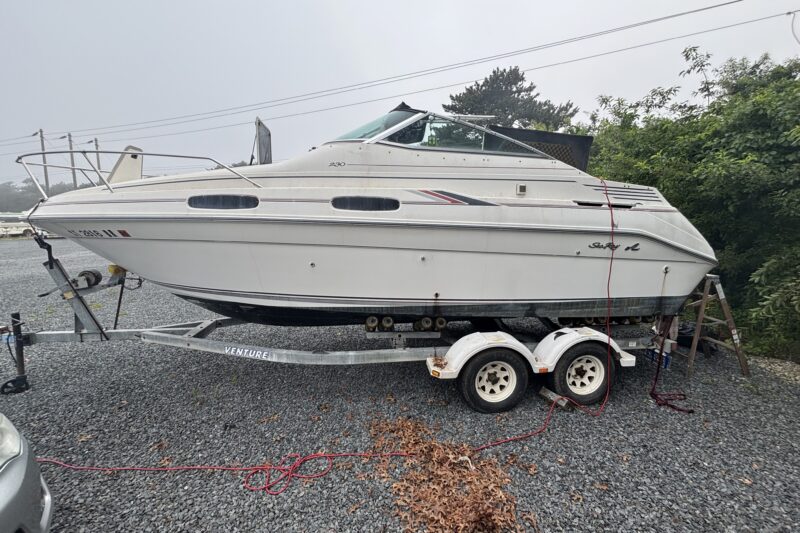
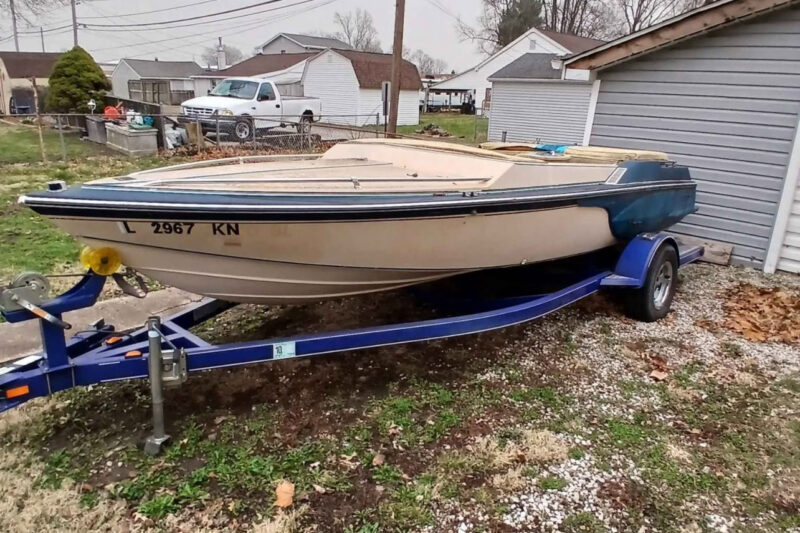
Owning a boat can be a great experience until the vessel stops being useful. A boat that once spent weekends on the water can eventually become a major storage problem, especially when repairs cost more than the boat is worth. For property owners, marinas, boatyards, and longtime boat owners around Worcester, Massachusetts, getting rid of an unwanted vessel can be surprisingly difficult.
That is where professional boat scrapping and removal can make a major difference.
Boat Scrapyards helps property owners and boat owners deal with old, damaged, neglected, and unwanted vessels throughout the Worcester area. Whether the boat is sitting on a trailer, occupying valuable yard space, deteriorating at a storage facility, or simply has reached the end of its useful life, arranging professional boat removal can eliminate the headache of figuring out what to do with it.
Worcester may not be directly on the Massachusetts coastline, but boating remains an important part of the region. Lake Quinsigamond and other nearby waterways support recreational boating, fishing, sailing, and seasonal water activities. As boats age, however, they eventually become candidates for removal and marine scrapping.
Worcester Boat Removal & Scrapping FAQs
Can you remove an old boat that no longer runs?
Yes. A boat does not have to be operational to qualify for removal. Non-running boats can often be hauled away from residential properties, storage areas, boatyards, and other locations, depending on access and the vessel’s condition.
Do you scrap fiberglass boats?
Fiberglass boats can present different disposal challenges than metal vessels, but they can still be candidates for professional boat removal and disposal. The condition, construction, size, and location of the boat all influence how the vessel is handled.
What about aluminum or metal boats?
Aluminum and other metal boats are common candidates for scrapping because valuable metal components can often be separated from the vessel during processing.
Can an abandoned boat be removed?
Potentially, but ownership and authorization matter. If a vessel has been abandoned on private property or at a storage location, the property owner or responsible party should make sure they have the legal authority to arrange its removal.
Do you remove boats from private property?
Boat removal can be arranged from many types of private properties, including driveways, side yards, garages, storage lots, and other accessible locations.
What if the boat has a trailer?
Boat trailers can often be handled along with the vessel. Including the trailer when requesting a quote helps determine the equipment and hauling requirements.
When an Old Boat Becomes a Property Problem
The biggest mistake many boat owners make is waiting too long to deal with a vessel they already know they will never use again.
At first, an unwanted boat may seem harmless. It sits behind the garage or along the side of a property. Months turn into years. Leaves collect inside it. Water finds its way through damaged covers. Tires deteriorate. The hull begins to show its age.
Eventually, the boat stops being an unused recreational asset and becomes an oversized piece of junk.
This is particularly frustrating when the owner does not have the equipment necessary to move it.
A boat can be heavy, awkward, difficult to tow, and impossible to maneuver without the proper vehicle or trailer. Even a relatively small vessel can require specialized hauling equipment.
Professional boat removal eliminates much of that uncertainty.
Instead of trying to dismantle the boat in a driveway or figuring out how to transport it yourself, an owner can arrange for the vessel to be evaluated and removed.
Why Worcester-Area Boats End Up Being Scrapped
There are plenty of reasons an otherwise useful boat eventually becomes scrap.
Sometimes the engine fails and the owner receives a repair estimate that makes no financial sense. Other times the hull develops structural problems, the electrical system becomes unreliable, or years of exposure leave the vessel in poor condition.
Older boats can also become difficult to maintain because replacement components are expensive or increasingly difficult to find.
For some owners, the problem is simply changing circumstances.
A person may have purchased a boat years ago when they had more time for weekend trips. Eventually, work, family responsibilities, changing interests, or financial priorities make boating less practical.
The boat remains.
Then there are inherited boats.
A family member passes away and leaves behind a vessel that nobody else wants. The family may have no idea how to sell it, transport it, or dispose of it.
In other situations, a boat has already been sitting at a marina or storage property for an extended period.
These are exactly the situations where professional boat scrapping and removal can provide a practical solution.
Lake Quinsigamond & the Worcester Boating Community
Lake Quinsigamond is one of the most recognizable boating destinations associated with Worcester. Recreational boaters, anglers, sailors, and waterfront property owners have long used the lake and surrounding area for outdoor activities.
But boats exposed to seasonal conditions do not remain new forever.
Massachusetts brings freezing temperatures, snow, ice, rain, and significant seasonal changes. Boats that are not properly maintained can suffer from weather-related deterioration, especially when covers, drainage systems, engines, or hull components have already begun to fail.
Winter storage can create its own problems.
A neglected boat may spend months sitting unused before the owner discovers that additional damage has occurred. By spring, what looked like a manageable maintenance project can become a much larger disposal issue.
When restoration no longer makes financial sense, scrapping the vessel may be the better option.
The Types of Boats We Scrap, Salvage & Dispose Of
Boat Scrapyards works with a wide range of vessels and boating equipment.
The boat does not have to be a large yacht to become a removal project. Smaller recreational vessels can be just as difficult for an individual owner to dispose of.
Depending on the circumstances, boat removal projects can involve:
- Fishing boats
- Bass boats
- Bowriders
- Center-console boats
- Runabouts
- Sailboats
- Cabin cruisers
- Pontoon boats
- Aluminum boats
- Fiberglass boats
- Wooden boats
- Older work boats
- Commercial vessels
- Damaged boats
- Non-running boats
- Boats with damaged trailers
Every vessel presents different challenges.
A lightweight aluminum fishing boat may be relatively straightforward compared with a large fiberglass cruiser that has been sitting in storage for years. Access also makes a significant difference.
A boat sitting beside a wide driveway is a different removal project from one boxed into a backyard behind a house.
That is why an accurate description of the vessel and its location is useful when arranging a removal.
Boat Scrapping Is About More Than the Hull
When people hear the word “scrapping,” they often imagine nothing more than an old boat being hauled away.
In reality, a vessel can contain a surprising amount of equipment and material.
Older boats may contain aluminum, stainless steel, copper wiring, bronze hardware, steel components, engines, batteries, electrical equipment, fuel-system components, trailers, and various mechanical parts.
Depending on the vessel, there may also be:
- Outboard motors
- Inboard engines
- Propellers
- Fuel tanks
- Marine batteries
- Stainless-steel rails
- Aluminum framing
- Wiring
- Pumps
- Hardware
- Trailer components
- Marine electronics
These materials are part of what makes marine scrapping different from simply throwing an unwanted object into a dumpster.
A boat is a complex manufactured structure. Proper removal requires consideration of the vessel itself, its equipment, its weight, and the materials that need to be separated during the disposal process.
When Repairs Stop Making Sense
There is a point where every boat owner has to make a decision.
Should the vessel be repaired, sold, stored, or scrapped?
For valuable boats in good condition, repair or resale may make sense. But when the cost of restoring a vessel approaches or exceeds its realistic value, continuing to spend money can become difficult to justify.
Consider an older boat with an aging engine, deteriorated interior, damaged wiring, worn trailer components, and a hull requiring extensive work.
Individually, each problem might be repairable.
Together, they can turn into a project costing thousands of dollars.
Some owners continue repairing these boats because they have sentimental value. Others simply keep postponing the decision.
Eventually, the boat continues deteriorating while occupying space.
At that stage, professional boat removal may be the most practical answer.
Getting an Unwanted Boat Out of a Worcester Property
Boat removal is often less about the boat itself and more about the logistics surrounding it.
Is the vessel on a trailer?
Can the hauling equipment reach it?
Is the trailer operational?
Are the tires inflated?
Is the boat sitting on blocks?
Has vegetation grown around it?
Has the hull deteriorated?
Is the property accessible from the street?
These details can dramatically change how a removal needs to be approached.
Trying to move a neglected boat without the right equipment can damage the property, damage the trailer, or create a safety hazard.
Professional hauling allows the removal process to be planned around the actual conditions at the property.
Boats Sitting at Storage Facilities & Boatyards
Storage fees can become another reason owners finally decide to remove an unwanted vessel.
A boat that is no longer being used can continue accumulating storage charges while its condition gets worse.
This creates a frustrating cycle.
The owner does not want the boat anymore, but does not know how to get rid of it. Meanwhile, the vessel continues taking up valuable storage space.
Boat Scrapyards can help simplify that process by coordinating removal of unwanted boats from appropriate storage and yard locations when the necessary authorization is in place.
For boatyards and storage operators, clearing out abandoned or unwanted vessels can also free up valuable space for active customers.
Old Boats Don’t Always Need to Be Restored
There is a tendency in the boating world to assume that every older vessel deserves another chance.
Sometimes that is true.
There are classic boats worth restoring. There are vessels with valuable engines, desirable hulls, or sentimental significance.
But not every boat is a restoration project.
Some have simply reached the end of their practical life.
A boat with severe deterioration, extensive mechanical problems, obsolete systems, and years of neglect may be better suited for scrapping than restoration.
Recognizing that distinction can save an owner substantial time, money, and frustration.
Boat Removal Throughout the Greater Worcester Area
Boat Scrapyards can serve boat owners and property owners looking for solutions to unwanted vessels in and around Worcester.
That can include communities and areas surrounding the city, depending on the location and accessibility of the boat.
Whether a vessel is stored near Lake Quinsigamond, sitting at a residential property, occupying space at a storage yard, or waiting on a trailer, the first step is determining the removal requirements.
Nearby Massachusetts communities can also have their own boating and storage needs, making professional boat disposal useful beyond Worcester’s city limits.
The important thing is not where the boat was originally purchased.
The important question is how to safely and efficiently get the unwanted vessel off the property.
What Happens After Your Boat Is Picked Up & Hauled Away?
Once the vessel has been removed, the next stage depends heavily on what the boat is made of and its overall condition.
Reusable components may have value. Metal components can be separated for scrap. Mechanical equipment may be evaluated independently from the hull. Other portions of the vessel may require specialized disposal.
The goal is to avoid treating an entire boat as though it were one simple piece of trash.
Marine scrapping involves breaking down a vessel into manageable components and materials whenever practical.
For the property owner, however, the immediate benefit is much simpler:
The boat is gone.
The driveway opens up.
The storage space becomes available.
The yard is no longer occupied by a deteriorating vessel.
And an expensive, frustrating disposal problem is finally off the owner’s hands.
Why Call Boat Scrapyards?
If an unwanted boat has been sitting around your Worcester property for months or years, continuing to ignore it will not make the problem disappear.
The vessel will not get lighter.
The trailer will not improve with age.
And deterioration rarely makes future removal easier.
Boat Scrapyards provides a straightforward way to start the process.
Tell us what kind of boat you have, where it is located, whether it runs, and what condition it is in. From there, the removal requirements can be evaluated and the appropriate hauling approach determined.
Whether you are cleaning up a residential property, clearing space at a boat storage facility, dealing with an inherited vessel, or simply ready to get rid of a boat you no longer want, professional boat removal can save you from tackling the project alone.
For Worcester boat owners, scrapping an unwanted vessel does not have to become another long-term headache.
When the boat has reached the end of its useful life, Boat Scrapyards can help you clear the space and move forward.