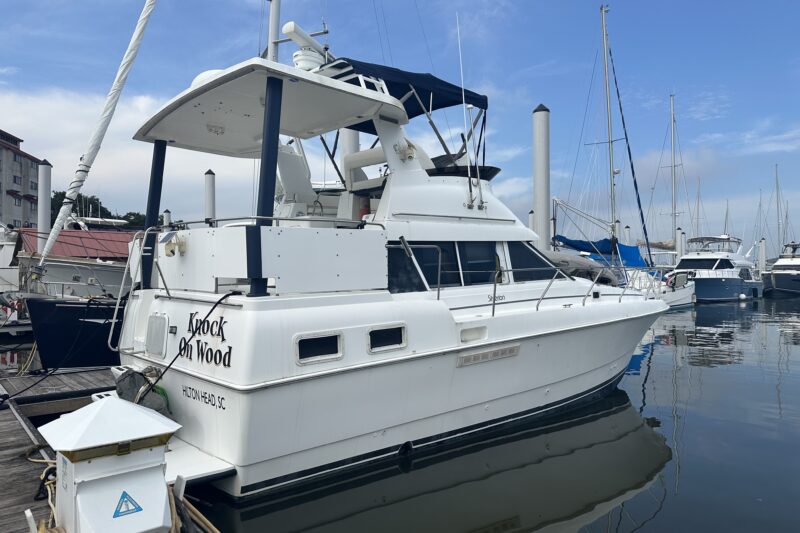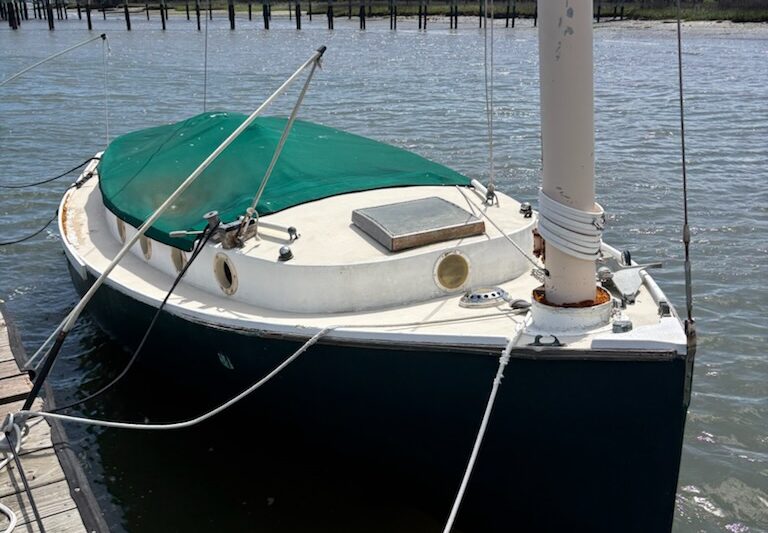
Owning a boat along the Grand Strand can mean easy access to fishing, cruising, offshore trips, and the waterways that connect Myrtle Beach with surrounding coastal communities. But when a boat stops being useful, the same coastal environment that makes boating attractive can make disposal a headache.
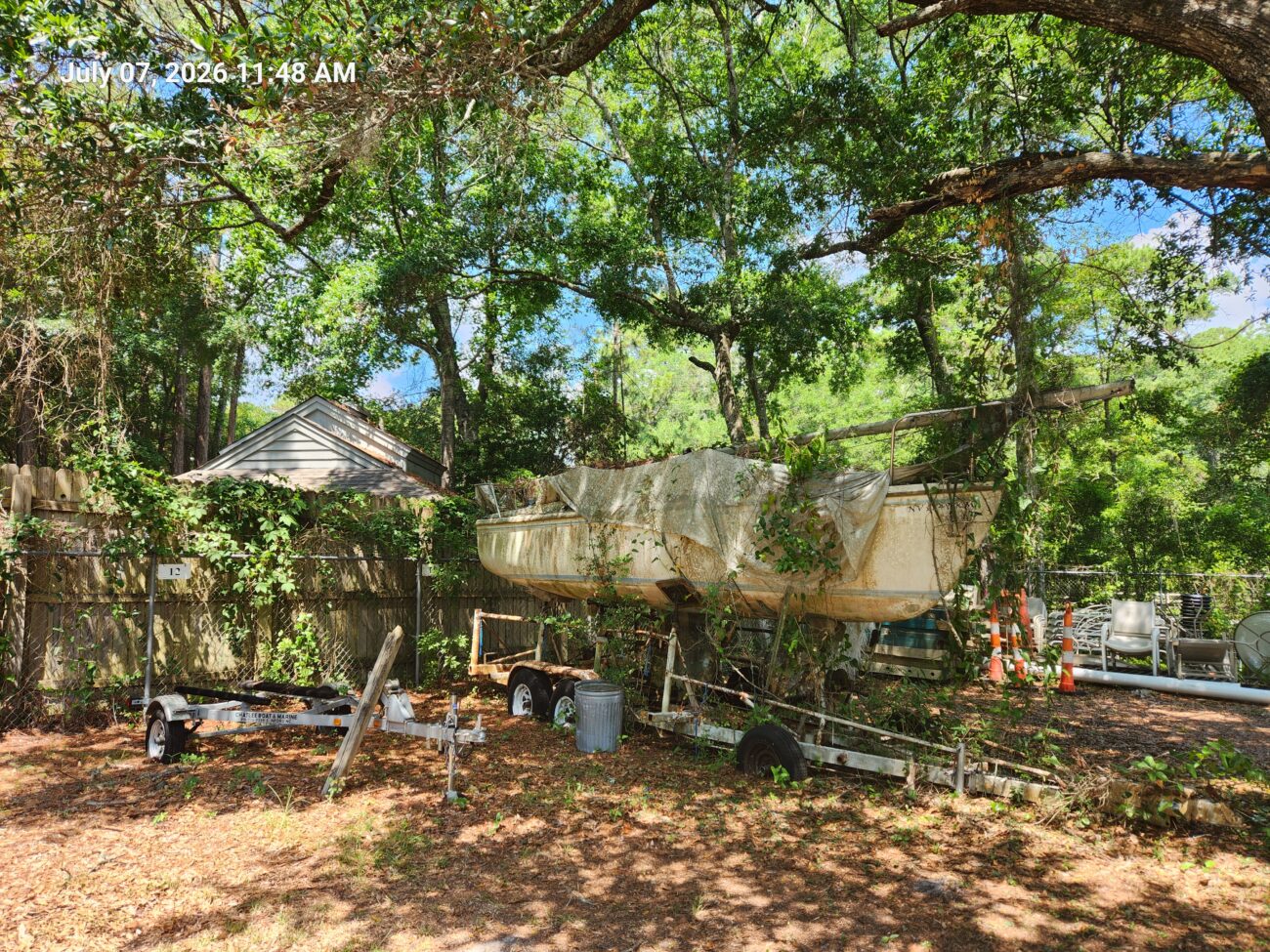
An aging vessel can sit behind a home, occupy a storage lot, remain on an old trailer, or become a neglected project that nobody wants to finish. The longer it stays there, the more difficult the situation can become.
Boat Scrapyards helps Myrtle Beach-area owners deal with unwanted vessels through boat removal, hauling, marine salvage, dismantling, scrapping, and disposal.
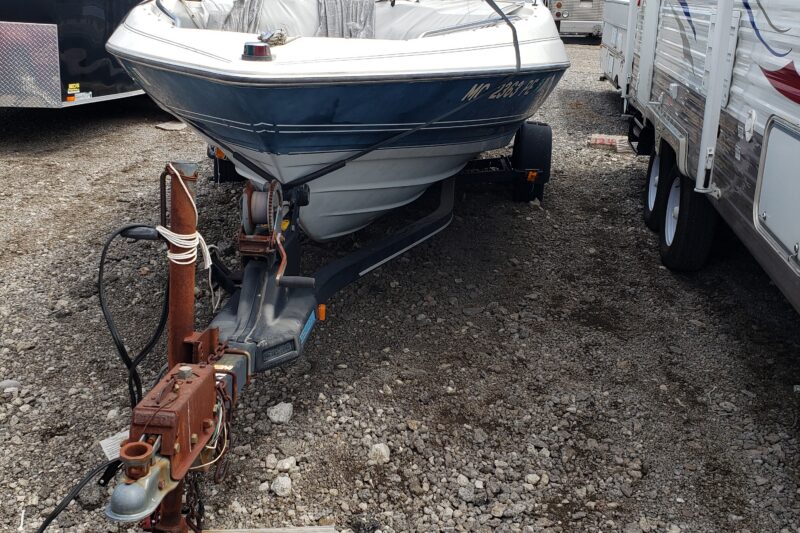
Whether the problem is an old fishing boat, damaged cruiser, deteriorated pontoon, fiberglass project, or trailer-bound vessel that has not moved in years, the first step is finding a practical way to get it out of the way.
Quick Answers for Myrtle Beach Boat Owners
What if the boat does not run?
A boat does not have to be operational to be considered for removal. Non-running vessels are common because mechanical failure is one of the reasons owners eventually decide to stop keeping an older boat.
Can an old boat sitting on a trailer be hauled away?
Yes, the trailer can be considered along with the vessel. Its condition, access, tires, bearings, frame, and location can all affect how the removal is handled.
Do fiberglass boats create disposal problems?
They can. Fiberglass hulls are different from metal vessels and may contain numerous additional materials and components that need to be addressed separately.
Can you remove boats from residential properties?
Residential boat removal is a common situation. Driveways, side yards, storage areas, and other private-property locations can all present different access requirements.
What happens to boats after they are removed?
A vessel can be evaluated for salvageable components and scrap materials. Engines, metals, trailer parts, hardware, and other equipment may be handled separately depending on condition.
Is marine salvage the same as repairing a boat?
No. Marine salvage and dismantling focus on recovering useful components and materials from vessels that may no longer make sense to operate or restore.
The Boat in the Yard Nobody Wants Anymore
There is a particular type of boat that creates headaches for homeowners.
It is not necessarily completely destroyed.
It may even have looked good when it was first purchased.
The owner planned to use it every weekend.
Then work got busy.
The kids got older.
The engine developed problems.
The boat sat.
Before long, the cover deteriorated, the trailer tires aged, and the vessel became something the owner walked past rather than something they used.
Eventually, the owner has to make a choice.
Spend more money restoring it or get rid of it.
For many older vessels, that decision becomes easier once the total cost of ownership is considered.
The boat may need an engine.
The trailer may need work.
The interior may be deteriorated.
The electronics may be obsolete.
The hull may need attention.
What once looked like a simple repair can turn into a major project.
Myrtle Beach’s Boating Environment Means Old Vessels Are Everywhere
The Myrtle Beach area has a broad marine environment that extends well beyond the beachfront.
The Intracoastal Waterway provides an important inland route, while the Atlantic coast supports fishing, cruising, recreational boating, and other marine activity.
Nearby communities such as Murrells Inlet and North Myrtle Beach add even more boat traffic and waterfront activity to the region.
With so many boats in the area, there are inevitably vessels that eventually reach the end of their useful lives.
Some are replaced by newer boats.
Some become storm-damaged.
Others simply sit until the owner no longer wants to pay for storage or repairs.
That creates a steady need for practical boat disposal options.
Before You Repair That Boat, Look at the Entire Project
Repairing a boat can become a series of decisions made one at a time.
The owner fixes the engine.
Then discovers an electrical problem.
The electrical system leads to another repair.
Then the trailer needs tires.
Then the deck needs attention.
Then the upholstery needs replacement.
The individual expenses can seem manageable when considered separately.
The problem is the total.
An owner should consider what the complete project will cost and whether the finished vessel will actually justify that investment.
This is particularly important with older boats.
If the vessel has been sitting unused for years, the engine may not be the only problem.
The systems surrounding the engine may have deteriorated too.
When restoration no longer makes sense, removal can end the cycle of repairs.
Boats That Commonly Become Myrtle Beach Removal Projects
Boat disposal is not limited to one particular type of vessel.
Center Console Boats
Center consoles are popular among coastal anglers and recreational boaters. Older examples can become difficult to maintain when engines, electronics, fuel systems, and hull components begin requiring major work.
Fishing Boats
A fishing boat that once provided years of use can eventually become a neglected asset. Failed engines, deteriorated decks, damaged wiring, and aging equipment can make continued ownership impractical.
Cruisers
Cruisers often contain more systems than smaller boats, including cabins, plumbing, electrical equipment, generators, appliances, and propulsion systems. A major failure can turn the vessel into an expensive restoration.
Sailboats
Older sailboats may have aging rigging, sails, masts, engines, decks, and interiors. Their size can also make removal more complicated than owners initially expect.
Pontoon Boats
Pontoons can develop problems involving decking, fencing, furniture, flotation components, and propulsion systems. Once several areas deteriorate, replacing everything may not make financial sense.
Fiberglass Boats
Fiberglass vessels can remain structurally recognizable long after they stop being practical to operate. Their composite hulls require a different disposal approach from conventional scrap-metal boats.
Why Boat Trailers Cause So Many Problems
The trailer is easy to overlook when a boat has been sitting for years.
Owners sometimes assume that because the vessel is technically “on a trailer,” it can simply be hooked to a truck and hauled away.
That may not be true.
A trailer that has spent years sitting outdoors can develop:
- Dry-rotted tires
- Seized wheel bearings
- Corroded frames
- Failed brakes
- Damaged wiring
- Rusted hardware
- Bent or weakened components
The trailer may have been perfectly usable when the boat was parked.
Years later, it may be another part of the disposal problem.
A proper boat-removal evaluation should consider the boat and trailer together rather than assuming the trailer is roadworthy.
When a Boat Becomes a Property Cleanup Issue
An unwanted vessel can eventually become more than a boating problem.
It can become a property problem.
A boat sitting in a driveway may prevent the homeowner from using that space.
A neglected vessel behind a business may interfere with operations.
An old trailer can occupy parking space.
A large cruiser can make a storage yard difficult to manage.
For someone preparing to sell a property, an abandoned boat can also become part of a larger cleanup effort.
Removing the vessel can open up usable space and eliminate one more obstacle from the property.
The same applies to landlords, property managers, contractors, storage operators, and waterfront businesses dealing with unwanted marine equipment.
Boats Stored Near the Intracoastal Waterway
The Intracoastal Waterway is an important part of the boating landscape around Myrtle Beach and the surrounding Grand Strand.
Boats associated with this area can range from small fishing vessels to larger recreational craft.
When an unwanted boat is located near a waterway or marina, accessibility becomes especially important.
There may be docks, other boats, narrow roads, storage buildings, fences, vehicles, or other obstacles.
A vessel that cannot move under its own power may require a completely different removal approach from an operational boat.
Owners should provide as much information as possible about the vessel’s location, approximate dimensions, condition, and access.
That makes it easier to determine what kind of hauling or removal process may be appropriate.
Murrells Inlet and the Wider Grand Strand
Boat removal needs do not stop at the Myrtle Beach city limits.
The broader Grand Strand includes numerous coastal communities where boats are stored, launched, repaired, parked, and eventually retired.
Murrells Inlet has a particularly strong connection to fishing and boating.
North Myrtle Beach and other nearby communities also have substantial recreational marine activity.
That means an unwanted vessel can appear in many different settings.
It might be sitting beside a house.
It might be stored at a commercial property.
It might be on a deteriorating trailer.
It might have been damaged and left unused.
Whatever the location, the underlying problem remains the same: the owner needs the vessel gone.
Storm-Damaged Boats May Not Be Worth Rebuilding
Coastal weather can change the equation quickly.
A boat that was usable before severe weather may come out of a storm with damage to the hull, deck, windshield, electronics, engine, trailer, or interior.
One damaged component might be repairable.
Multiple damaged systems can tell a different story.
The owner may face a long list of repairs before the boat can safely return to the water.
For some vessels, rebuilding is worthwhile.
For others, the better path is to remove the damaged craft and move on.
Boat Scrapyards can help owners address unwanted vessels that have reached that point through marine removal and salvage services.
Fiberglass Boats Need More Than a Simple Trip to a Scrap Yard
A fiberglass hull cannot simply be treated like a pile of aluminum.
The vessel may include multiple materials layered together.
Inside the hull there may be wood, foam, wiring, plumbing, fuel-system components, engines, batteries, seats, hardware, and electronics.
That is why fiberglass boat disposal can become frustrating for owners who attempt to dismantle everything themselves.
A large hull can also create significant transportation and storage issues.
Professional boat removal gives the owner a way to address the entire vessel rather than figuring out how to cut apart and dispose of every component independently.
Marine Scrapping Starts With Understanding What Is Still There
An old boat may be finished as a boat without being completely useless.
That distinction matters.
A vessel can contain valuable metal and marine equipment even when the hull itself is no longer practical.
Depending on the boat, there may be:
- Aluminum components
- Stainless hardware
- Copper wiring
- Engines
- Transmissions
- Propellers
- Marine electronics
- Trailer components
- Batteries
- Hardware and fittings
The condition of each component determines what happens next.
Some may have salvage potential.
Some may be suitable for scrap.
Others may require disposal.
Dismantling allows the vessel to be separated into manageable categories rather than treating everything as one large object.
What Happens Once Boat Scrapyards Removes the Vessel?
After the boat has been hauled away, the vessel can be evaluated according to its condition and construction.
The engine and mechanical systems may be considered separately from the hull.
Metal components can be sorted.
Trailer parts can be handled independently.
Equipment and hardware can be evaluated for salvage potential.
The remaining materials can then be dealt with according to their characteristics.
A severely deteriorated boat may have a different outcome from an older vessel that still contains useful components.
There is no universal formula for every boat.
The condition of the individual vessel determines the appropriate approach.
Why Owners Call Boat Scrapyards
Boat removal is a specialized hauling problem.
A boat may be too large for ordinary junk removal.
The trailer may not be roadworthy.
The vessel may not operate.
The property may have restricted access.
The boat may contain several different materials.
Boat Scrapyards is focused on these types of marine removal situations.
Instead of asking an owner to solve every transportation and disposal problem individually, the process starts by understanding the vessel and where it is located.
That can include information such as:
- Boat type
- Approximate length
- General condition
- Whether the engine runs
- Trailer condition
- Property location
- Access to the boat
- Whether the vessel is stored indoors or outdoors
Those details provide a starting point for determining what the removal project involves.
Get the Old Boat Out of the Way
An unwanted vessel can remain on a property for years simply because nobody wants to deal with the removal process.
But every month it remains there is another month of lost storage space.
Another month of exposure.
Another month of looking at a project that is not getting completed.
If you already know you are not going to restore the boat, keeping it indefinitely may not accomplish anything.
Boat Scrapyards helps Myrtle Beach-area owners remove unwanted boats through hauling, marine salvage, dismantling, scrapping, and disposal services.
Whether it is a neglected fishing boat near Murrells Inlet, an old center console on a residential trailer, a damaged cruiser, an aging pontoon, or a fiberglass vessel that has reached the end of its useful life, the removal process can finally clear the problem.
Get the vessel out.
Reclaim the space.
Move on from the boat you no longer use.