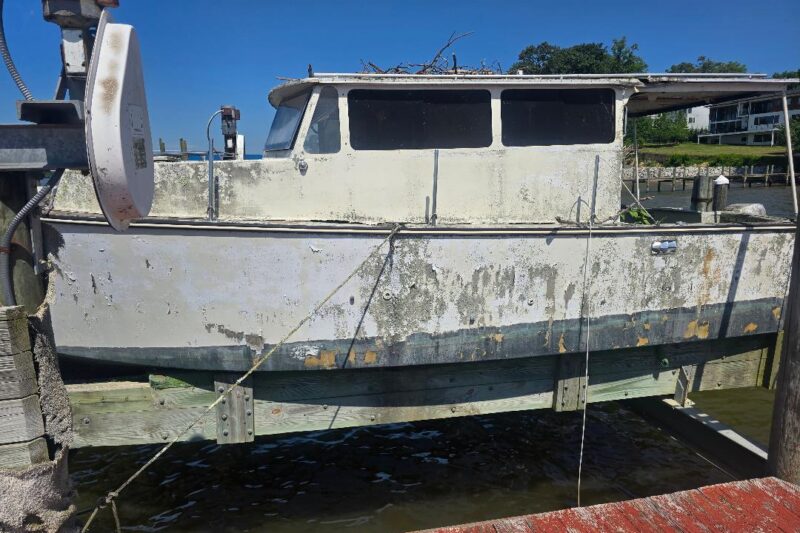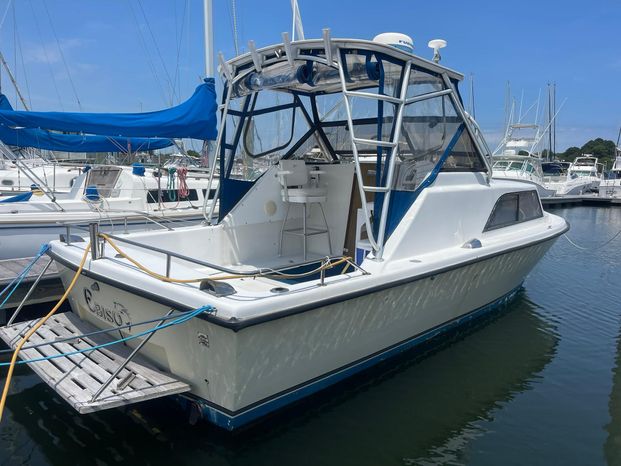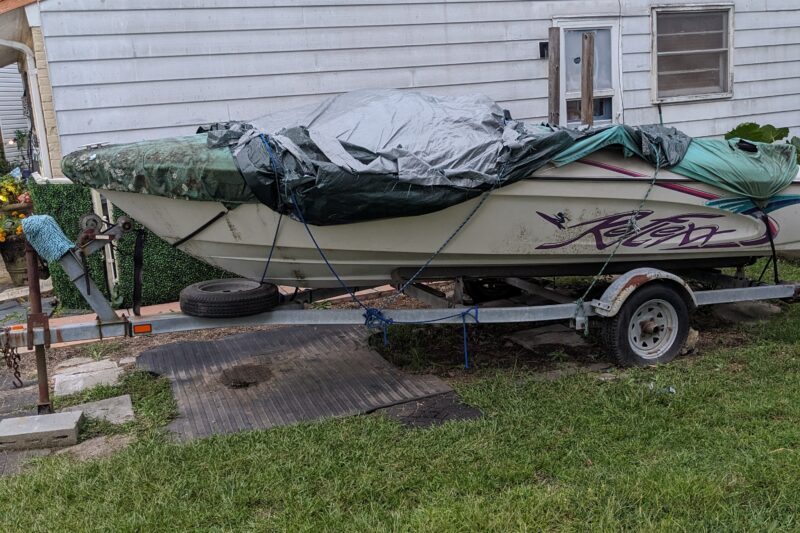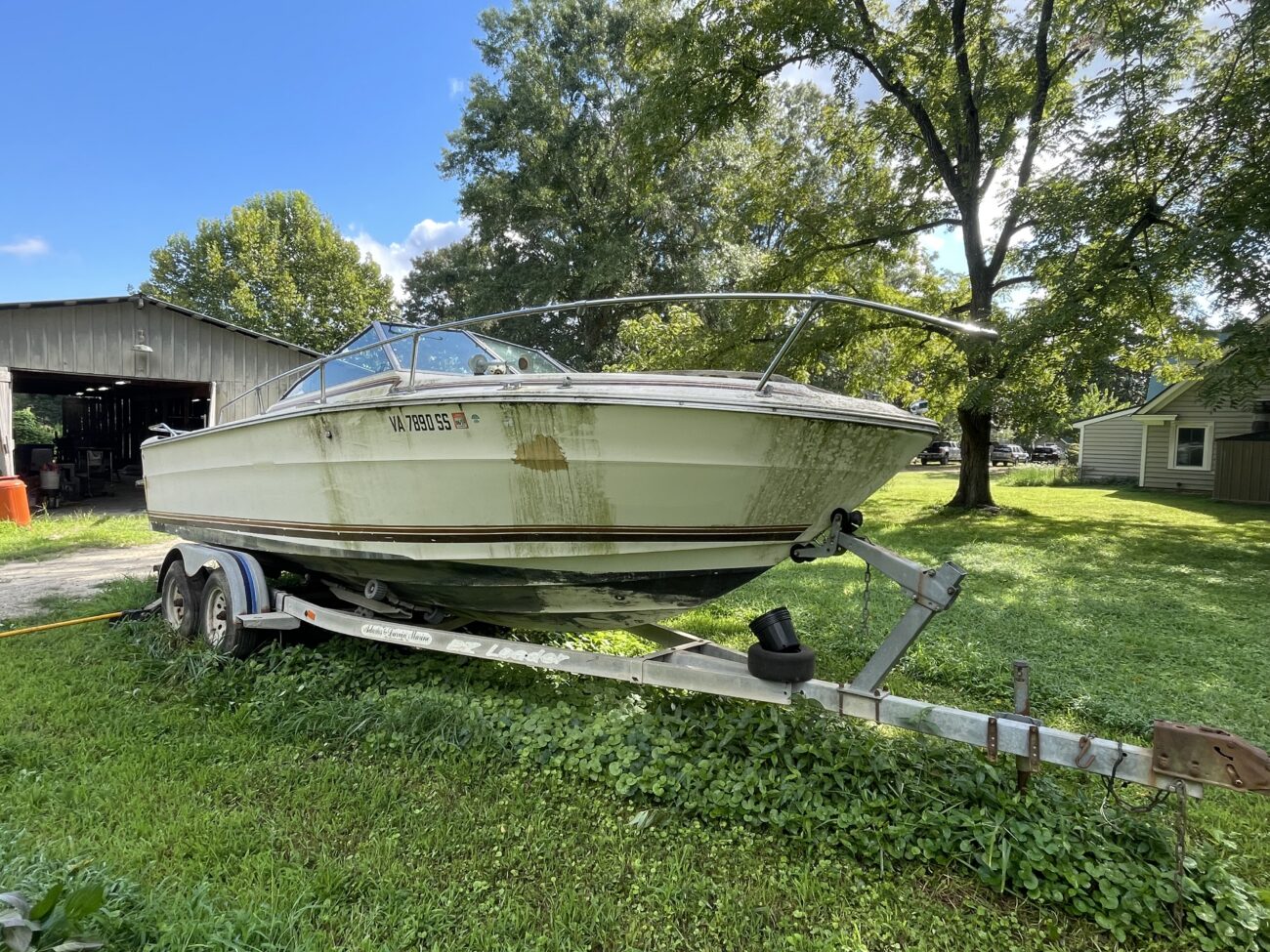
An unwanted boat does not have to be sitting directly on the ocean to become a serious removal problem. In Chesapeake, Virginia, boats are stored throughout residential neighborhoods, waterfront properties, marinas, driveways, and private storage areas, with access to the Elizabeth River, Intracoastal Waterway, and broader Hampton Roads boating region.
Over time, an unused vessel can become damaged, non-running, difficult to transport, or simply too expensive to keep. A boat that was once a weekend project can eventually become a permanent fixture taking up valuable property space.
Boat Scrapyards helps Chesapeake-area owners deal with those vessels through boat removal, hauling, marine salvage, dismantling, scrapping, and disposal. Services can apply to fiberglass boats, fishing boats, sailboats, cruisers, center consoles, skiffs, wooden vessels, aluminum boats, workboats, and trailer-mounted recreational craft.
Whether an old boat is sitting beside a home, occupying a driveway, stored near the water, or deteriorating on a trailer, Boat Scrapyards can evaluate the vessel and determine the appropriate path toward removal.
Chesapeake Boat Removal FAQ
Can you remove unwanted boats in Chesapeake?
Yes. Boat Scrapyards can evaluate unwanted, damaged, abandoned, non-running, and end-of-life vessels throughout Chesapeake and surrounding Hampton Roads communities.
Do you remove boats that no longer run?
Yes. Boats do not have to be operational to be considered for removal. Condition, size, location, and accessibility help determine the hauling requirements.
What kinds of boats can be removed?
Projects can include fishing boats, sailboats, powerboats, cruisers, center consoles, skiffs, runabouts, fiberglass boats, wooden boats, aluminum vessels, workboats, and trailer-mounted boats.
Can you remove a boat from a residential property?
Yes. Boats stored at homes, driveways, side yards, waterfront properties, storage locations, and other accessible areas can be evaluated.
Do you remove boat trailers?
Boat-and-trailer combinations can be evaluated together, including trailers that are damaged, deteriorated, or no longer roadworthy.
What happens to an old boat after removal?
Depending on the vessel, applicable equipment and materials may be separated during dismantling and salvage. Remaining portions of the boat can then be handled through the appropriate disposal process.
Getting Rid of an Old Boat in Chesapeake
Chesapeake has a different boating environment from Virginia’s directly coastal communities.
The city includes extensive waterways and residential areas where boats can be stored well away from the open ocean. That means an unwanted vessel might be sitting behind a house, in a driveway, beside a workshop, or on a private property rather than at a traditional waterfront facility.
The removal problem is still the same.
A boat that has not moved in years can become increasingly difficult to handle. Tires deteriorate. Trailers corrode. Engines seize. Hulls develop damage. Covers fail. Water collects inside the vessel.
Eventually, an owner may realize that the boat is no longer a recreational asset but a piece of oversized property debris.
Boat Scrapyards helps owners move from storing the vessel to getting it removed.
Elizabeth River and Chesapeake Boat Disposal
Chesapeake’s connection to the Elizabeth River and surrounding waterways creates plenty of opportunities for boating, fishing, and marine recreation.
It also means many local vessels spend years exposed to moisture and changing weather.
A boat does not need to be abandoned in the water to deteriorate.
A vessel stored on land can experience corrosion, sun damage, moisture intrusion, deteriorating upholstery, electrical problems, and structural issues. A trailer can become difficult to move even while the boat itself still appears intact.
When that happens, ordinary junk removal is not the answer.
Boats contain a mixture of materials and equipment that require a more specialized removal approach.
Boat Scrapyards evaluates the entire vessel and considers its construction, condition, location, and accessibility before determining how removal, hauling, dismantling, salvage, and disposal should be handled.
Old Fiberglass Boats in Chesapeake
Fiberglass boats are common throughout the Hampton Roads region, but they can become difficult to dispose of when they reach the end of their useful lives.
A fiberglass hull is too large for normal household disposal and can be extremely awkward to transport without the appropriate equipment.
Many unwanted fiberglass boats also contain engines, fuel systems, wiring, batteries, electronics, hardware, upholstery, and other components.
Some Chesapeake owners hold onto these boats because they intend to restore them eventually.
Years can pass.
The restoration never begins.
The vessel continues taking up space.
At some point, removal becomes more practical than continued storage.
Boat Scrapyards can evaluate old fiberglass boats for hauling, dismantling, marine salvage, scrapping, and disposal.
Fishing Boats, Cruisers and Recreational Vessels
Chesapeake’s waterways support many different types of recreational and working vessels.
Boat Scrapyards can evaluate removal projects involving:
- Fishing boats
- Sailboats
- Powerboats
- Cabin cruisers
- Center consoles
- Skiffs
- Runabouts
- Wooden boats
- Fiberglass boats
- Aluminum boats
- Workboats
- Pontoon boats
- Personal watercraft
- Trailer boats
- Storm-damaged vessels
- Non-running boats
A small fishing boat sitting on a trailer may require a relatively straightforward removal arrangement.
A larger cruiser, sailboat, or deteriorated workboat may require more planning because of its size, weight, equipment, and condition.
The location matters as well.
A boat sitting in a wide driveway is different from one behind a home with limited access or positioned beside a waterfront structure.
When a Chesapeake Boat Is No Longer Worth Repairing
Boat repairs can start small.
An owner may initially need an engine component replaced. Then the electrical system needs attention. The trailer requires work. The hull develops another issue.
Eventually, the list becomes longer than the owner’s willingness to keep investing.
At that point, repairing the boat may no longer be the objective.
Boat Scrapyards provides an option for owners who have decided that the vessel has reached the end of its useful life.
Instead of continuing to spend money on repairs or storing a boat with no realistic future, owners can explore removal, dismantling, salvage, scrapping, and disposal.
The goal is not to keep an unwanted boat on the property.
The goal is to get it gone.
Marine Salvage and Boat Dismantling
An old boat may contain useful equipment even when the vessel itself is no longer operational.
Depending on the boat, components may include engines, outboards, aluminum, stainless-steel hardware, electronics, anchors, pumps, rigging, marine fittings, trailers, and other equipment.
Boat Scrapyards can evaluate qualifying vessels as marine salvage and dismantling projects.
During dismantling, applicable components and materials may be separated before the remaining hull and other material are prepared for hauling and disposal.
This approach is particularly useful for larger vessels because there may be considerably more aboard than just the hull itself.
For the owner, the benefit is having the boat evaluated as an entire marine project rather than being left to figure out how to dismantle it independently.
Boat Trailer Removal in Chesapeake
The trailer can be one of the biggest obstacles to removing an unwanted boat.
A trailer that has sat outdoors for years may have deteriorated tires, rusted frames, seized wheel bearings, damaged lights, or other problems that make moving it unsafe.
In some cases, the boat itself is still in reasonable condition while the trailer underneath it has become unusable.
Boat Scrapyards can evaluate the boat and trailer together.
This can help homeowners determine how the entire setup should be removed instead of solving only half the problem.
For boats stored in driveways, side yards, or residential storage areas, addressing both the vessel and trailer can make a substantial difference.
Residential Boat Removal Across Chesapeake
One of the biggest challenges with unwanted boats is that many are stored at private residences.
A homeowner may have a vessel behind the garage that has not moved in ten years.
Another boat may be sitting beside a workshop or buried behind other property equipment.
Some vessels were purchased with plans for restoration. Others were inherited or acquired with a property.
Property access is an important part of any removal project.
Driveway width, gates, overhead clearance, terrain, boat dimensions, trailer condition, and the location of nearby structures can all affect how the vessel can be moved.
Photos and accurate information about the property can help establish the requirements before the removal is planned.
Boat Removal Around the Great Dismal Swamp Region
Chesapeake’s location also places many properties near the rural and wooded areas surrounding the Great Dismal Swamp region.
Boats stored in these areas can create additional access considerations.
A vessel may be positioned on a large residential property, beside a workshop, along a private access road, or in an area where standard hauling equipment has limited room to maneuver.
That makes early evaluation especially important.
Boat Scrapyards can consider the vessel’s position, available access, trailer condition, and surrounding property when determining what type of removal arrangement may be appropriate.
The goal remains the same regardless of location: remove the unwanted boat and clear the property.
Serving Chesapeake and Hampton Roads
Boat Scrapyards can evaluate unwanted boat removal projects throughout Chesapeake and nearby Hampton Roads communities.
Potential service areas include:
- Chesapeake
- Great Bridge
- Deep Creek
- Western Branch
- South Norfolk
- Hickory
- Grassfield
- Indian River
- Portlock
- South Chesapeake
- Nearby Norfolk-area communities
- Other accessible Hampton Roads locations
Whether a vessel is stored near the Elizabeth River, along a residential waterway, in a driveway, or on a larger rural property, the removal process begins with evaluating the boat and its surroundings.
How Chesapeake Boat Removal Works
Boat owners do not need to know exactly how the vessel will be transported before contacting Boat Scrapyards.
Start with the basic information.
Provide the boat’s approximate length, construction material, condition, location, trailer status, and whether it can currently be moved.
Photographs can also help show the hull, trailer, equipment, and access to the property.
Boat Scrapyards can review the project and determine the appropriate next steps.
A typical removal project may involve:
- Vessel evaluation – The boat’s basic details and condition are reviewed.
- Access assessment – The property and location are considered.
- Removal planning – Hauling and equipment requirements are determined.
- Boat removal – The vessel is moved from its current location.
- Salvage and dismantling – Applicable equipment and materials may be separated.
- Final disposal – Remaining materials are handled through the appropriate disposal process.
This gives Chesapeake owners a clear path forward when an unwanted vessel has become too difficult to manage.
Stop Storing a Boat You No Longer Intend to Use
An unwanted boat can occupy valuable space for years simply because nobody wants to deal with the removal process.
The owner may keep telling themselves that they will repair it.
Then another year passes.
The boat continues deteriorating while the property space remains unavailable.
Removing the vessel can finally eliminate that cycle.
If a boat has not been used in years, cannot realistically be sold, or would require extensive repairs before it could return to service, removal may be the practical next step.
Boat Scrapyards helps Chesapeake owners turn that decision into an actual removal project.
Boat Scrapyards for Chesapeake VA Boat Removal
Boat Scrapyards provides Chesapeake-area owners with boat removal, hauling, marine salvage, dismantling, scrapping, and disposal services for unwanted vessels.
From an old fiberglass fishing boat to a deteriorating sailboat, damaged cruiser, non-running powerboat, wooden vessel, or trailer-mounted skiff, each project can be evaluated according to its condition and location.
If an unwanted boat is occupying your driveway, storage area, waterfront property, or other valuable space, contact Boat Scrapyards to discuss boat removal in Chesapeake, Virginia.