Newport is synonymous with boating. Narragansett Bay, Newport Harbor, the Sakonnet River, surrounding coves, marinas, yacht facilities, and coastal waterways support everything from small fishing boats to large sailboats and recreational cruisers.
That strong boating culture also means Newport-area property owners eventually encounter boats that have outlived their usefulness.
An aging vessel may have been sitting on a trailer for years. A sailboat may have become too expensive to maintain. A cruiser might need more repairs than its owner wants to fund. A fiberglass fishing boat could be damaged, neglected, or simply unwanted.
When keeping the boat no longer makes sense, the next challenge is figuring out how to get rid of it.
Boat Scrapyards helps Newport-area owners with boat removal, marine hauling, salvage, dismantling, scrapping, and disposal. Instead of allowing an unwanted vessel to continue consuming valuable storage or property space, owners can arrange for the boat to be addressed as a complete removal project.
Newport Boat Removal FAQs
Can you remove a boat that does not run?
Yes. Non-running boats are common removal projects. The vessel’s condition, size, location, and accessibility determine how the removal can be approached.
What about an old boat trailer?
A trailer can be considered along with the boat. Older trailers may have deteriorated tires, seized bearings, damaged brakes, rust, or other problems that make normal towing unsafe or impractical.
Do you handle sailboats and larger vessels?
Larger sailboats, cruisers, and other vessels can present unique transportation and access challenges. Each boat needs to be evaluated based on its size and location.
Can a fiberglass boat be removed?
Yes. Fiberglass boats can be considered for removal and disposal. Their composite construction means they may require a different dismantling process from aluminum or steel vessels.
What happens after the vessel is removed?
The boat can be assessed for salvageable components and scrap materials. Engines, metal, hardware, trailer components, electronics, and other parts may be handled separately depending on condition.
Can you remove a boat from private property?
Residential and private-property boat removal can be considered based on access, location, vessel size, and surrounding conditions.
Newport’s Boating Culture Means Old Boats Eventually Need to Go
Boats can remain useful for many years.
But eventually, every vessel requires a decision.
Some owners upgrade to a newer boat. Others stop boating altogether. A family may inherit a vessel that nobody wants. A restoration project may become too expensive. A boat damaged by weather or neglect may no longer be practical to repair.
The problem is that boats are not small items.
You cannot simply place one beside the curb and expect ordinary trash collection to handle it.
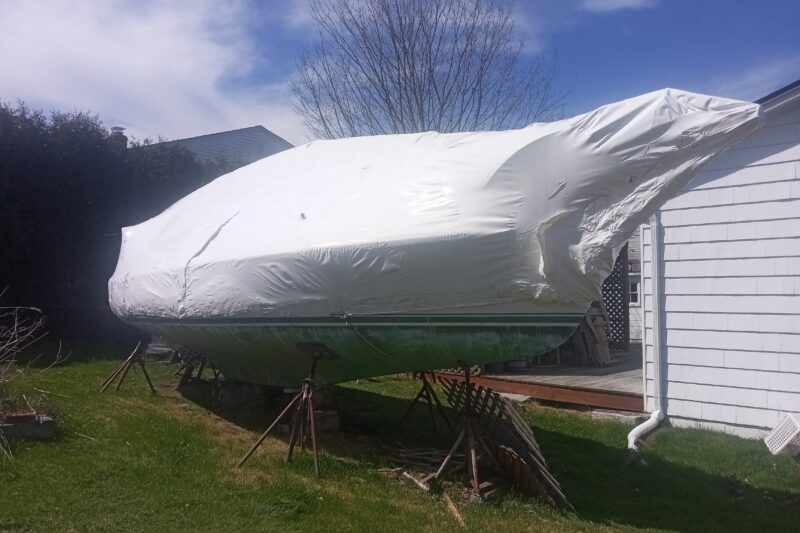
A boat can occupy a driveway, storage lot, marina space, backyard, or commercial property for years.
Once the owner has decided the vessel is no longer worth keeping, professional removal becomes a much more practical option.
When a Restoration Project Gets Out of Control
Many unwanted boats begin as restoration projects.
The owner sees an older vessel and imagines what it could become.
The first repair seems manageable.
Then another problem appears.
The engine needs attention.
The electrical system needs replacement.
The fuel system has deteriorated.
The deck requires work.
The trailer needs repairs.
The interior is no longer usable.
Suddenly, the project has expanded far beyond the original plan.
This does not mean restoration is always a bad idea. Some boats are absolutely worth saving.
But owners should periodically look at the total investment rather than continuing to spend money one repair at a time.
If the finished boat will cost substantially more than the owner wants to invest, removing the vessel may make more sense.
Boats We Remove, Haul and Scrap
Different boats create different disposal challenges.
Sailboats
Newport’s sailing culture means older sailboats can eventually become significant removal projects. Masts, rigging, sails, engines, tanks, interiors, and extensive hardware can all complicate transportation.
Fishing Boats
Fishing boats experience constant exposure to water and weather. Older engines, electronics, decks, fuel systems, and trailers can eventually become expensive to maintain.
Cruisers
Cruisers can contain cabins, appliances, plumbing, generators, electrical equipment, engines, and other systems. When several components deteriorate at once, restoration can become a major undertaking.
Center Consoles
Center consoles are popular recreational and fishing vessels. Older examples can develop problems involving propulsion, electronics, wiring, fuel systems, and hull components.
Pontoon Boats
Pontoons can develop problems with decking, furniture, fencing, flotation systems, and engines. Once deterioration spreads across several areas, owners may decide replacement makes more sense than restoration.
Fiberglass Vessels
Fiberglass boats can remain intact long after they stop being practical to operate. Removing the hull and addressing its associated materials requires a different approach from scrapping a primarily metal vessel.
Aluminum Boats
Aluminum fishing and recreational boats can contain significant amounts of recoverable metal along with engines, hardware, wiring, and trailer components.
Narragansett Bay and Newport Harbor Boat Removal
Newport’s marine environment makes access an important part of any boat removal project.
Narragansett Bay supports a wide range of boating activity, while Newport Harbor is surrounded by marinas, waterfront properties, docks, and marine facilities.
A boat that is easy to access in an open driveway may be much more complicated to remove from a waterfront location.
There may be neighboring vessels, docks, pilings, buildings, narrow access routes, vehicles, and other obstacles.
The vessel may also be unable to move under its own power.
That is why location should be considered just as carefully as the boat itself.
When arranging removal, useful information includes the approximate length, boat type, condition, trailer status, and access to the vessel.
What to Do With a Boat That Has Been Sitting on a Trailer
An old boat trailer can become a problem all by itself.
A vessel may have been parked for several years without moving.
During that time, trailer tires can dry out.
Wheel bearings can seize.
Brakes can deteriorate.
Wiring can corrode.
The frame can develop rust or structural problems.
A trailer that appears fine from the outside may not be ready for highway transportation.
Owners should avoid assuming that an old stationary boat can simply be hooked to a truck.
If the vessel is already destined for disposal, spending substantial money restoring an obsolete trailer may not be worthwhile.
The boat and trailer can instead be considered together as part of the removal project.
Residential Boat Disposal in Newport
Not every unwanted vessel is located at a marina.
Boats can sit behind homes, alongside garages, in private yards, on storage properties, or at commercial locations.
Sometimes the owner has simply run out of room.
A boat may block parking.
It may prevent a property improvement.
It may interfere with landscaping.
It may be an eyesore while a home is being prepared for sale.
For property owners dealing with an unwanted vessel, removal can provide an immediate practical benefit: the space becomes available again.
This can be particularly important when the boat has not been used in years and there is no realistic plan to put it back in the water.
Marine Salvage: More Than Just the Hull
An old boat can be finished as a functioning vessel without every component being useless.
That is where marine salvage and dismantling become important.
Depending on the boat, useful materials and equipment may include:
- Aluminum
- Stainless steel
- Copper wiring
- Engines
- Transmissions
- Propellers
- Marine electronics
- Batteries
- Hardware
- Trailer components
- Metal fittings
The condition of those components varies.
Some may have salvage potential.
Others may be appropriate for scrap handling.
Still others may simply require disposal.
Evaluating the vessel component by component can make more sense than treating the entire boat as one undifferentiated object.
Fiberglass Boat Disposal Requires Planning
Fiberglass is widely used in recreational boats, but an unwanted fiberglass vessel is not simply a pile of scrap metal.
The hull may be accompanied by wood, foam, wiring, plumbing, upholstery, batteries, engines, hardware, and other materials.
That combination can make do-it-yourself disposal difficult.
The owner has to figure out how to move the boat, dismantle it, separate the materials, and deal with the remaining hull.
For a large vessel, that can become a substantial project.
Professional boat removal gives owners another option by treating the entire vessel as a marine disposal project rather than expecting them to dismantle everything themselves.
How the Newport Boat Removal Process Works
A straightforward removal begins with understanding the vessel.
1. Identify the Boat
Provide the type, approximate size, general condition, and whether it is operational.
2. Describe the Location
Explain whether the vessel is at a home, storage property, marina, waterfront location, or commercial site.
3. Explain the Trailer Situation
If the boat is on a trailer, describe its condition and whether it has moved recently.
4. Evaluate Access
The surrounding property can determine how the vessel can be reached and removed.
5. Arrange the Haul
Once the project has been evaluated, the vessel can be scheduled for removal and hauled away.
The process is designed around the actual boat rather than assuming every vessel can be handled the same way.
Newport and the Surrounding Coastal Service Area
Boat removal needs can extend beyond Newport itself.
The surrounding coastal region includes communities and marine areas connected to Narragansett Bay and the broader Rhode Island boating network.
Owners may store vessels in residential areas, waterfront properties, marinas, boatyards, and private storage locations.
Nearby communities can include Middletown, Portsmouth, Tiverton, Jamestown, and other areas connected to the Newport marine environment.
That broader geography means an unwanted boat can create problems in many different settings.
Boat Scrapyards can help owners determine how to approach removal based on the specific vessel and its location.
When Weather and Age Finally Catch Up With a Boat
Coastal boats are exposed to sun, rain, wind, humidity, and saltwater.
Regular maintenance can extend the life of a vessel.
Neglect can have the opposite effect.
A boat that sits unused may gradually develop problems throughout its systems.
A severe weather event can accelerate that deterioration.
Damage to the hull, deck, windshield, engine, electronics, interior, or trailer can turn an already aging vessel into a major restoration project.
At that point, owners have to decide whether rebuilding the boat is worthwhile.
For some, it is.
For others, removing the vessel is the better way to resolve the problem.
Why Boat Scrapyards?
An unwanted boat is not ordinary household junk.
It can be oversized, heavy, non-running, trailer-bound, difficult to access, and constructed from numerous different materials.
Boat Scrapyards focuses on boat removal and marine disposal projects involving these types of vessels.
The process considers hauling, salvage, dismantling, scrapping, and disposal rather than treating the boat as a simple piece of household debris.
For Newport owners dealing with an old fishing boat, sailboat, cruiser, fiberglass vessel, pontoon, aluminum boat, or deteriorated trailer setup, that specialized focus can simplify the process.
The objective is straightforward: get the unwanted vessel out of the way and allow the owner to reclaim the space.
Get the Unwanted Boat Off Your Property
A boat that has not been used for years can become easy to ignore.
But ignoring it does not make the problem disappear.
The trailer continues to age.
The vessel remains exposed.
The property remains occupied.
The restoration remains unfinished.
At some point, removing the boat is simply the practical thing to do.
Boat Scrapyards helps Newport-area owners with boat removal, marine hauling, salvage, dismantling, scrapping, and disposal for unwanted vessels.
Whether you have an old sailboat near Narragansett Bay, a fishing boat on a deteriorated trailer, a damaged cruiser, a fiberglass project, or another vessel that has reached the end of its useful life, the first step is getting the boat evaluated.
Clear the vessel.
Reclaim the space.
Move forward without the boat that has been sitting there long enough.