Savannah is surrounded by water, waterways, and a strong coastal boating culture. From the Savannah River to nearby tidal creeks, marinas, fishing areas, and the Georgia coast, boats are a familiar part of life in the region.
But owning a boat and getting rid of one are two very different things.
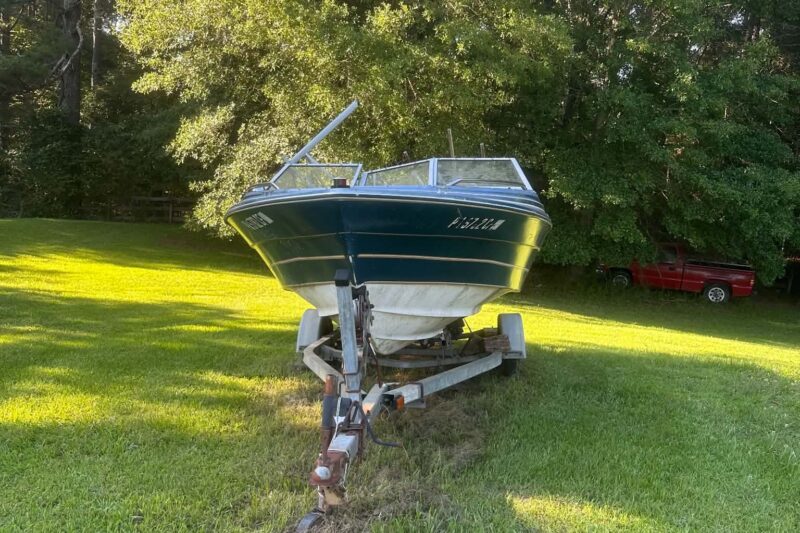
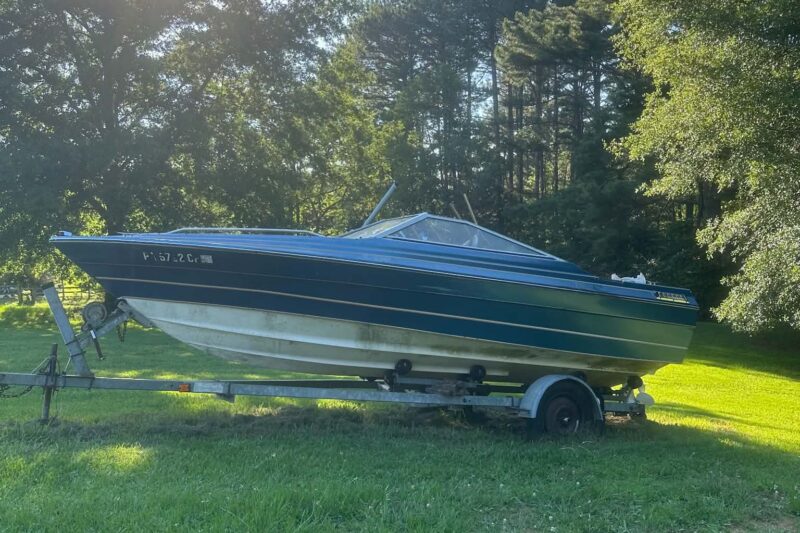
A vessel that once provided fishing trips, weekend adventures, or years of recreation can eventually become an unwanted project. Engines stop running. Trailers deteriorate. Fiberglass hulls become damaged. Interiors fall apart. Boats sit unused for years while owners continue wondering what to do with them.
Eventually, the boat has to go.
Boat Scrapyards helps Savannah-area boat owners deal with unwanted vessels through boat removal, marine scrapping, salvage, and disposal solutions. Whether an old boat is sitting on private property, taking up storage space, attached to a deteriorated trailer, or creating a problem for a marina or business, professional removal can provide a practical way to clear it out.
Savannah Boat Scrapping FAQs
Can you remove old boats in Savannah?
Boat Scrapyards helps boat owners address old, unwanted, damaged, and non-running vessels in the Savannah area. Removal requirements depend on the boat’s condition, size, location, and accessibility.
Do boats have to be running?
No. Non-running vessels are frequently the boats owners have the most difficulty moving themselves. A failed engine or damaged trailer can make normal transportation impossible.
What types of boats can be removed?
Depending on the vessel, removal can include fishing boats, sailboats, cruisers, runabouts, fiberglass boats, aluminum boats, recreational vessels, and certain commercial or work boats.
Can you remove the boat and trailer?
The trailer can be considered as part of the overall removal project. Old trailers frequently have their own problems, including damaged tires, seized bearings, and deteriorated frames.
Are fiberglass boats accepted?
Fiberglass boats require different handling from aluminum or steel vessels. The boat’s construction and condition help determine the appropriate removal and disposal approach.
What happens after a boat is removed?
The vessel can be evaluated for salvageable components and scrap materials. Depending on its condition, different parts and materials may be separated and processed appropriately.
Why Savannah Boat Owners Eventually Need Boat Removal
A boat can remain useful for many years when it is properly maintained.
The problem begins when maintenance stops.
Maybe the owner no longer has time to use the boat. Maybe a major engine failure makes the vessel too expensive to repair. Perhaps the boat was inherited from a family member. In other cases, a restoration project simply became much larger than expected.
Whatever the reason, an unused boat takes up an enormous amount of space.
It can sit behind a house, in a driveway, on a trailer, in a storage yard, or around a commercial property.
And while it sits there, the boat continues to deteriorate.
Coastal Georgia’s humid, wet environment can be especially hard on neglected marine equipment. Moisture, sun, wind, salt air, and temperature changes can affect engines, electrical components, upholstery, hardware, trailers, and hulls over time.
The longer an unwanted vessel sits, the more difficult it may become to move.
That is why dealing with an unwanted boat sooner rather than later can make sense.
The Difference Between Selling a Boat and Removing a Boat
When a boat is still desirable, selling it may be an option.
But what happens when the boat does not have much market appeal?
A broken-down vessel with a dead engine, deteriorated interior, damaged hull, and unusable trailer is not necessarily something buyers are lining up to purchase.
Even if someone agrees to take it, transportation can become a separate problem.
Owners may spend weeks advertising the boat, answering questions, arranging inspections, and trying to find someone willing to haul it away.
At some point, the effort may no longer be worth it.
Boat scrapping gives owners another option.
Instead of trying to convince someone that an unwanted boat is worth restoring, the focus becomes removing the vessel and evaluating it for scrap or salvage.
The Types of Boats We Scrap, Salvage & Dispose Of
Every vessel has different characteristics, but several types commonly become candidates for boat removal.
Fishing Boats
Fishing boats can accumulate years of equipment, electronics, engines, wiring, fuel systems, and marine hardware. Once repairs become too expensive, removing the vessel can make more sense than continuing to invest in it.
Sailboats
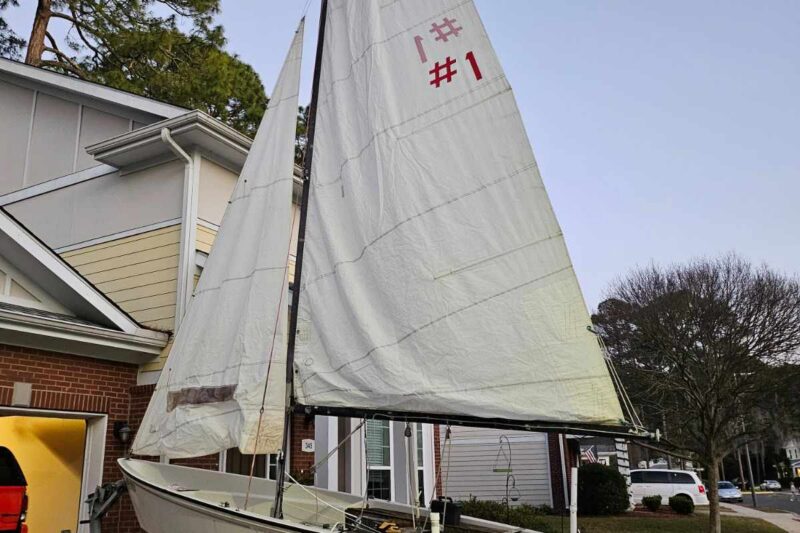
Older sailboats can become substantial restoration projects. Deteriorated rigging, sails, decks, engines, interiors, and hull components can leave owners with an expensive vessel that is no longer being used.
Cruisers
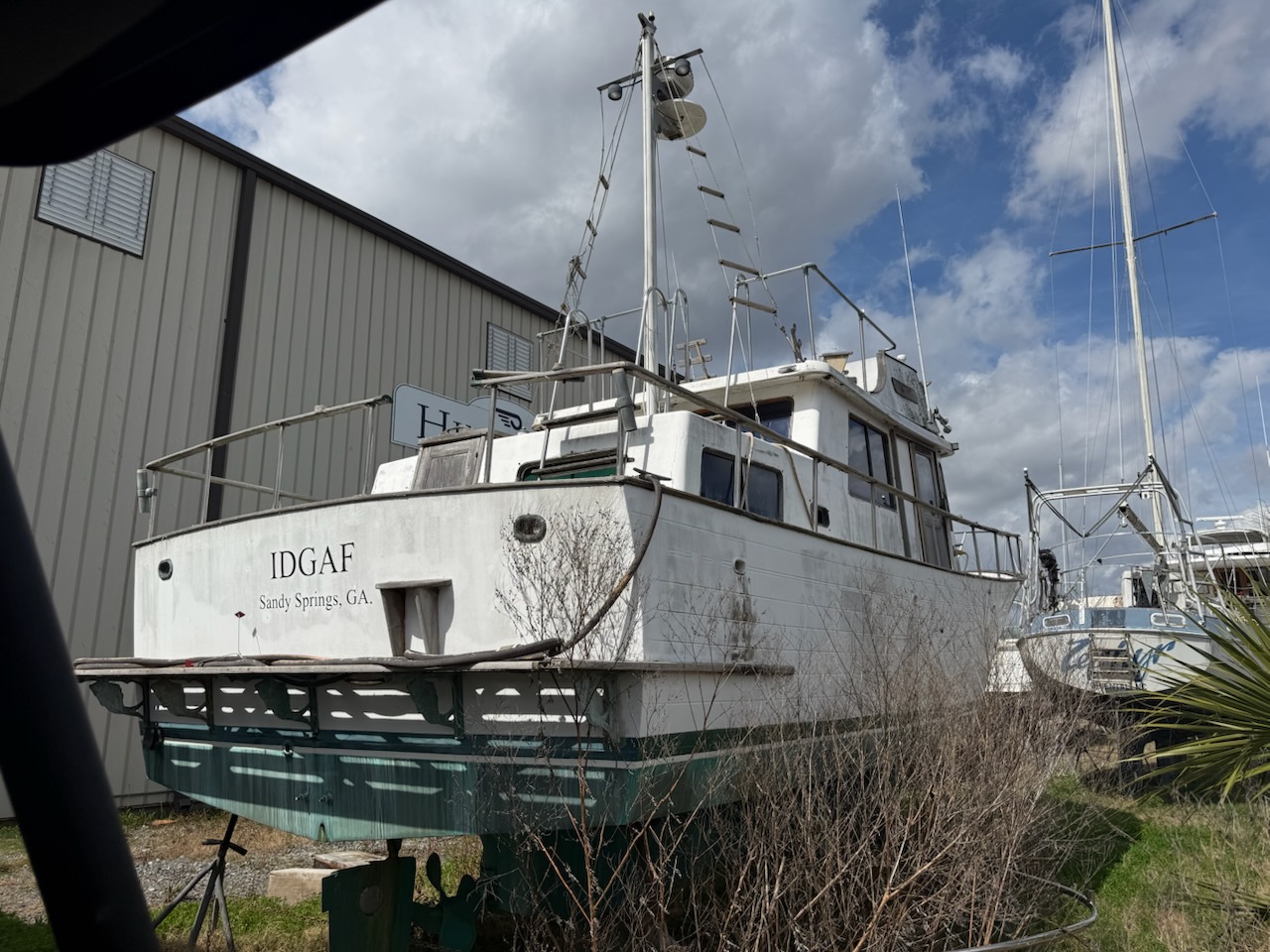
Cruisers can contain cabins, plumbing, electrical systems, larger engines, appliances, and other equipment. When multiple systems begin failing, restoration costs can rise quickly.
Runabouts and Recreational Boats
Smaller recreational boats often sit on trailers. When the trailer fails or the boat has been neglected for years, owners may have no practical way to move the vessel themselves.
Aluminum Boats
Aluminum fishing and recreational boats can contain significant quantities of recoverable metal. Their condition and construction help determine their scrapping potential.
Fiberglass Boats
Fiberglass boats can be more complicated to dispose of because the hull itself is not simply conventional metal scrap. Dismantling and material handling may be necessary.
Commercial and Work Boats
Coastal Georgia has substantial commercial marine activity, and older work vessels can eventually become obsolete, damaged, or too expensive to maintain.
When an Old Boat Becomes a Scrap Project
Age alone does not determine whether a boat belongs in a scrapyard.
Condition does.
A properly maintained older boat may still have plenty of useful life. Meanwhile, a newer vessel that has suffered major damage may become economically impractical to restore.
The warning signs are often obvious once you look at the boat as a whole.
The engine needs replacement.
The electrical system needs rebuilding.
The hull has structural damage.
The trailer needs major work.
The interior has deteriorated.
The fuel system needs attention.
The list keeps growing.
At some point, repairing the boat stops being a single project and becomes a complete rebuild.
That is when owners should consider whether the vessel is actually worth saving.
If the answer is no, removing the boat can provide a clean way to end the project.
Savannah’s Waterfront Creates a Natural Need for Marine Removal
Savannah’s connection to the Savannah River and surrounding coastal waterways makes marine activity an important part of the region.
Boats are used for recreation, fishing, transportation, commercial activity, and access to the surrounding waterways.
With a large boating community comes a wide variety of vessels.
Some are new.
Some are carefully maintained.
Others have been sitting unused for years.
Those older vessels can eventually create problems for owners and property managers.
A boat that has become unseaworthy may still occupy valuable storage space. A damaged recreational vessel may remain on a trailer long after its owner stopped using it. An older work boat may become too expensive to maintain.
Boat removal gives owners a way to address those situations without continuing to store an unwanted vessel.
Residential Boat Removal in Savannah
Many boat owners do not store their vessels directly on the water.
Boats may be kept in driveways, side yards, garages, workshops, private storage facilities, or commercial lots.
A large boat can dominate a property.
If it has not been used in years, there is often little reason to continue giving it valuable space.
This is particularly common with unfinished restoration projects.
An owner purchases an old boat with the intention of fixing it up. The project starts with enthusiasm. Then work slows down. Months turn into years.
Eventually, the unfinished boat becomes part of the property.
Removing it can give the owner back that space.
For homeowners preparing to sell or renovate a property, clearing an unwanted vessel can also eliminate a major obstacle during the cleanup process.
Boat Trailer Problems Can Make Removal Difficult
One of the biggest issues with old boats is the trailer underneath them.
A trailer may look intact while hiding serious mechanical problems.
Tires can become dry-rotted. Bearings can seize. Axles can deteriorate. Brakes can stop working. Wiring can corrode.
If the boat has been sitting for a long time, the trailer may not be safe to tow.
That creates an immediate transportation problem.
The owner cannot simply hitch the trailer to a truck and head down the road.
A professional removal project can take the condition of the boat and trailer into account rather than requiring the owner to make the vessel roadworthy first.
Marina and Waterfront Boat Removal
Boat removal around a marina or waterfront property can require additional planning.
Other vessels may be nearby. Access lanes may be narrow. Docks, buildings, vehicles, storage equipment, and other obstacles can affect how the boat can be moved.
A non-running boat creates additional complications.
Owners should provide accurate information about the vessel’s location and condition when requesting removal. Approximate size, construction, trailer status, accessibility, and whether the boat is currently on land or in the water can all matter.
Good planning helps avoid surprises.
Storm-Damaged and Neglected Boats
Severe weather can leave boat owners with difficult decisions.
A storm-damaged vessel may have problems with the hull, deck, trailer, electronics, engine, interior, or other components.
Even when the damage looks manageable, the total repair cost can quickly become substantial.
Neglected boats have similar problems.
Years of inactivity can allow small issues to become major ones.
An engine that once needed routine maintenance may eventually seize. A trailer that once rolled normally may develop serious mechanical problems. Water intrusion can cause widespread deterioration.
Once the boat has reached that point, scrapping can be worth considering.
Fiberglass Boat Disposal Requires Planning
Fiberglass boats are common throughout coastal Georgia, but their disposal can be challenging.
The hull is constructed from composite materials, and the vessel may also contain foam, wood, wiring, tanks, engines, hardware, and other components.
Simply throwing the boat away is not a practical solution.
The vessel needs to be removed and evaluated as a whole.
Components with potential salvage value may be separated. Metal can be sorted where appropriate. The fiberglass structure may require a different disposal process.
For an owner with a large fiberglass hull sitting on a property, professional assistance can eliminate the headache of figuring out every part independently.
Marine Scrapping Can Separate Valuable Materials
A boat that has reached the end of its useful life can still contain materials worth recovering.
Depending on the vessel, there may be aluminum, stainless steel, other metals, engines, transmissions, marine electronics, trailer components, wiring, hardware, and equipment.
Some components may have salvage potential.
Others may have scrap value.
This is why marine scrapping involves more than simply hauling away a boat and forgetting about it.
The vessel can be evaluated based on its construction and condition.
Different materials can then be handled appropriately.
For the owner, the most important part is having the unwanted vessel removed without having to dismantle the entire boat alone.
What Happens After Your Boat Is Picked Up & Hauled Away?
After removal, the boat can be evaluated to determine what materials and components remain useful.
Mechanical equipment may be separated for evaluation. Metal components can be sorted. Trailer parts may be handled separately. Other materials can be addressed based on the construction of the vessel.
A fiberglass boat will require a different approach from an aluminum boat.
A severely damaged vessel may have fewer usable components than one that was simply neglected.
There is no single outcome for every boat.
The process depends on what is actually there.
But from the owner’s perspective, the major result is the same: the boat is gone and the space is cleared.
Why Boat Scrapyards?
Finding someone to take an old boat can be surprisingly difficult.
Traditional junk removal companies may not be equipped for oversized marine vessels. Standard towing companies may not be prepared to deal with deteriorated boats or failed trailers. Disposal facilities may have their own requirements for marine materials.
Boat Scrapyards focuses on unwanted boats.
The process starts by understanding the actual situation.
What type of boat is it?
How large is it?
Where is it located?
Does it run?
Is the trailer usable?
Can the property be accessed?
What condition is the vessel in?
These details help establish the removal requirements.
For Savannah-area owners who have been putting off a boat cleanout because they do not know where to start, having a company focused on marine removal can make the process much more straightforward.
Stop Letting an Old Boat Become a Permanent Fixture
The longer an unwanted boat sits, the more it can become part of the property.
A temporary storage decision can turn into years of neglect.
Meanwhile, the boat continues occupying space and deteriorating.
If you have a vessel that has not been used in years, a restoration project that has gone nowhere, or a damaged boat that is no longer worth repairing, it may be time to stop postponing the inevitable.
Boat Scrapyards helps Savannah boat owners address unwanted vessels through boat removal, marine scrapping, salvage, and disposal.
Whether it is an old fishing boat, neglected sailboat, damaged cruiser, fiberglass project, aluminum vessel, or non-running boat sitting on a deteriorated trailer, the first step is getting the vessel addressed.
Clear the driveway.
Clear the storage area.
Clear the marina space.
Get the unwanted boat out of the way.
For Savannah-area property owners dealing with an old vessel, Boat Scrapyards provides a practical path toward finally getting the boat removed and moving on.