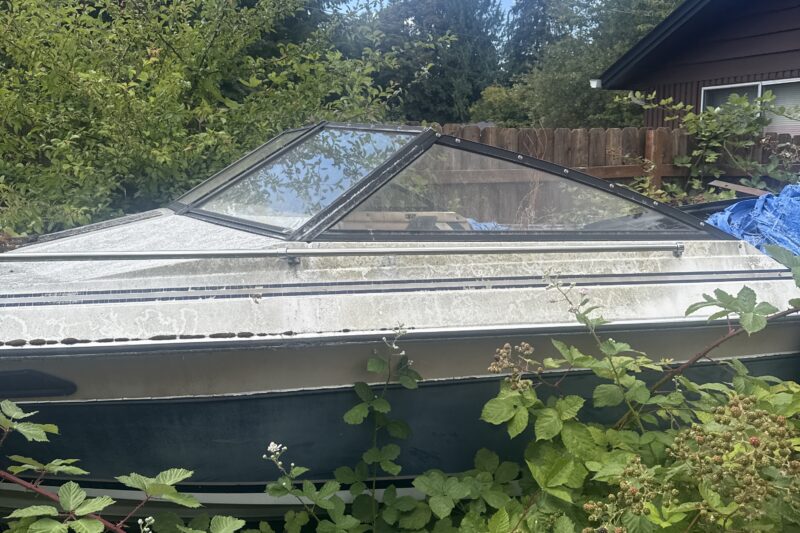
A boat does not have to sink to become a serious problem. Sometimes it is sitting on a trailer behind a Tacoma home. Sometimes it has been parked at a storage yard for years. Sometimes a marina has an aging vessel that is no longer operational, while the owner has no practical way to move it. In other cases, a boat has suffered enough damage that repairing it simply does not make financial sense.
When that happens, boat scrapping and professional boat removal can provide a practical way forward.
Tacoma’s location on Puget Sound gives the area a strong connection to boating, fishing, marinas, waterfront properties, and commercial marine activity. Boats around the region deal with constant moisture, rain, changing temperatures, and years of exposure to saltwater or damp conditions. Even vessels that were once dependable can eventually reach the point where removal makes more sense than continued maintenance.
Boat Scrapyards helps owners address that problem by providing solutions for unwanted, damaged, aging, and non-running boats.
Whether you have an old fishing boat taking up space, a fiberglass cruiser that has become too expensive to restore, an aluminum vessel that has reached the end of its useful life, or a boat sitting unused on a deteriorating trailer, getting it removed can finally eliminate the headache.
Tacoma Boat Removal FAQs
Do you remove boats that are not running?
A boat does not need to be operational to be considered for removal. Non-running and deteriorated vessels are common candidates for professional boat hauling. The size, condition, location, and accessibility of the boat determine how the removal needs to be handled.
Can an old boat sitting on a trailer be removed?
Yes. Trailer condition is an important part of the removal process. Flat tires, rust, damaged axles, or a non-functional trailer can make an old boat much more difficult to move, but those circumstances can be evaluated when arranging removal.
What types of boats can be scrapped?
Boat Scrapyards works with inquiries involving many different types of boats, including fishing boats, sailboats, cruisers, runabouts, aluminum boats, fiberglass boats, pontoon boats, work boats, and other unwanted watercraft.
Can you remove boats from private property?
Boat removal may be possible from driveways, yards, storage areas, boatyards, and other private locations when the owner or authorized party has permission for the vessel to be removed.
What happens to a boat after it is hauled away?
The vessel can be evaluated based on its materials, components, construction, and condition. Metal, mechanical equipment, hardware, trailers, and other components may be separated and handled according to their characteristics.
Do I need to restore the boat before having it removed?
If your goal is to get rid of the boat, investing heavily in restoration first may not make sense. The vessel can be evaluated in its existing condition to determine the most practical removal approach.
Tacoma’s Marine Environment Can Be Hard on Old Boats
Puget Sound is beautiful, but it is not an easy environment for neglected equipment.
Moisture gets into everything.
Metal corrodes. Hardware deteriorates. Wiring develops problems. Upholstery breaks down. Covers eventually fail. Wood can absorb moisture, and fiberglass vessels can develop their own collection of structural and maintenance issues.
For boats that are actively maintained, these problems can often be managed.
For boats that sit untouched for years, deterioration becomes a different story.
A vessel that once looked perfectly serviceable can eventually become a shell of what it used to be.
Tacoma’s marine environment makes this particularly relevant for owners who have boats stored outdoors or near the water. A vessel does not necessarily have to be submerged or severely damaged to become a disposal candidate. Sometimes years of ordinary exposure combined with deferred maintenance are enough.
When Boat Ownership Turns Into Boat Storage
There is a familiar pattern among owners of aging vessels.
The boat stops getting used.
The owner thinks they will repair it next season.
Then next season comes and goes.
The boat stays on the trailer.
Eventually, the project becomes too expensive or time-consuming to justify.
At that point, the owner is no longer really storing a boat for future use. They are storing a problem.
The longer that continues, the more difficult the removal can become.
Trailer tires may fail. Components may seize. Vegetation can grow around the hull. Access can become restricted. Covers can deteriorate and allow additional moisture inside.
Getting ahead of the problem can be far easier than waiting until the vessel has deteriorated further.
The Types of Boats We Scrap, Salvage & Dispose Of
Boat Scrapyards can receive requests involving a wide range of vessels.
Tacoma-area boating includes everything from small recreational craft to larger fishing and working vessels, and unwanted boats can eventually come from any category.
Potential removal projects include:
- Fishing boats
- Aluminum fishing boats
- Fiberglass boats
- Sailboats
- Bowriders
- Runabouts
- Center-console boats
- Cabin cruisers
- Small yachts
- Pontoon boats
- Utility boats
- Older work boats
- Commercial vessels
- Damaged boats
- Non-running boats
- Boats with deteriorated trailers
The condition of the boat is often more important than its age.
A 30-year-old boat that has been maintained may still be valuable and useful.
A much newer vessel that suffered major damage or was neglected for years may be a completely different situation.
That is why removal decisions should be based on the actual vessel rather than simply its model year.
Tacoma Boat Scrapping Starts With the Entire Vessel
One reason boat disposal can become complicated is that a boat is not a single material.
A vessel can contain a combination of metals, plastics, fiberglass, wood, rubber, wiring, mechanical systems, and other components.
An older boat may contain:
- Aluminum
- Stainless steel
- Steel
- Copper wiring
- Bronze hardware
- Engines
- Outboard motors
- Propellers
- Fuel tanks
- Batteries
- Pumps
- Marine electronics
- Trailer components
- Railings
- Hardware
This mixture is why marine scrapping requires a different approach from ordinary household junk removal.
The hull may be only one part of the project.
Equipment and components may need to be addressed separately before the remaining vessel is processed.
For owners, the advantage of professional boat removal is that they do not have to figure out every stage of that process themselves.
Saltwater Exposure and Corrosion
Tacoma’s relationship with Puget Sound creates another issue for aging boats: corrosion.
Metal and marine environments have never been particularly good friends.
Hardware, fasteners, rails, trailer components, electrical connections, and other metal parts can deteriorate over time. A boat that spends years exposed to moisture can develop problems that are not immediately visible.
The trailer can be especially important.
An owner may look at the boat and think the vessel itself is still manageable, only to discover that the trailer has become severely compromised.
If the boat cannot be safely towed, traditional transportation becomes much more difficult.
That is one reason it is useful to evaluate the entire boat-and-trailer combination rather than treating them as separate problems.
Old Fiberglass Boats Around Tacoma
Fiberglass made recreational boating more accessible and remains one of the most common construction materials for pleasure craft.
It also creates a unique disposal challenge when a boat reaches the end of its life.
A fiberglass hull does not have the same straightforward scrap characteristics as an aluminum hull.
An older fiberglass boat may contain fiberglass laminate, wood components, foam, metal hardware, wiring, an engine, fuel-system equipment, and other materials.
If the vessel has been sitting outdoors for years, the owner may be tempted to dismantle it piece by piece.
That can quickly turn into a major undertaking.
There is the labor involved, the size of the hull, the debris created during dismantling, and the question of how each material should ultimately be handled.
For many property owners, arranging professional removal is a much more practical starting point.
Aluminum Boats Are Different
Aluminum boats present a different scrapping opportunity.
Small aluminum fishing and utility boats are common throughout the Pacific Northwest because the material provides a useful combination of durability and relatively low weight.
When an aluminum boat is no longer wanted, its metal construction becomes an important consideration.
Other components may still need to be separated, including engines, wiring, seats, fuel systems, hardware, and trailer components.
The scrap value of a boat depends on its actual weight, construction, condition, and the materials present. No two boats should automatically be assigned the same value.
But for an owner who has an old aluminum boat taking up space, professional boat scrapping can offer a practical exit strategy.
Boats at Tacoma Marinas, Storage Areas & Yards
Not every unwanted boat is sitting behind someone’s house.
Marinas and storage facilities can also end up with vessels that have effectively been abandoned or neglected.
A boat occupying a storage position is taking up space that could potentially be used for an active vessel.
That creates a problem for property managers and marina operators.
The situation can be even more frustrating when the vessel has not moved in years and the owner is no longer interested in maintaining it.
Before removal is arranged, ownership and authorization should be properly addressed. Once the responsible party has the authority to have the vessel removed, professional hauling can help clear the space.
For businesses that manage multiple boats, removing a single unwanted vessel can also be the first step toward a larger property cleanup.
Boat Removal From a Tacoma Home
Residential boat removal comes with its own set of challenges.
A boat may be parked beside a garage, behind a fence, at the bottom of a sloped driveway, or in a backyard with limited equipment access.
The trailer may not roll.
The tires may be flat.
The boat may be partially dismantled.
Trees or structures may prevent a conventional towing vehicle from reaching the vessel.
These details matter.
A removal plan needs to account for the actual conditions surrounding the boat rather than assuming every vessel can simply be hitched to a truck and driven away.
That is why photographs and accurate information about the boat’s location can be valuable when requesting a removal quote.
When Restoration Is No Longer Worth the Money
Boat restoration can be rewarding when the vessel has genuine value.
But restoration is not automatically the right answer.
Imagine an older boat with a failed engine, deteriorated trailer, damaged wiring, worn interior, hull problems, and years of deferred maintenance.
Each repair may seem manageable by itself.
Together, they can create a restoration bill that makes little financial sense.
This is where owners sometimes need to be realistic.
If the boat is worth less than the cost of getting it back into usable condition, continuing to pour money into it may simply delay the inevitable.
Scrapping allows the owner to stop spending money on a vessel that no longer fits their needs.
What Happens After Your Boat Is Picked Up & Hauled Away?
Once the boat has been removed, its next steps depend on the vessel’s materials, condition, and components.
Metal may be separated for scrapping.
Mechanical components can be evaluated independently.
Trailer parts may be handled separately from the hull.
Other materials may require different disposal methods.
The exact process varies by vessel.
The important point for the owner is that the boat is no longer sitting on the property.
That means no more tarp-covered hull taking up driveway space.
No more deteriorating trailer sitting beside the garage.
No more neglected vessel becoming an eyesore.
And no more wondering what to do with it every time you walk past.
Boat Scrapping for Tacoma and the South Puget Sound Region
Tacoma’s boating community extends beyond the city itself.
The South Puget Sound region includes numerous waterfront communities, marinas, storage facilities, residential properties, and boat owners dealing with aging vessels.
That makes professional boat removal useful for more than just waterfront properties.
A boat can be several miles from the water and still create the exact same problem: it is large, difficult to move, and no longer wanted.
Boat Scrapyards can help owners explore removal options based on the vessel and its location.
Whether the boat is near the water, sitting on a residential property, parked at a storage yard, or waiting on an old trailer, the first step is simply determining what is involved.
Stop Letting an Unwanted Boat Take Up Your Space
There is no benefit to keeping a boat that you already know you will never use.
Every month it sits outside is another month of exposure.
Every season can add another layer of deterioration.
And every year you wait can make the removal more complicated.
If you have an old, damaged, abandoned, non-running, or simply unwanted boat in the Tacoma area, Boat Scrapyards can help you start the process of getting it out of the way.
You do not need to restore it.
You do not need to make it look presentable.
You do not need to spend another year searching for someone willing to take it.
Provide the basic information about the vessel, its condition, and where it is located. From there, the removal requirements can be determined.
For Tacoma boat owners, getting rid of an unwanted vessel does not have to become a second job.
When the boat has reached the end of its useful life, professional boat removal and marine scrapping can turn an ongoing headache into a cleared space and a finished project.
Contact Boat Scrapyards and take the first step toward getting that old boat gone.