Norfolk sits at the center of one of Virginia’s most active maritime regions. With the Elizabeth River, Chesapeake Bay, Hampton Roads, marinas, waterfront properties, fishing activity, commercial vessels, and recreational boating all surrounding the city, boats are an everyday part of the local landscape.
But not every boat on the water is still worth keeping.
Some vessels have spent years sitting unused. Others have suffered storm damage, mechanical failure, structural deterioration, or years of neglect. A boat that once provided weekends on the water can eventually become an expensive project that nobody wants to finish.
And once an old boat reaches that point, figuring out how to get rid of it can be harder than expected.
Boat Scrapyards helps Norfolk-area boat owners deal with unwanted vessels through boat removal, boat scrapping, marine salvage, and disposal solutions. Whether an old boat is sitting on a trailer, occupying space at a private property, taking up room in storage, or creating problems around a marine facility, the goal is to get the vessel removed and the space cleared.
Norfolk Boat Scrapping FAQs
Can you remove an old boat in Norfolk?
Boat Scrapyards helps owners address unwanted boats in the Norfolk area, including older, damaged, neglected, and non-running vessels. Removal requirements depend on the boat’s size, location, condition, accessibility, and transportation needs.
Does a boat have to be operational to be removed?
No. Non-running boats are often among the vessels owners need help removing. A dead engine or failed electrical system does not necessarily mean the boat has to remain where it is.
What types of boats can be scrapped?
Depending on condition and construction, boats considered for removal may include fishing boats, sailboats, cruisers, runabouts, aluminum boats, fiberglass boats, commercial vessels, and other recreational or marine craft.
Do you remove boat trailers?
An unusable trailer can be just as much of a problem as the boat itself. Trailer condition can be considered when planning the overall removal.
Can you remove fiberglass boats?
Fiberglass vessels can be handled differently from metal boats. Their construction and condition need to be considered when determining the appropriate removal, salvage, or disposal process.
What happens to a boat after it is removed?
The vessel can be evaluated for salvageable components and scrap materials. Depending on its condition, certain parts may be separated for salvage or scrapping while the remaining materials are handled appropriately.
Why Norfolk Has So Many Unwanted Boats
A major boating community naturally produces older vessels.
Norfolk’s location around Hampton Roads and the Chesapeake Bay puts boat owners close to an enormous amount of marine activity. Fishing, recreational boating, sailing, commercial operations, and waterfront businesses all contribute to the number and variety of vessels in the region.
As boats age, however, maintenance becomes more demanding.
Engines require increasingly expensive repairs. Electrical systems become outdated. Decks and interiors deteriorate. Trailer components fail. Hulls can suffer damage or prolonged exposure to moisture.
The problem is not always one catastrophic failure.
Sometimes it is simply years of small problems adding up.
An owner may keep postponing repairs because the boat is not being used. Eventually, the vessel sits for months or years. By the time the owner decides to deal with it, the boat may be significantly more difficult to move than it was originally.
At that point, selling it may not be realistic.
A professional boat removal and scrapping option can provide an alternative.
When an Old Boat Becomes More Trouble Than It Is Worth
There is nothing wrong with restoring an older boat when the vessel has good bones and the owner has the time and budget for the project.
The problem starts when restoration becomes an endless money pit.
Imagine an older boat with a failed engine. Replacing the engine is already expensive. Then the owner discovers damaged wiring, deteriorated upholstery, trailer problems, leaks, and additional structural work.
Suddenly, the boat needs thousands of dollars of investment before it can even return to the water.
That is when owners should step back and evaluate the entire project.
How much is the boat actually worth when completed?
How much will repairs cost?
How much time will restoration require?
Is the boat going to be used regularly?
If the answers do not make sense, scrapping the vessel may be the more practical decision.
Boat Scrapyards gives Norfolk owners an option for moving forward when restoration is no longer worthwhile.
The Types of Boats We Scrap, Salvage & Dispose Of
Old boats come in almost every configuration imaginable, and the disposal process can vary considerably depending on the vessel.
Fishing Boats
Fishing boats can contain engines, electronics, fuel systems, fishing equipment, aluminum, stainless hardware, and other marine components. Once the vessel becomes too expensive to maintain, removing it can be the best way to clear the property.
Sailboats
Sailboats can become difficult disposal projects when their rigging, sails, decks, interiors, or mechanical systems deteriorate. Older sailboats can also occupy significant storage space.
Cruisers
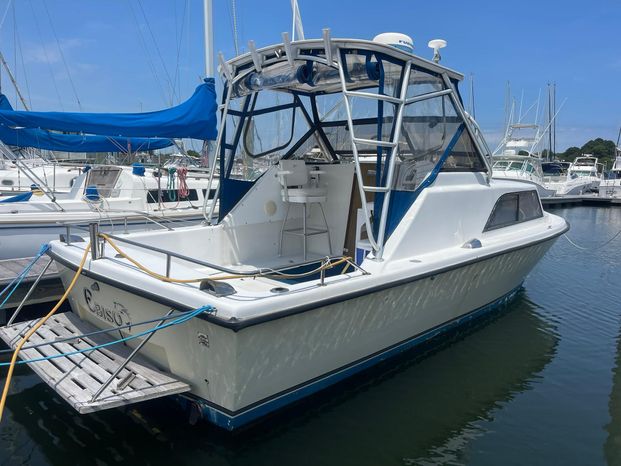
Cruisers often contain larger engines, enclosed interiors, plumbing, electrical systems, and other equipment. When these systems fail simultaneously, restoration can become financially impractical.
Runabouts and Smaller Recreational Boats
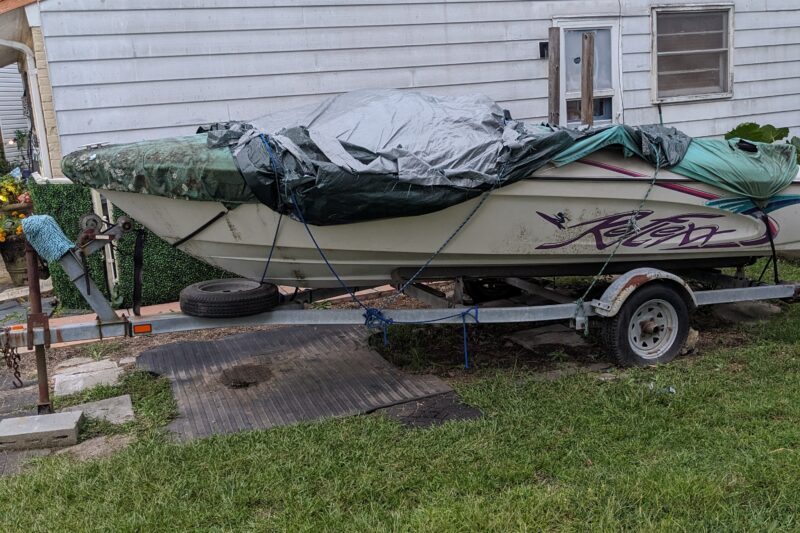
Smaller boats may appear easier to dispose of, but a deteriorated trailer can make moving them difficult. An owner may have no practical way to transport the vessel safely.
Aluminum Boats
Aluminum boats can be attractive candidates for scrapping because of their metal construction. The amount and condition of recoverable material varies from vessel to vessel.
Fiberglass Boats
Fiberglass vessels require a different disposal strategy than aluminum or steel boats. Their composite construction can make traditional disposal more complicated, particularly when the hull is large or severely damaged.
Commercial and Work Boats
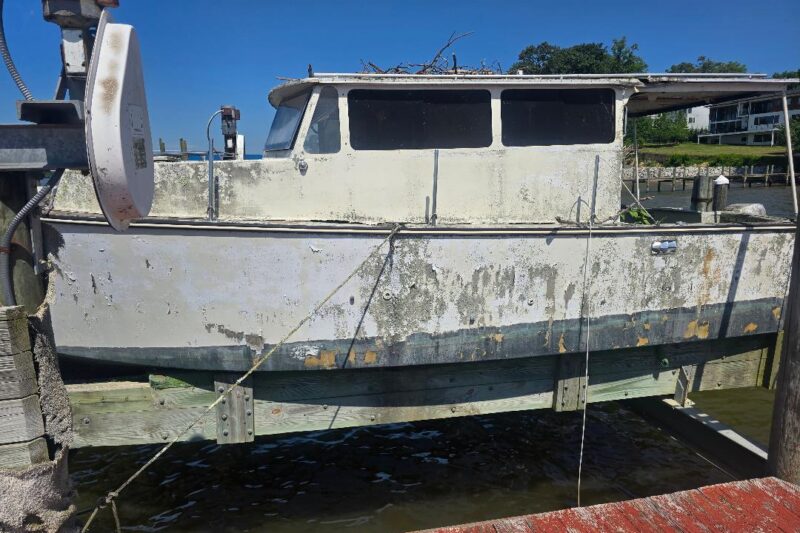
Hampton Roads has a long-standing connection to commercial maritime activity. Older work boats and commercial vessels can eventually become obsolete, damaged, or too expensive to maintain.
Hampton Roads Marine Activity and Boat Removal
Norfolk’s relationship with the water is one of the reasons marine disposal is such an important consideration in the region.
The surrounding Hampton Roads area includes a network of waterways and communities where vessels are regularly used, stored, repaired, and maintained.
That creates a steady cycle.
Newer vessels enter the market. Older boats continue operating. Some are sold. Some are restored. Others eventually reach the end of their useful lives.
The difficult vessels are the ones that do not have an obvious next owner.
An old boat with a failing engine and deteriorated hull is not an attractive purchase. A neglected vessel sitting on a bad trailer can be difficult to transport. A fiberglass boat that has been abandoned for years can be expensive to dispose of properly.
Those are the boats that often require professional removal.
Boat Trailer Problems Are Common
A boat can be perfectly capable of being moved while sitting on a trailer that is not.
This is one of the most overlooked problems in boat disposal.
Trailer tires can deteriorate from age and inactivity. Wheel bearings can seize. Brakes can fail. Wiring can corrode. Frames and supports can weaken.
If the trailer has not moved in years, assuming that it is ready for the highway can be a serious mistake.
Some owners discover this only after attempting to prepare the boat for sale or transport.
When the trailer is no longer roadworthy, the removal project becomes more complicated.
Boat Scrapyards can evaluate the overall situation instead of expecting the owner to solve the trailer problem independently.
Residential Boat Removal in Norfolk
Not every unwanted vessel is located at a marina.
Boats can sit in driveways, side yards, residential storage areas, garages, commercial lots, and private properties throughout the Norfolk area.
For homeowners, an old boat can become an enormous space-consuming object.
A vessel that was once used every weekend may eventually become a permanent fixture behind the house.
The longer it remains there, the more neglected it can become.
Removing the boat can open up space for vehicles, landscaping, construction, storage, or other uses. It can also improve the appearance of a property that is being prepared for sale or renovation.
For inherited properties, removal can be especially useful. Family members may inherit a boat without having any interest in maintaining it.
Rather than spending years trying to figure out what to do with the vessel, arranging professional removal can resolve the problem.
Marina and Waterfront Boat Removal
Boats stored near the water can present their own challenges.
A marina may have specific access points, narrow travel lanes, surrounding vessels, docks, and other equipment that affect how a boat can be moved.
A vessel that is not operational may require additional planning.
Owners should be prepared to provide information about the boat’s approximate size, condition, location, trailer status, and accessibility when requesting removal.
Those details help determine what the removal project may involve.
The objective is to avoid turning a simple request into an unexpected logistical problem.
Storm-Damaged and Neglected Boats
Waterfront communities regularly have to deal with vessels that have suffered significant weather exposure.
A boat may survive a storm but still sustain damage to its hull, deck, electrical systems, interior, or trailer.
In other cases, a vessel may simply deteriorate from years of sitting outdoors without maintenance.
Once a boat has sustained major damage, the owner may face a difficult decision.
Repairing the vessel could cost more than it is worth.
Leaving it in place does not solve the problem.
Selling it may not be realistic.
That is where boat scrapping and removal can become a practical alternative.
Why Fiberglass Boats Need Special Consideration
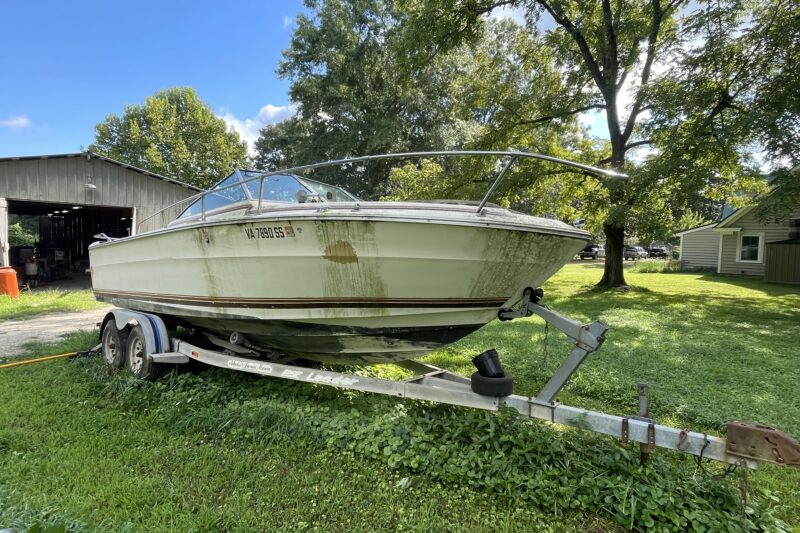
Fiberglass boats are common throughout Virginia’s boating community, but disposing of one is not the same as hauling away an ordinary metal object.
The hull can contain layers of composite material, wood, foam, hardware, wiring, mechanical equipment, and other components.
When the vessel is no longer seaworthy, the owner still has to figure out what to do with all of it.
A professional removal process can begin by assessing the vessel as a whole.
Components with potential salvage value can be identified. Metal can be separated where appropriate. The fiberglass structure can then be handled according to the requirements of the project.
The important thing is not leaving the owner with a massive hull that is still sitting on the property after everything else has been removed.
Marine Scrapping Goes Beyond the Hull
An old boat can contain a surprising amount of material.
Depending on the vessel, there may be aluminum, steel, stainless hardware, wiring, engines, transmissions, batteries, trailer components, marine electronics, fuel systems, and other equipment.
Some components may be worth salvaging.
Others may have scrap value.
That is why professional marine scrapping involves looking at the entire boat rather than treating the vessel as one indivisible object.
The condition of each component can affect what happens next.
A severely deteriorated boat may have limited salvage potential, while another older vessel may still contain valuable equipment.
Either way, the removal process starts by getting the unwanted boat out of the owner’s way.
What Happens After Your Boat Is Picked Up & Hauled Away?
After removal, the vessel can be assessed based on its condition and construction.
Usable equipment may be separated from the boat. Metal components can be sorted. Engines and mechanical systems can be evaluated. Trailer components may be handled separately.
Fiberglass hulls require different handling from aluminum or steel vessels.
The exact outcome depends on what the boat contains and what condition it is in.
For the owner, the major benefit is that the unwanted vessel is no longer occupying valuable space.
That can mean an empty driveway, a cleared storage area, additional marina space, or simply one less neglected project to worry about.
Why Choose Boat Scrapyards for Norfolk Boat Removal?
Finding a buyer for an old boat is not always easy.
Finding someone willing to remove a damaged, non-running, or severely deteriorated vessel can be even harder.
Boat Scrapyards focuses specifically on unwanted boats and the challenges associated with removing them.
The process is centered around the vessel’s actual circumstances.
Where is it located?
How large is it?
Is it operational?
Is the trailer usable?
Can the removal equipment access the property?
Does the boat have significant damage?
These are the types of details that matter when planning boat removal.
For Norfolk owners who have been staring at the same unwanted boat for months or years, having a company focused on marine removal can make the next step much easier.
Get the Old Boat Out of the Way
An unwanted boat does not become easier to deal with by sitting untouched.
Every season of neglect can create another problem. Tires deteriorate. Engines seize. Water intrusion gets worse. Interior materials break down. Property space remains occupied.
Eventually, the owner has to make a decision.
For Norfolk and Hampton Roads boat owners, Boat Scrapyards offers a straightforward way to address old, damaged, unwanted, and non-running vessels.
Whether it is an aging fishing boat, an abandoned sailboat, a fiberglass restoration project, a damaged cruiser, an aluminum fishing vessel, or a commercial boat that has reached the end of its useful life, professional removal can eliminate a major headache.
You do not have to keep paying for storage space around a boat you no longer use.
You do not have to keep postponing a restoration project that no longer makes financial sense.
And you do not have to spend years wondering how you are going to get rid of an oversized vessel.
Get the boat addressed. Clear the property. Move forward.
Boat Scrapyards is ready to help Norfolk-area owners take the next step toward boat removal, marine scrapping, salvage, and disposal.