Charleston, South Carolina is surrounded by water. The Lowcountry’s rivers, tidal creeks, marshes, harbor, and coastal waterways create an environment where fishing, sailing, cruising, and recreational boating are part of the local lifestyle.
But what happens when a boat reaches the end of its useful life?
Not every vessel gets sold to another owner. Some become too expensive to restore. Others suffer storm damage, engine failure, structural deterioration, or years of neglect. A boat may also be inherited by someone who has no interest in owning it.
Eventually, the vessel becomes something that needs to be removed rather than maintained.
That is where Boat Scrapyards comes in.
Boat Scrapyards helps property owners, boat owners, marina operators, and businesses deal with unwanted vessels through boat hauling, marine salvage, dismantling, scrapping, and disposal. Instead of leaving an aging boat sitting on a trailer, in a storage area, or around a waterfront property, owners can arrange for the vessel to be evaluated and removed.
Charleston Boat Removal Questions
Can Boat Scrapyards take old boats in Charleston?
Boat Scrapyards works with owners dealing with unwanted, aging, damaged, and non-operational boats. The logistics of each removal depend on the vessel’s condition, dimensions, location, and accessibility.
What if the boat has not run in years?
A vessel does not have to be operational to be considered for removal. In fact, boats that no longer run are often the ones owners have the most difficulty transporting themselves.
What kinds of vessels can be removed?
Potential removal projects can include fishing boats, sailboats, cruisers, runabouts, pontoon boats, aluminum vessels, fiberglass boats, and other recreational or working craft, depending on the individual circumstances.
Can an old boat trailer be dealt with too?
Yes, the trailer can be considered as part of the overall removal project. An aging boat trailer may have flat tires, seized bearings, damaged axles, or other issues that make normal towing difficult.
Are fiberglass boats difficult to dispose of?
They can be. Fiberglass hulls contain composite materials that require a different approach from conventional metal scrap. The boat can be evaluated based on its construction and condition.
What happens once the vessel is removed?
The boat may be dismantled and evaluated for salvageable equipment, reusable components, and scrap materials. The exact process varies according to the vessel.
Why Charleston Has a Steady Need for Boat Removal
Charleston’s maritime environment means boats are constantly being purchased, operated, stored, repaired, sold, and eventually retired.
That last stage can be surprisingly difficult.
A boat owner may start with a relatively minor repair. Then another issue appears. An engine needs work. The electrical system becomes unreliable. The trailer develops problems. The deck or hull requires attention.
Suddenly, the vessel has become a major project.
Some owners have the time and money to take on that challenge.
Others do not.
A boat can also become unwanted because of changing circumstances. Retirement, relocation, inheritance, financial considerations, or simply losing interest in boating can leave an owner with a vessel that is no longer being used.
Once the boat stops serving a purpose, its size becomes a problem.
Unlike ordinary household belongings, an old boat cannot simply be placed at the curb.
It needs to be moved, hauled, dismantled, salvaged, scrapped, or otherwise handled through an appropriate disposal process.
When Boat Restoration Stops Making Financial Sense
Older boats often have sentimental value.
That can make it difficult to let go.
An owner may remember fishing trips, family vacations, weekend cruises, or years spent working on the vessel. Those memories can make another repair seem worthwhile.
But restoration costs can add up quickly.
An engine replacement alone can represent a major expense. Add electrical repairs, fuel-system work, hull repairs, new equipment, trailer repairs, interior work, and other maintenance, and the total investment can become substantial.
At some point, the question changes.
Instead of asking, “Can this boat be repaired?” the better question may be, “Does repairing this boat make sense?”
If the vessel requires extensive work before it can be safely and practically used again, removal and scrapping may be worth considering.
Boat Scrapyards gives Charleston-area owners an option when they have decided that keeping the boat is no longer practical.
The Boats We Remove, Dismantle & Scrap
There is no single type of boat that becomes unwanted. Different vessels reach the end of their useful lives for different reasons.
Fishing Boats
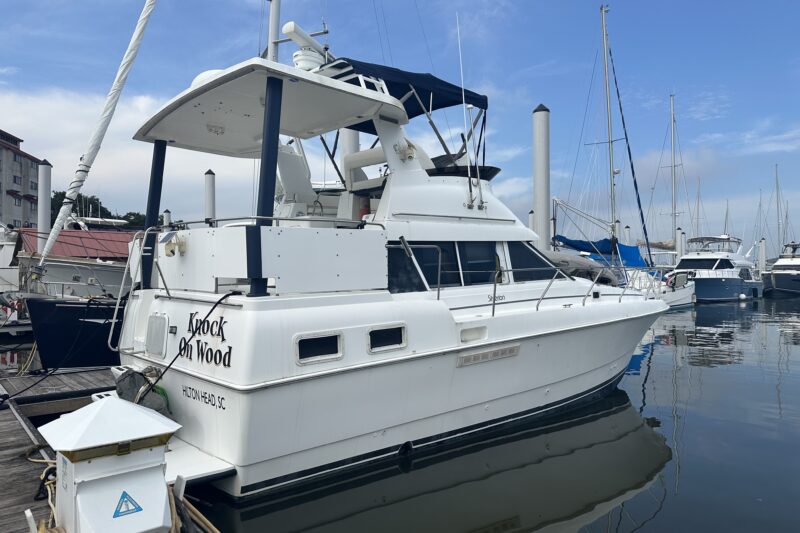
Fishing vessels can contain engines, electronics, wiring, fuel systems, fishing equipment, aluminum, stainless components, and other marine hardware. When repair costs become excessive, removal can be the logical next step.
Sailboats
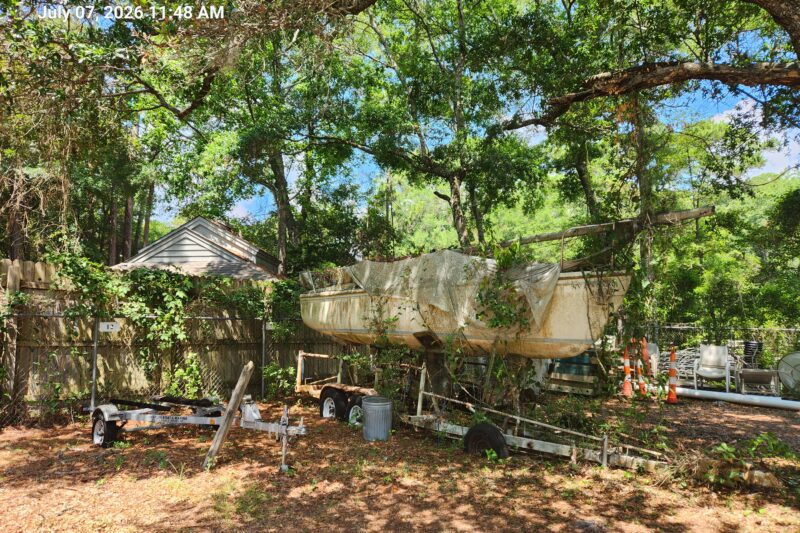
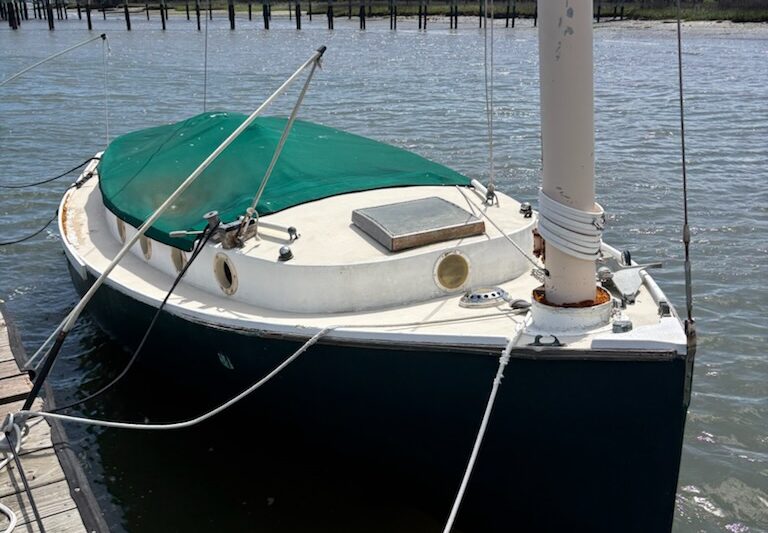
Older sailboats can become major restoration projects when rigging, sails, decks, engines, cabins, and hull components begin deteriorating.
Cruisers
Cruisers often contain multiple mechanical and electrical systems. A major engine problem combined with interior, plumbing, or electrical deterioration can make restoration expensive.
Runabouts
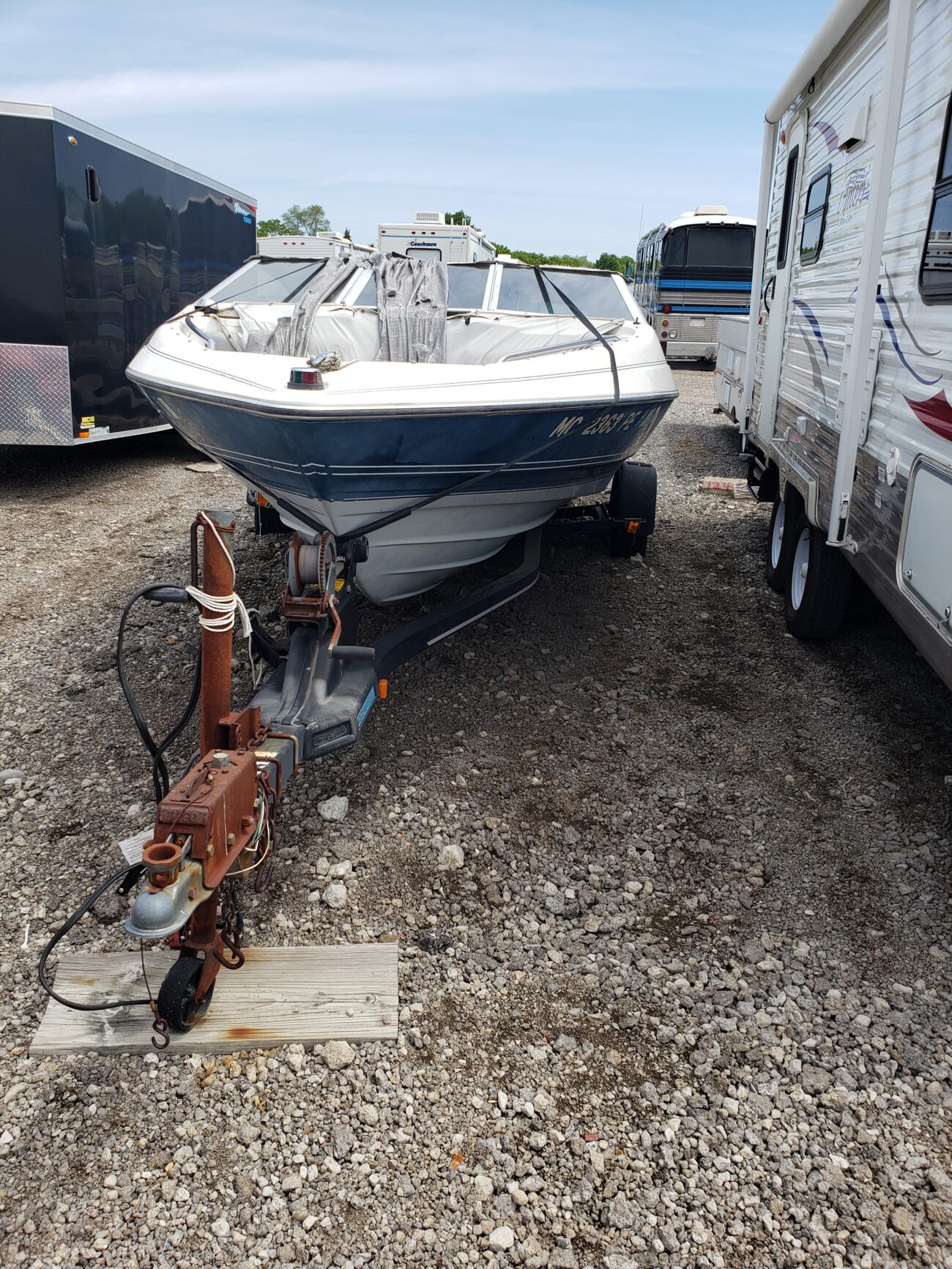
Smaller recreational boats are commonly stored on trailers. A neglected vessel may be relatively small but still difficult to transport when the trailer is no longer roadworthy.
Pontoon Boats
Pontoon boats can experience deterioration involving decks, furniture, fencing, flotation components, engines, and metal structures. An older pontoon can eventually become more trouble than it is worth.
Aluminum Boats
Aluminum vessels can contain significant amounts of recoverable metal. Their condition, size, and components help determine how the boat should be handled.
Fiberglass Boats
Fiberglass vessels require different disposal considerations. The hull may contain composite materials, foam, wood, hardware, wiring, and mechanical equipment.
Charleston Harbor and the Local Marine Market
Charleston Harbor is closely tied to the area’s boating and maritime economy.
Fishing, sailing, recreational boating, commercial activity, and marine businesses all contribute to a large local boating population.
That also means older vessels eventually become part of the equation.
A boat may spend years moving around the harbor before becoming permanently stored. Another may be kept on a trailer in a residential neighborhood. A commercial vessel may eventually be replaced by newer equipment.
When the owner no longer wants the boat, the disposal challenge begins.
The boat still occupies physical space even though it no longer provides any useful purpose.
That is where professional vessel removal can help.
Getting an Old Boat Out of a Residential Property
One of the most common boat-storage situations involves a vessel sitting on private property.
A boat may be parked in a driveway, side yard, backyard, workshop, storage lot, or commercial property.
Sometimes it has been there for years.
The original owner may have planned to restore it. Perhaps they intended to use it after retirement. Maybe they purchased it for a family member.
Plans change.
The boat remains.
Eventually, the property owner realizes how much space the vessel is consuming.
Removing it can create room for vehicles, landscaping, construction materials, outdoor equipment, or simply a cleaner and more functional property.
For someone preparing a home for sale, eliminating an oversized boat can also make the property easier to present to prospective buyers.
Old Boat Trailers Create Their Own Headaches
The boat may be the obvious problem, but the trailer can be just as difficult.
A trailer that has been sitting for years can develop deteriorated tires, seized wheel bearings, rust, damaged supports, brake problems, and electrical failures.
Even if the boat itself is relatively lightweight, an unsafe trailer can prevent the owner from towing it.
That creates a frustrating situation.
The boat cannot be sold easily because it cannot be moved.
The trailer cannot be used safely because of its condition.
The owner is left with a large vessel sitting in one place.
Professional boat hauling can address the removal project without requiring the owner to make the entire setup roadworthy first.
Marina and Waterfront Vessel Cleanouts
A boat stored near the water can create a different set of logistical issues.
Marinas and waterfront properties may have limited access, neighboring vessels, docks, buildings, vehicles, storage equipment, and narrow maneuvering areas.
A boat that cannot operate under its own power may require additional planning.
Owners should provide information about the vessel’s location, approximate dimensions, condition, accessibility, and trailer status when requesting removal.
This allows the project to be considered based on the actual circumstances rather than assuming every vessel can be handled the same way.
For marina operators, removing an unwanted vessel can also free valuable space for another customer or another use.
Damaged and Weathered Boats
Coastal boats deal with a demanding environment.
Moisture, humidity, sunlight, wind, salt air, storms, and temperature changes can all contribute to deterioration over time.
A vessel that was properly maintained can remain useful for years, but neglected boats can deteriorate rapidly.
Storm damage can make matters worse.
A boat may suffer damage to its hull, deck, trailer, engine, electronics, or interior. What initially looks like a manageable repair can turn into a much larger project once the vessel is thoroughly inspected.
For some owners, repairing the damage makes sense.
For others, the vessel has reached the point where removal is the more practical choice.
Fiberglass Boat Disposal in Charleston
Fiberglass boats are popular because composite construction offers many advantages during normal use.
At the end of a vessel’s life, however, fiberglass presents a different disposal challenge.
A fiberglass hull cannot simply be treated like an aluminum boat.
The vessel may contain layers of composite material, foam, wood, wiring, tanks, engines, hardware, and other equipment.
That means a proper removal project may involve separating different components and determining how the materials should be handled.
Boat Scrapyards can help owners approach the vessel as a complete marine disposal project rather than leaving them to figure out how to handle a massive fiberglass hull themselves.
Marine Salvage and Scrapping: More Than Just the Hull
An old boat can contain valuable components even when the vessel itself is no longer practical to operate.
Engines, transmissions, aluminum, stainless hardware, marine electronics, trailer parts, wiring, batteries, and other equipment may have salvage or scrap potential depending on condition.
That is why dismantling can be an important part of marine scrapping.
The vessel can be broken down into its major components.
Materials can be separated.
Equipment can be evaluated.
The hull can be handled according to its construction.
This approach can make more sense than treating the entire boat as one piece of unwanted material.
For the owner, the important part is having the vessel removed without taking on the entire dismantling process alone.
What Happens After Your Boat Is Hauled Away?
Once a vessel has been removed, it can be evaluated based on its construction and condition.
Mechanical equipment may be separated for further evaluation. Metal components can be sorted. Trailer parts can be addressed independently. Other materials can be handled according to the nature of the boat.
An aluminum fishing boat may have a different outcome from a severely deteriorated fiberglass cruiser.
A sailboat with usable equipment may be handled differently from a vessel that has suffered extensive structural damage.
Every boat is different.
The important result for the owner is that the unwanted vessel is no longer occupying the property.
The driveway is clear.
The storage space is available again.
The marina area can be used for something else.
The unfinished restoration project is finally over.
Why Boat Scrapyards?
Boat disposal is not the same as ordinary junk removal.
A large vessel may require specialized hauling considerations. A failed trailer can complicate transportation. Fiberglass construction can make disposal different from metal scrapping. Waterfront access can introduce additional logistical challenges.
Boat Scrapyards is focused specifically on these marine-related removal problems.
Instead of asking an owner to turn an old boat into a roadworthy vessel before anything can happen, the removal process starts with understanding the condition of the boat.
Is it operational?
Is it on a trailer?
How large is it?
Where is it stored?
Can the property be accessed?
Is the vessel damaged?
What type of construction does it have?
Those details help establish what the removal project involves.
For Charleston-area owners who have spent months or years trying to figure out what to do with an unwanted boat, having a company focused on boat removal and scrapping can make the process much more straightforward.
Stop Storing a Boat You No Longer Want
An unwanted vessel can become a permanent fixture when nobody takes responsibility for removing it.
Months turn into years.
The trailer gets worse.
The boat deteriorates.
The restoration never starts.
The storage bill continues.
Eventually, the boat has to be addressed.
Boat Scrapyards helps Charleston-area property owners, boat owners, businesses, and marine operators move forward with unwanted vessels through boat removal, hauling, salvage, dismantling, and scrapping.
Whether you are dealing with an old fishing boat, a neglected sailboat, a damaged cruiser, an abandoned restoration project, a fiberglass hull, an aluminum fishing vessel, or a non-running boat on an aging trailer, professional removal can eliminate a major headache.
You do not have to keep sacrificing valuable property space for a boat that is no longer being used.
You do not have to keep pouring money into a restoration that no longer makes sense.
And you do not have to spend another year wondering how you are going to get rid of it.
Get the vessel removed.
Clear the property.
Move on.
Boat Scrapyards is ready to help Charleston-area owners take the next step toward getting unwanted boats out of the way and properly addressed.