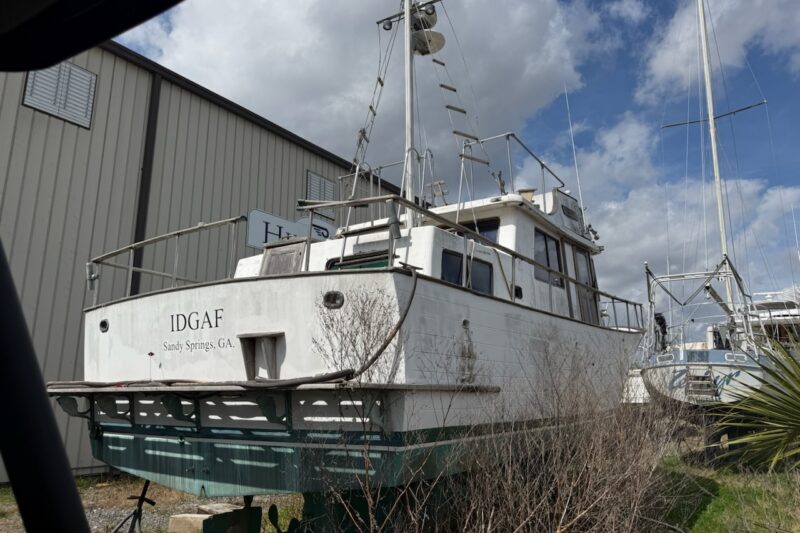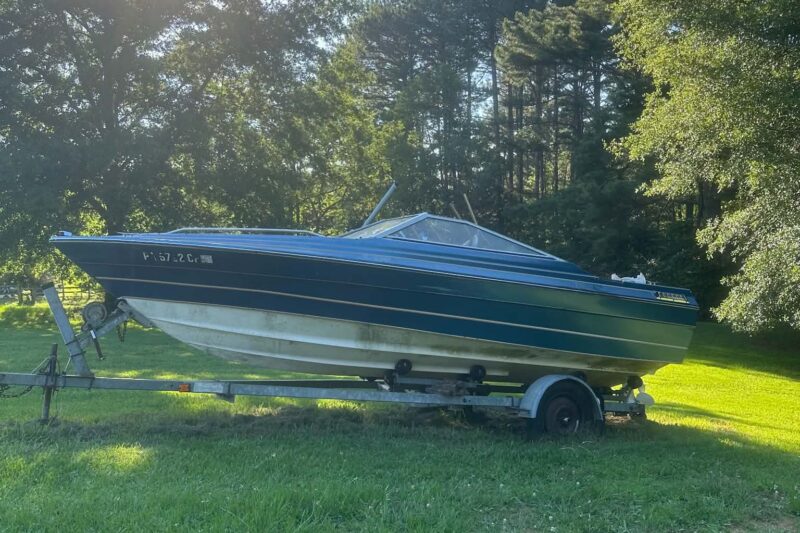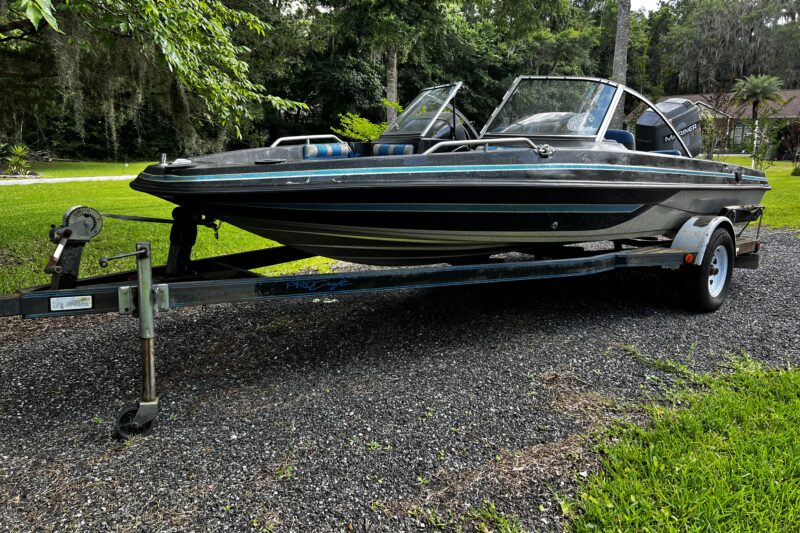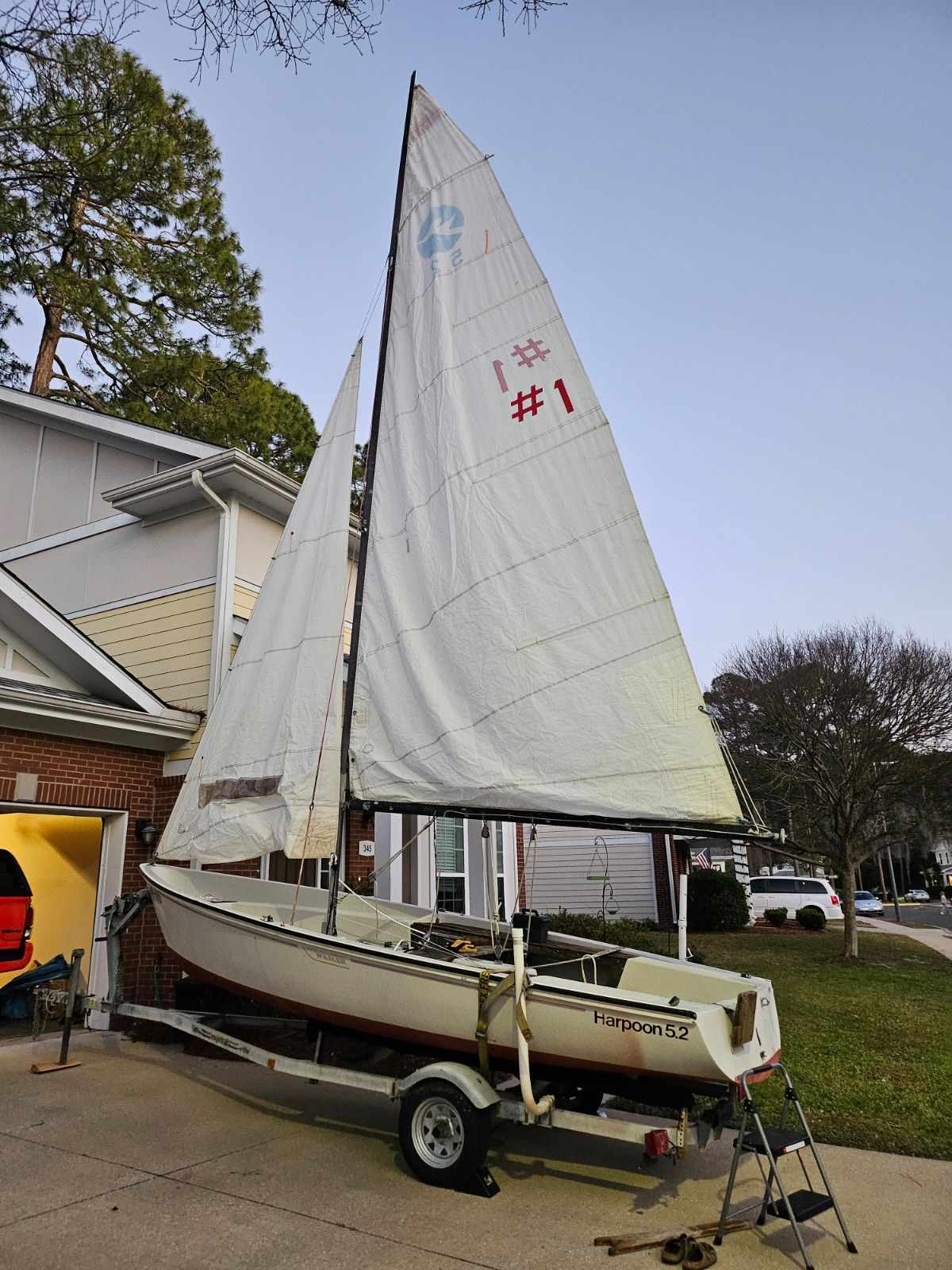
Life around St. Simons Island is closely tied to the water. Boats are used for fishing, cruising, sightseeing, transportation, recreation, and work throughout the Golden Isles. The surrounding waterways provide plenty of opportunities to own and use a vessel, but they also create an inevitable problem for owners of boats that have reached the end of their useful life.
What happens when that boat is no longer wanted?
Maybe it has been sitting on a trailer behind the house. Maybe the engine has failed. Perhaps years of exposure have taken their toll on the hull and interior. A boat might also have been inherited, damaged, abandoned by a previous owner, or left unfinished after a restoration project became too expensive.
Whatever the reason, getting rid of a large vessel is rarely as simple as throwing it away.
Boat Scrapyards helps St. Simons Island-area owners address unwanted boats through removal, hauling, marine salvage, dismantling, scrapping, and disposal. The objective is to take an unwanted vessel from being a lingering property problem and turn it into a removal project that can finally be completed.
St. Simons Island Boat Removal FAQs
What if the boat has been sitting for several years?
Long-term storage does not automatically prevent removal. The vessel can be assessed according to its current condition, size, location, and accessibility.
Can you remove a boat that does not run?
Non-running vessels are common removal projects. A failed engine does not necessarily mean the owner has to keep the boat indefinitely.
Can the trailer be removed with the boat?
The trailer can be considered as part of the overall removal. Its tires, axles, bearings, brakes, frame, and general condition can affect transportation.
What types of vessels can be removed?
Projects can include fishing boats, center consoles, skiffs, sailboats, cruisers, pontoons, fiberglass boats, aluminum vessels, and other unwanted marine craft.
Is an old fiberglass boat difficult to dispose of?
Fiberglass vessels can require more involved handling because the hull is composite material and may contain many other components, including wood, foam, wiring, hardware, and mechanical equipment.
What happens to the boat after it is removed?
The vessel can be evaluated for salvageable equipment, recyclable metals, scrap components, and other materials. The specific process depends on the condition and construction of the boat.
When the Boat Stops Being an Asset
A boat can start out as something exciting.
It may represent weekends on the water, fishing trips, family outings, or years of coastal recreation.
Then circumstances change.
The owner has less time.
The boat needs an expensive repair.
The family moves.
A new boat replaces the old one.
The vessel is left sitting.
Once a boat stops being used, the costs associated with keeping it can become more noticeable.
Storage takes up space.
Insurance and maintenance may continue.
The trailer ages.
The vessel remains exposed to weather.
Eventually, the owner may realize that keeping the boat is no longer accomplishing anything.
That is often when removal becomes the most practical solution.
The Golden Isles Are Built Around Boats
St. Simons Island is part of the Golden Isles, an area surrounded by coastal waterways and marine activity.
St. Simons Sound, the Frederica River, Mackay River, surrounding tidal creeks, and the Intracoastal Waterway contribute to the region’s strong boating culture.
Jekyll Island and Brunswick are nearby, further connecting the local boating environment.
That means there are many different types of vessels operating around the area.
Small fishing boats may be kept at private residences.
Larger recreational vessels may be stored near marinas.
Sailboats and cruisers can remain in service for decades.
Commercial and working vessels may also eventually reach the point where replacement makes more sense than continued maintenance.
With such a diverse marine environment, unwanted boats can appear in equally diverse locations.
The Boat May Not Be the Only Thing That Needs to Go
One of the first questions owners often ask is whether the boat itself is the entire removal problem.
Sometimes it is not.
The trailer may also be obsolete.
An old trailer can have tires that are no longer safe, bearings that have seized, rusted components, damaged wiring, or structural corrosion.
If the vessel has been sitting in one location for years, moving the trailer may be nearly as difficult as moving the boat.
This is why the trailer should be considered during the initial assessment.
Instead of assuming an old trailer can simply be hooked to a truck, owners should recognize that a stationary boat and its aging trailer may need to be handled as one removal project.
Is It Really Worth Repairing?
Boat owners can get caught in the repair cycle.
One problem gets fixed.
Another appears.
The engine needs attention.
The fuel system needs work.
The electronics are outdated.
The deck needs repair.
The trailer requires tires.
The upholstery has deteriorated.
At some point, the owner is no longer repairing one boat.
They are rebuilding an entire vessel.
That may be worthwhile for a valuable boat with sentimental or practical importance.
But an older vessel with substantial deterioration may not justify the expense.
A simple comparison can help.
Add up the expected repair costs.
Consider the amount of time required.
Look at the boat’s condition.
Think about how often it will actually be used.
If the numbers and circumstances no longer make sense, removal can eliminate a continuing expense.
Old Fishing Boats Around St. Simons Island
Fishing is an important part of coastal Georgia’s marine culture, and fishing boats can see years of demanding use.
Engines, fuel systems, electronics, decks, seating, trailers, and other equipment all experience wear.
A boat may remain perfectly recognizable while becoming increasingly expensive to maintain.
Once the owner stops using it, deterioration can continue without providing any benefit in return.
An older fishing vessel sitting behind a house or in a storage area can become a long-term obstacle.
Boat Scrapyards can help owners address the vessel through removal and marine scrapping rather than leaving it to deteriorate indefinitely.
Sailboats and Cruisers Create Bigger Disposal Challenges
Larger boats present a different set of issues.
A sailboat can have a mast, rigging, sails, engine, tanks, interior systems, electrical equipment, and extensive hardware.
A cruiser can include cabins, appliances, plumbing, generators, engines, electrical systems, and other equipment.
When those systems start failing simultaneously, restoration can become a major undertaking.
The owner may have initially intended to repair the vessel gradually.
But years can pass without meaningful progress.
Meanwhile, the boat continues occupying valuable space.
Removing the vessel can provide a clean ending to a project that is no longer realistic.
Residential Boat Removal on St. Simons Island
Not every unwanted boat is sitting at a marina.
Some are parked at private homes.
A boat may have been placed beside a garage or behind a house. It may have been stored on a trailer with the expectation that it would eventually return to the water.
Then it never did.
The longer the vessel sits, the more difficult the situation can become.
A homeowner may want to reclaim the driveway.
A property owner may be preparing for a sale.
A family may be cleaning up an inherited property.
A landlord may need to clear an abandoned vessel from a rental property.
Whatever the circumstances, removing the boat can make the property substantially more usable.
Boats Near the Water Require a Different Kind of Planning
A boat located near a dock or waterfront property may have access restrictions that do not exist at a typical residence.
There may be:
- Narrow access roads
- Docks
- Pilings
- Neighboring boats
- Buildings
- Fences
- Vehicles
- Storage structures
The boat may also be incapable of moving under its own power.
For that reason, location is an important part of the removal process.
Owners should be prepared to provide information about where the vessel sits, its approximate size, its condition, and how the removal area can be accessed.
Photos can also help establish what the project involves before hauling is arranged.
Weather Exposure Can Take Its Toll on Older Vessels
Coastal Georgia boats are exposed to sun, humidity, rain, wind, salt air, and changing weather conditions.
A vessel that receives regular maintenance can remain useful for many years.
A neglected vessel is a different story.
Once covers deteriorate and systems are no longer maintained, water intrusion and weather exposure can contribute to increasingly serious problems.
Storm damage can accelerate the process.
An already aging boat may suffer additional damage to the hull, deck, windshield, electronics, engine, or trailer.
After a major weather event, owners sometimes discover that restoring the vessel will cost considerably more than expected.
Removing the boat can become the practical alternative.
Fiberglass Boat Removal Is More Complicated Than It Looks
Fiberglass is common throughout recreational boating.
It is strong and durable, but that does not make an old fiberglass boat easy to dispose of.
The hull is only one component.
A fiberglass vessel can also contain:
- Wood
- Foam
- Wiring
- Plumbing
- Batteries
- Engines
- Fuel-system equipment
- Electronics
- Stainless hardware
- Aluminum components
- Upholstery
This combination means the vessel needs to be considered as a complete marine disposal project.
Trying to dismantle a large fiberglass boat without the right equipment can quickly become a substantial undertaking.
Professional removal provides an alternative for owners who simply want the unwanted vessel gone.
Marine Salvage Can Recover More Than People Expect
An old boat can be finished as a functioning vessel without every component being worthless.
That is where marine salvage becomes important.
Depending on the boat, there may be equipment and materials that can be separated during dismantling.
Potential salvage or scrap materials can include engines, transmissions, aluminum, stainless steel, copper wiring, marine electronics, propellers, hardware, trailer components, and other metal parts.
The condition of each component determines whether it has useful salvage or scrap potential.
A severely deteriorated boat may have limited recoverable equipment.
A vessel that was recently retired may have considerably more.
The point is to evaluate what is actually there rather than assuming the entire vessel has to be treated as one piece.
What Happens During Boat Dismantling?
Dismantling is essentially the process of taking a vessel apart in a controlled manner so its different components can be evaluated.
Mechanical equipment can be separated.
Metal can be sorted.
Trailer components can be removed.
Marine hardware can be assessed.
Other portions of the vessel can be addressed according to their materials.
This is particularly useful when a boat is no longer worth restoring but still contains equipment that can be salvaged or materials that can be scrapped.
For the owner, the result is much simpler: the large unwanted vessel is removed instead of continuing to occupy the property.
What About a Boat That Has Been Damaged?
Damage does not necessarily mean the boat must remain where it is.
A vessel may be damaged by age, weather, collision, mechanical failure, or long-term neglect.
Some damage can be repaired.
Other damage can make restoration financially unrealistic.
The important consideration is the condition of the entire boat.
A damaged hull combined with a failed engine, deteriorated trailer, and neglected interior can create a very different situation from a vessel with one isolated repair.
Boat Scrapyards can help St. Simons Island-area owners address boats that have crossed that line from usable vessel to removal project.
Boat Scrapyards: A Practical Way to Clear an Unwanted Vessel
The biggest challenge with an unwanted boat is often figuring out where to begin.
Boat Scrapyards starts with the basics.
What kind of boat is it?
How large is it?
Where is it located?
Is it running?
Is it on a trailer?
What condition is the hull in?
How can the vessel be accessed?
Those details provide a starting point for determining the removal requirements.
The company focuses on boat removal, hauling, marine salvage, dismantling, scrapping, and disposal rather than treating a large marine vessel like ordinary household junk.
For owners who have been trying to figure out what to do with an unwanted boat, that specialized focus can make the process much easier to navigate.
Clear the Vessel and Reclaim Your Space
A boat that is no longer being used does not have to remain on your property indefinitely.
If restoration has stalled, storage has become expensive, or the vessel has simply reached the end of its useful life, removal can bring the situation to a close.
Boat Scrapyards helps St. Simons Island-area owners deal with unwanted fishing boats, sailboats, cruisers, center consoles, pontoons, fiberglass vessels, aluminum boats, and other marine craft.
The project may involve a boat on an aging trailer, a damaged vessel near a waterfront property, or a long-neglected boat taking up space at home.
Whatever the circumstances, the process starts by getting the vessel evaluated and determining how it can be removed.
Instead of continuing to store a boat you no longer use, clear it out and reclaim the space.
Boat Scrapyards is ready to help with boat removal, marine hauling, salvage, dismantling, scrapping, and disposal throughout the St. Simons Island area.