Owning a boat in the Bay Area comes with plenty of opportunities to enjoy the water, but getting rid of an old vessel can be an entirely different experience.
A boat that has stopped running cannot simply be placed at the curb. A deteriorating sailboat cannot always be towed away with an ordinary vehicle. And a fiberglass cruiser that has been sitting at a marina for years can become a serious disposal problem when the owner finally decides it has to go.
For Oakland, California boat owners, professional boat removal can provide a much more practical solution.
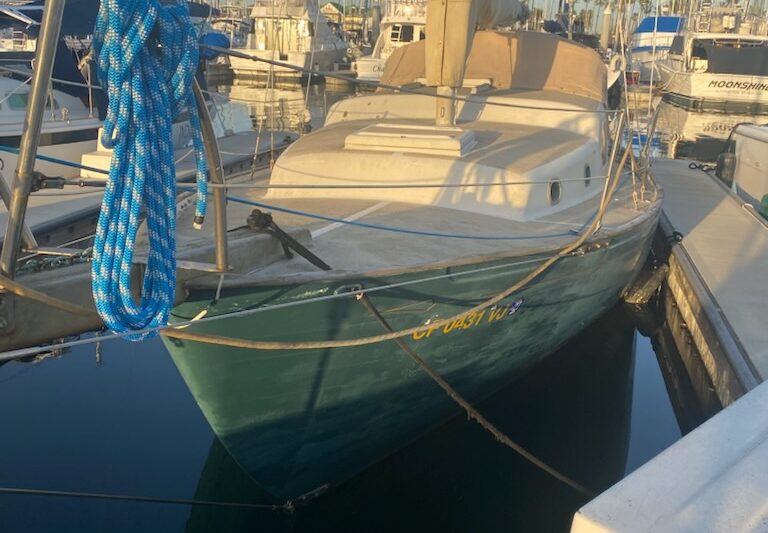
Oakland’s location along San Francisco Bay and the Oakland Estuary gives the city a strong connection to recreational and commercial boating. Marinas, boatyards, waterfront properties, storage areas, and nearby communities all deal with vessels that eventually become too old, damaged, neglected, or expensive to maintain.
Boat Scrapyards helps owners address those situations through boat removal, boat disposal, and marine scrapping solutions.
Whether the vessel is an old fishing boat, fiberglass cruiser, aluminum boat, sailboat, work boat, or non-running recreational vessel, getting it removed can eliminate a problem that has been taking up valuable space for far too long.
Oakland Boat Removal FAQs
Can you remove an old boat that does not run?
Yes. Non-running vessels can be candidates for removal. The boat’s condition, size, location, and accessibility determine what type of equipment and hauling approach may be required.
What kinds of boats can be scrapped?
Boat Scrapyards can receive inquiries involving fishing boats, sailboats, fiberglass boats, aluminum boats, cruisers, runabouts, pontoons, work boats, and other unwanted vessels.
Can you remove boats from Oakland marinas?
Boat removal from a marina or storage facility may be possible when the owner or authorized party has the necessary permission for the vessel to be removed.
Do you remove boats from private property?
Residential and private-property boat removal may be possible from driveways, yards, storage areas, and other accessible locations.
What if my boat has a bad trailer?
A deteriorated trailer can make conventional towing impossible. Flat tires, seized wheels, damaged axles, corrosion, or structural problems should be disclosed when arranging removal.
Can abandoned boats be removed?
Abandoned vessels require proper authorization. Whoever requests removal should establish that they have the legal authority to have the boat removed before the process begins.
Do I need to repair the boat first?
If you have already decided that the vessel is no longer worth keeping, extensive repairs may not be necessary. The boat can be evaluated in its existing condition to determine the removal requirements.
Oakland’s Waterfront Creates a Natural Demand for Boat Removal
Oakland has a unique position on San Francisco Bay.
The city’s waterfront includes a mix of marinas, commercial marine operations, recreational boating, working waterfront areas, and residential communities. The Oakland Estuary also provides an important connection between the city’s urban landscape and the Bay.
With so many vessels in and around the region, there are inevitably boats that have reached the end of their useful lives.
Some are simply old.
Others have suffered years of deferred maintenance.
Some have been damaged.
Others have been sitting in storage because their owners cannot justify the expense of repairing them.
Eventually, someone has to make a decision.
Keep spending money on the boat—or get it removed.
When an Old Boat Becomes a Liability
There is a major difference between an old boat and an unwanted boat.
An older vessel that is maintained and regularly used may still be perfectly functional.
An unwanted boat, however, often receives little or no maintenance.
That is when deterioration accelerates.
A cover tears.
Rainwater gets inside.
The engine sits unused.
Electrical connections deteriorate.
Metal hardware corrodes.
The interior begins falling apart.
The trailer becomes increasingly unreliable.
What was once a recreational asset becomes an oversized object that nobody wants to deal with.
This is particularly frustrating for property owners who have limited space.
A boat can occupy an enormous amount of room compared with ordinary household junk.
Removing it can immediately transform the property.
The Types of Boats We Scrap, Salvage & Dispose Of
Boat Scrapyards can assist with inquiries involving many different categories of vessels.
Oakland-area boat removal projects can include:
- Fishing boats
- Sailboats
- Fiberglass boats
- Aluminum boats
- Cabin cruisers
- Bowriders
- Runabouts
- Center-console boats
- Pontoon boats
- Small yachts
- Utility boats
- Work boats
- Commercial vessels
- Damaged boats
- Non-running boats
- Boats with deteriorated trailers
A vessel’s size is only one consideration.
Accessibility can be just as important.
A large boat sitting in an open yard may be easier to access than a smaller boat boxed into a narrow residential driveway.
The condition of the hull and trailer also matters.
Every removal should therefore be approached according to the actual circumstances surrounding the vessel.
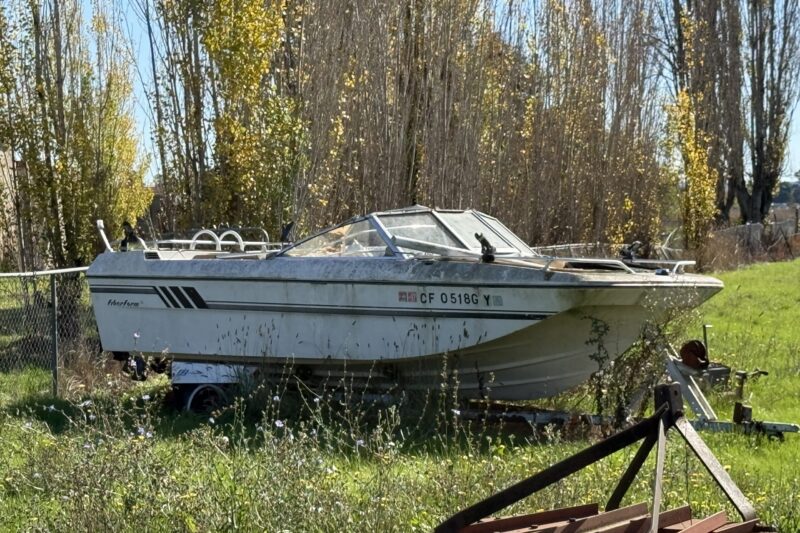
Fiberglass Boats Are Not Simple Trash
Fiberglass boats are common throughout Northern California.
They can provide decades of service, but eventually even a fiberglass vessel can become too expensive or difficult to restore.
The disposal challenge comes from the construction of the boat itself.
A fiberglass vessel can include layers of fiberglass and resin along with wood, foam, metal hardware, wiring, engines, tanks, batteries, electronics, and other components.
An owner who decides to dismantle one personally may quickly realize how much work is involved.
There is no simple way to throw an entire fiberglass hull away.
Breaking the vessel down creates additional material that still needs to be handled.
For someone who simply wants the boat removed from their property, professional boat removal is often a much more practical starting point.
Aluminum Boats and the Scrapping Process
Aluminum boats are common among anglers and recreational boaters.
The material is durable and relatively lightweight, making it well suited to many smaller vessels.
When an aluminum boat reaches the end of its useful life, the metal hull can be an important component of the scrapping process.
Other materials may also be present.
An older boat could contain stainless steel, copper wiring, steel hardware, an engine, propeller, fuel-system components, and trailer parts.
The actual scrap value depends on the individual vessel.
Weight, construction, condition, equipment, transportation requirements, and current scrap-market conditions all affect the economics.
That means an aluminum boat should be evaluated as an entire project rather than assigning it an assumed value based solely on the hull.
The Bay Environment Can Be Hard on Aging Vessels
Boats around Oakland and San Francisco Bay deal with a marine environment that can accelerate deterioration when maintenance is neglected.
Moisture and saltwater exposure can affect metal components over time.
Hardware can corrode.
Electrical connections can develop problems.
Engines and mechanical systems can deteriorate when left unused.
The same can happen to trailers stored near the waterfront.
A boat that spends years without maintenance can become increasingly difficult to move safely.
This is one reason owners should not wait indefinitely after deciding they no longer want the vessel.
The earlier a removal is considered, the more options there may be for handling the boat.
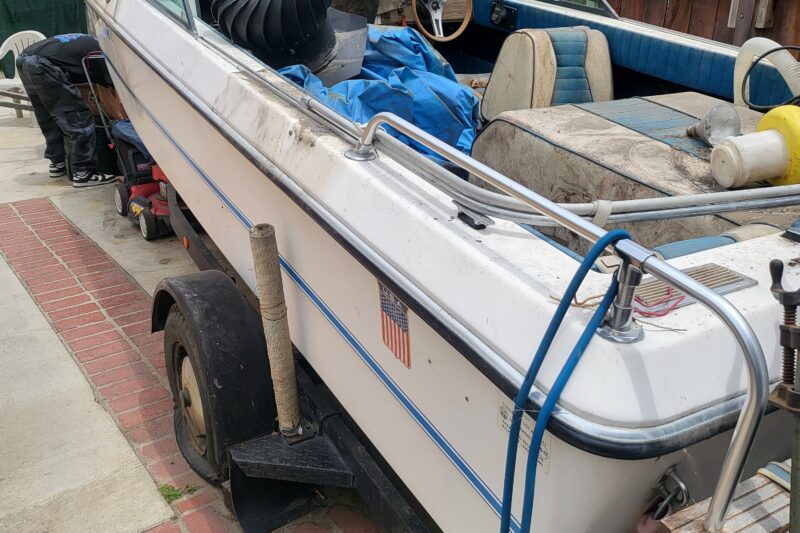
Boat Trailers Can Turn Into Their Own Removal Project
For many recreational boat owners, the trailer is what makes the vessel useful.
It allows the boat to move between the home and the water.
But once a boat has been abandoned for years, the trailer can become one of the biggest obstacles to removal.
Tires may be flat.
Bearings may have seized.
Wheels may be damaged.
The frame may be heavily corroded.
Axles can become compromised.
A trailer that once moved the boat effortlessly may eventually be incapable of safely traveling down the road.
That does not necessarily mean the boat cannot be removed.
It simply means the removal plan needs to account for the trailer’s condition.
When requesting a boat removal quote, providing information about the trailer can be just as important as describing the boat itself.
Removing Boats From Oakland Residential Properties
Not all boats are stored at marinas.
Some are sitting on private property.
A homeowner may have parked the boat beside a garage years ago. Another owner may have stored it behind a fence or at the end of a driveway.
Urban properties can create particularly interesting access challenges.
Buildings, parked cars, fencing, landscaping, narrow streets, utility structures, and neighboring properties can all affect how a vessel can be reached.
A boat removal company needs to know more than just the length of the boat.
The surrounding property matters too.
Photos of the vessel and access area can help establish what the removal project may require.
Oakland Marina and Storage Yard Boat Removal
Marinas and storage facilities have another reason to deal with unwanted boats quickly: space has value.
A vessel that occupies a slip or storage position without being used can become an ongoing problem.
Perhaps the owner stopped paying attention to the boat.
Maybe repairs were supposed to happen but never did.
Perhaps the vessel changed ownership and the new owner never followed through.
Eventually, the marina or storage operator needs the space back.
Once ownership and authorization are properly addressed, professional boat removal can help clear the vessel and return that space to productive use.
For waterfront businesses, this can be an important part of keeping the property organized and functional.
Abandoned Boats Require More Than a Tow Truck
An abandoned vessel can create a much bigger issue than simply having an unwanted boat sitting nearby.
It may have deteriorated mechanical systems, damaged fuel components, compromised electrical equipment, or structural damage.
There can also be questions surrounding ownership.
A marina operator, property owner, or other party should not simply assume that they can dispose of someone else’s vessel.
The appropriate authorization needs to be established first.
Once the legal side has been addressed, however, professional boat removal can provide a practical path toward clearing the property.
When Is Scrapping Better Than Restoration?
Boat owners often struggle with the decision to stop repairing an old vessel.
That is understandable.
A boat may have sentimental value.
It may have been in the family for years.
The owner may remember fishing trips, vacations, or weekends spent on the water.
But sentiment does not make repairs cheaper.
Imagine an older cruiser with an aging engine, damaged electrical system, deteriorated interior, trailer problems, and hull repairs that need attention.
One repair leads to another.
A project that looked manageable suddenly becomes a full restoration.
The owner may spend thousands of dollars before the vessel ever becomes usable again.
At some point, scrapping can be the financially responsible decision.
The question is not whether the boat could theoretically be restored.
Almost anything can be restored with enough money.
The question is whether restoring this particular boat makes sense.
Marine Scrapping: What’s Inside the Boat?
A boat can contain a surprising number of individual components.
Depending on its construction, marine scrapping may involve:
- Aluminum
- Steel
- Stainless steel
- Copper wiring
- Bronze hardware
- Engines
- Outboard motors
- Propellers
- Fuel tanks
- Batteries
- Pumps
- Marine electronics
- Electrical components
- Trailer parts
- Railings
- Hardware
Some materials may have scrap value.
Some equipment may be handled independently.
Other materials may require different disposal methods.
The exact process depends on the boat’s construction and condition.
That is why marine scrapping should be treated as a specialized disposal process rather than ordinary junk hauling.
What Happens After Your Boat Is Picked Up & Hauled Away?
Once the vessel has been removed, it can be evaluated according to its condition, construction, and components.
Metal materials may be separated for scrapping.
Engines and other mechanical components can be addressed separately.
Trailer parts may be separated from the vessel.
Other materials can be handled according to their characteristics.
The exact process will vary from one boat to another.
For the owner, however, the result is much simpler.
The boat is gone.
That can mean reclaiming a driveway, opening up storage space, clearing a marina position, or finally cleaning up a property that has been occupied by an unwanted vessel for years.
Boat Removal Throughout Oakland and the East Bay
Oakland is part of a much larger boating network throughout the Bay Area.
The surrounding East Bay includes residential neighborhoods, waterfront properties, marinas, storage facilities, boatyards, and communities where owners may have aging vessels that need to be removed.
An unwanted boat does not have to be sitting directly on the waterfront to become a major problem.
It could be stored several miles inland.
It could be sitting on an old trailer behind a home.
It could be occupying space at a private yard.
It could be a non-running vessel that has not moved in years.
Boat Scrapyards can help owners start by evaluating the basic details of the boat and its location.
Don’t Keep Paying to Store a Boat You Don’t Want
One of the biggest mistakes owners make is continuing to spend money on a boat they already know they are finished with.
Storage costs add up.
Maintenance gets postponed.
The vessel deteriorates.
Then the owner eventually has to deal with an even more difficult removal project.
If you are not going to use the boat, there is little benefit in allowing it to remain on your property indefinitely.
Boat Scrapyards can help you begin the process of removing the vessel.
Whether it is an old sailboat, damaged fishing boat, fiberglass cruiser, aluminum utility boat, abandoned recreational vessel, or non-running boat on a deteriorated trailer, the process begins with understanding what you have and where it is located.
You do not need to spend thousands of dollars making an unwanted boat look presentable.
You do not need to restore a vessel you no longer want.
And you do not need to spend your weekends attempting to dismantle a boat piece by piece.
When the vessel has reached the end of its useful life, professional boat removal and marine scrapping can provide the clean break you need.
For Oakland boat owners ready to clear out an unwanted vessel, Boat Scrapyards is ready to help turn that old boat into a finished removal project.